
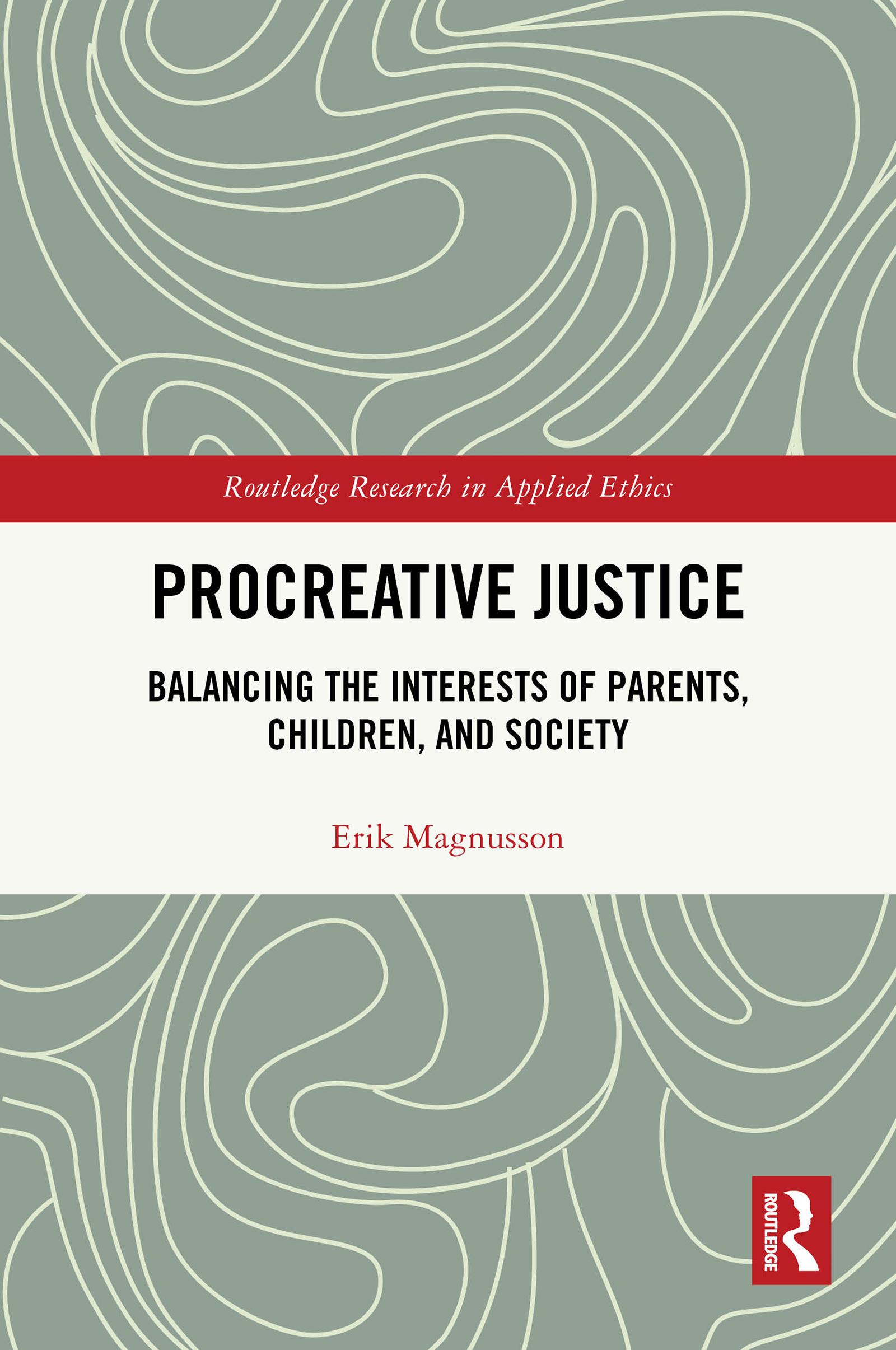
This book explores how considerations of justice apply to procreative decision-making.
Despite its immense personal significance, procreation is an inherently other-regarding endeavor. By its very nature, the decision to procreate is the decision to bring into existence another morally considerable being, one who will be exposed to the full range of harms, benefits, and risks that accompany a typical human life, and one who cannot by its nature ever consent to being born. Moreover, when this decision is undertaken in a community of persons, it is also a decision to affect the lives of others in a host of profound if often underappreciated ways, from its effects on population size and environmental sustainability to its consequences for a community’s distribution of resources. In many ways, of course, these interests coincide: adults need children for their parenting projects, societies need citizens for the maintenance of their institutions, and children themselves are often happy to have been brought into existence. However, as the book demonstrates, the various interests that are implicated by procreative decision-making can also come into conflict as well and in ways that raise basic questions of justice. Through a systematic examination of six of these questions, the author argues that taking adequate stock of the conflicting interests at stake in procreative decision-making leads to a narrower view of the conditions under which it is morally permissible to procreate and a much more demanding conception of our procreative responsibilities.
Procreative Justice will be of interest to researchers and advanced students working on the morality of procreation and related areas of philosophy, including bioethics, intergenerational ethics, environmental ethics, population ethics, and the ethics of the family.
Pay easily by card, Klarna, Apple Pay or Google Pay. Not happy? You always have a 14-day money-back guarantee. Read more in our terms. If you have any questions, email us at hello@memmo.org.
Memmo makes studying easier – wherever you are in the world. We bring your course books and smart study tools together in one place: summaries, quizzes, podcasts and flashcards. Plus Ted, your study buddy who answers anything you wonder. Over 50,000 students already study here – built to help you learn faster and stress less.