
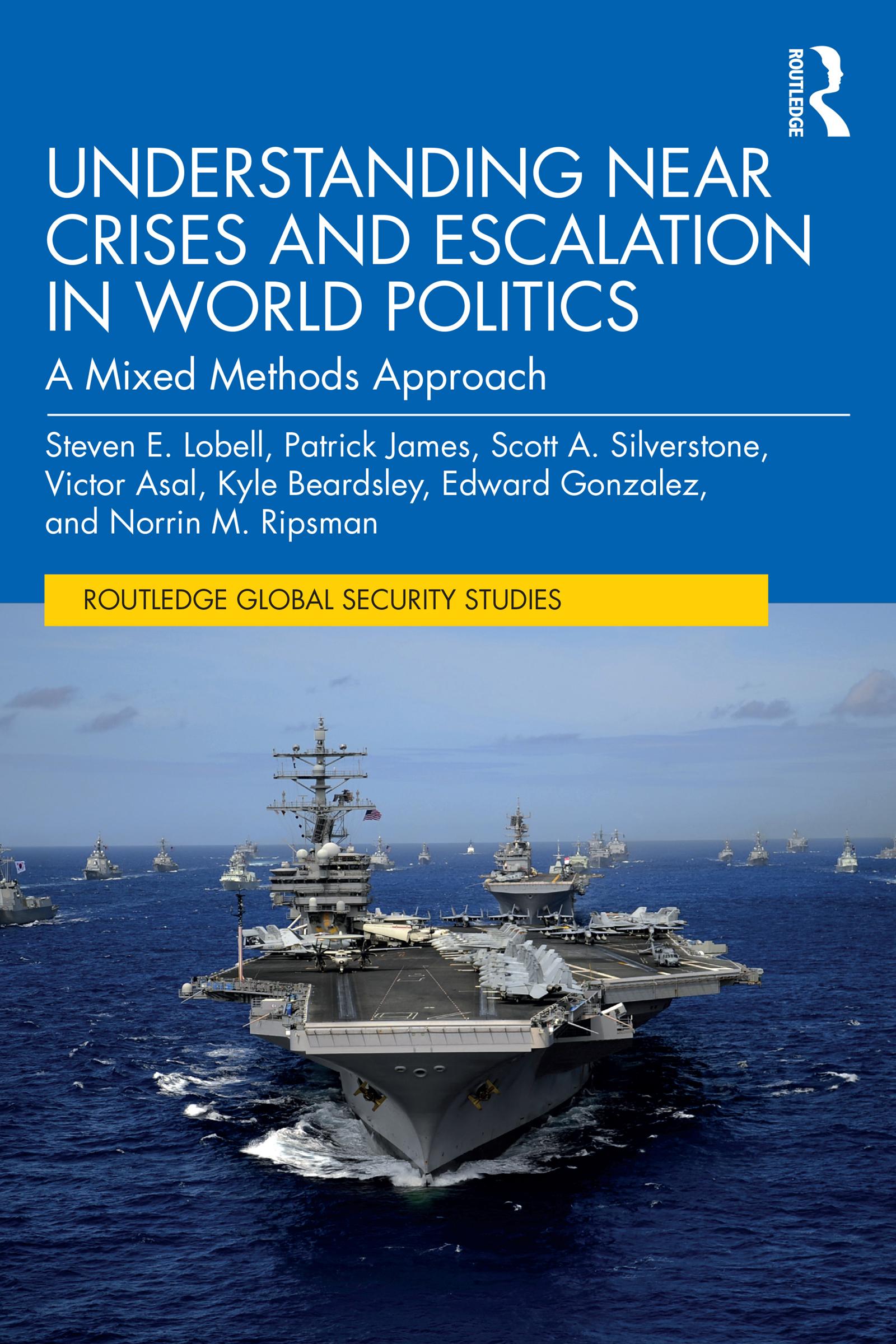
This book introduces the near crisis phase of conflict and escalation.
These time-sensitive disputes between states, and even with violent non-state actors, do not involve significant risk of military escalation, at least in the moment. Investigating how and why some near crises escalate, while others do not, requires an explanation of the different dynamics of international disputes and the policy tools that states and international institutions can employ. We ask an expanded set of questions about specific cases and general patterns of conflict behavior, such as: why did Israeli leaders respond to Hezbollah’s 2006 cross-border raid with escalation, resulting in the Second Lebanon War, while in previous instances the Israelis limited their retaliation? Why didn’t the 2015 Iranian Ballistic Missile Test or the 1995 Norwegian Black Brant Missile Launch escalate, while the 2009 North Korea Missile Movement and the 1995 Taiwan Straits dispute tipped into a full-blown crisis, and why did the 2008 Russia-Georgia conflict escalate from near crisis to war? We use primary sources and newly created data on near crises to answer these questions and others. The overall conclusion is that an ounce of prevention at the near crisis phase is worth a pound of cure in averting a full-blown crisis or war.
This book will be of great interest to students of security studies, conflict studies, foreign policy, and international relations.
Pay easily by card, Klarna, Apple Pay or Google Pay. Not happy? You always have a 14-day money-back guarantee. Read more in our terms. If you have any questions, email us at hello@memmo.org.
Memmo makes studying easier – wherever you are in the world. We bring your course books and smart study tools together in one place: summaries, quizzes, podcasts and flashcards. Plus Ted, your study buddy who answers anything you wonder. Over 50,000 students already study here – built to help you learn faster and stress less.