
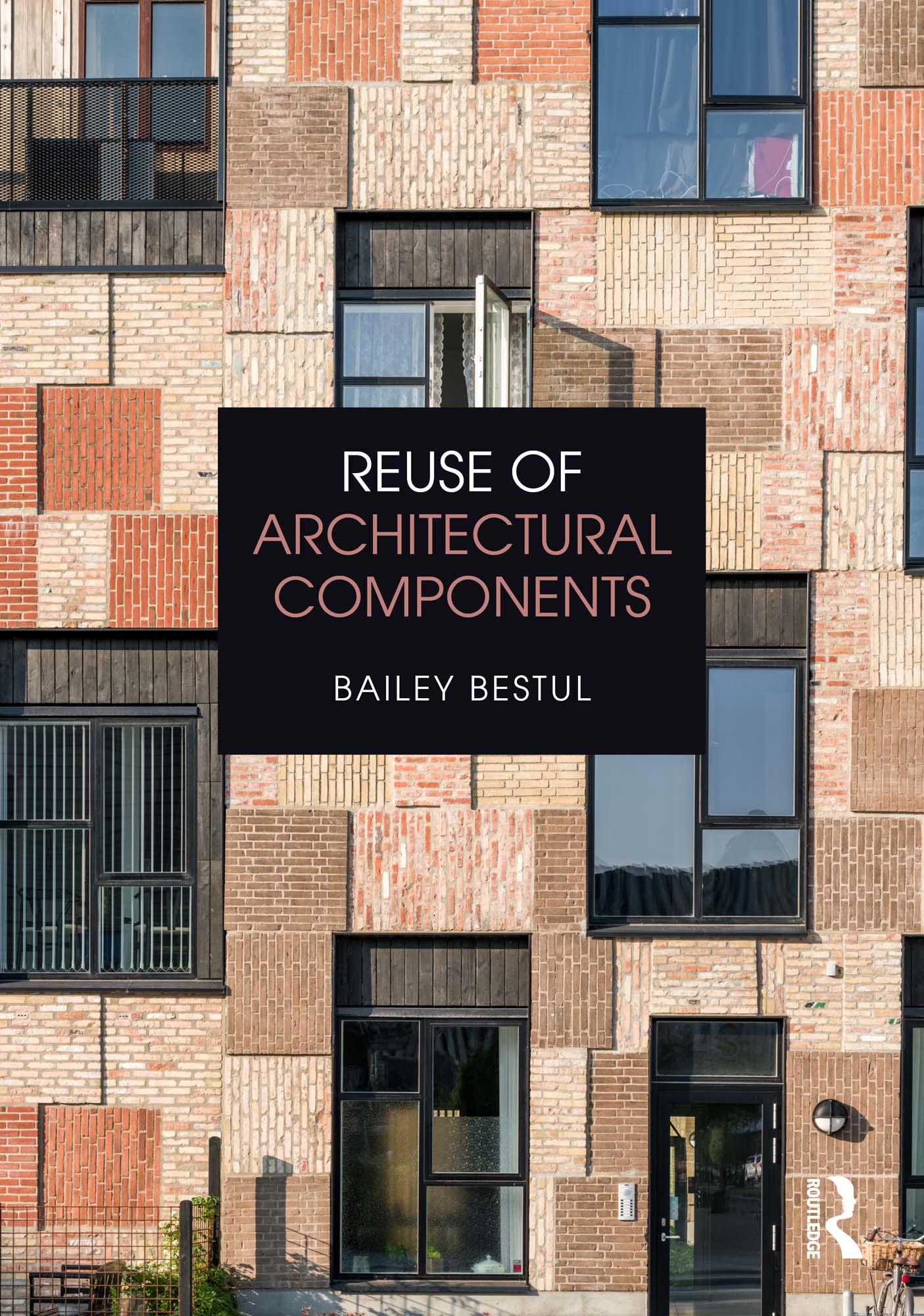
As the need for a circular construction industry becomes progressively more apparent, building practitioners are increasingly turning to salvaged building components to construct new projects. Yet the aesthetic potential of reused materials remains underexplored. Drawing from art history, architectural theory and constructed works, this book develops a set of design strategies practitioners might employ to develop thoughtful, architecturally rigorous reuse projects. Author Bailey Bestul illustrates the immense design potential of reuse using nine themes that follow the reader from the initial stages of building planning to the finishing of the interior spaces.
Following an overview of the history of component reuse in building design and construction, the first part of this book, “Planning strategies,” provides recommendations for the integration of scavenged building elements into the larger architectural work. From the “gap” to the “wrapper,” these chapters consider how designers might arrange reused components both to shelter and be sheltered, while revealing the age and flaws of these components for maximum design effect. The next part, “Assembly techniques,” considers how reuse projects might be constructed and the way in which the construction method impacts the architectural proposal. Whether framing with sticks or stacking up stones, these chapters demonstrate the variety of assembly opportunities available for found object projects. Finally, the part on “Finishing” suggests the ways these materials can create experiential spaces that may be variously uniform, deeply complex and highly embellished.
Expanding upon the practical steps outlined in the technical literature, this book provides designers with a set of frameworks for approaching architectural reuse during the more conceptual parts of the design process. It is essential reading for professionals interested in integrating reuse in their architectural practice.
Pay easily by card, Klarna, Apple Pay or Google Pay. Not happy? You always have a 14-day money-back guarantee. Read more in our terms. If you have any questions, email us at hello@memmo.org.
Memmo makes studying easier – wherever you are in the world. We bring your course books and smart study tools together in one place: summaries, quizzes, podcasts and flashcards. Plus Ted, your study buddy who answers anything you wonder. Over 75,000 students already study here – built to help you learn faster and stress less.