
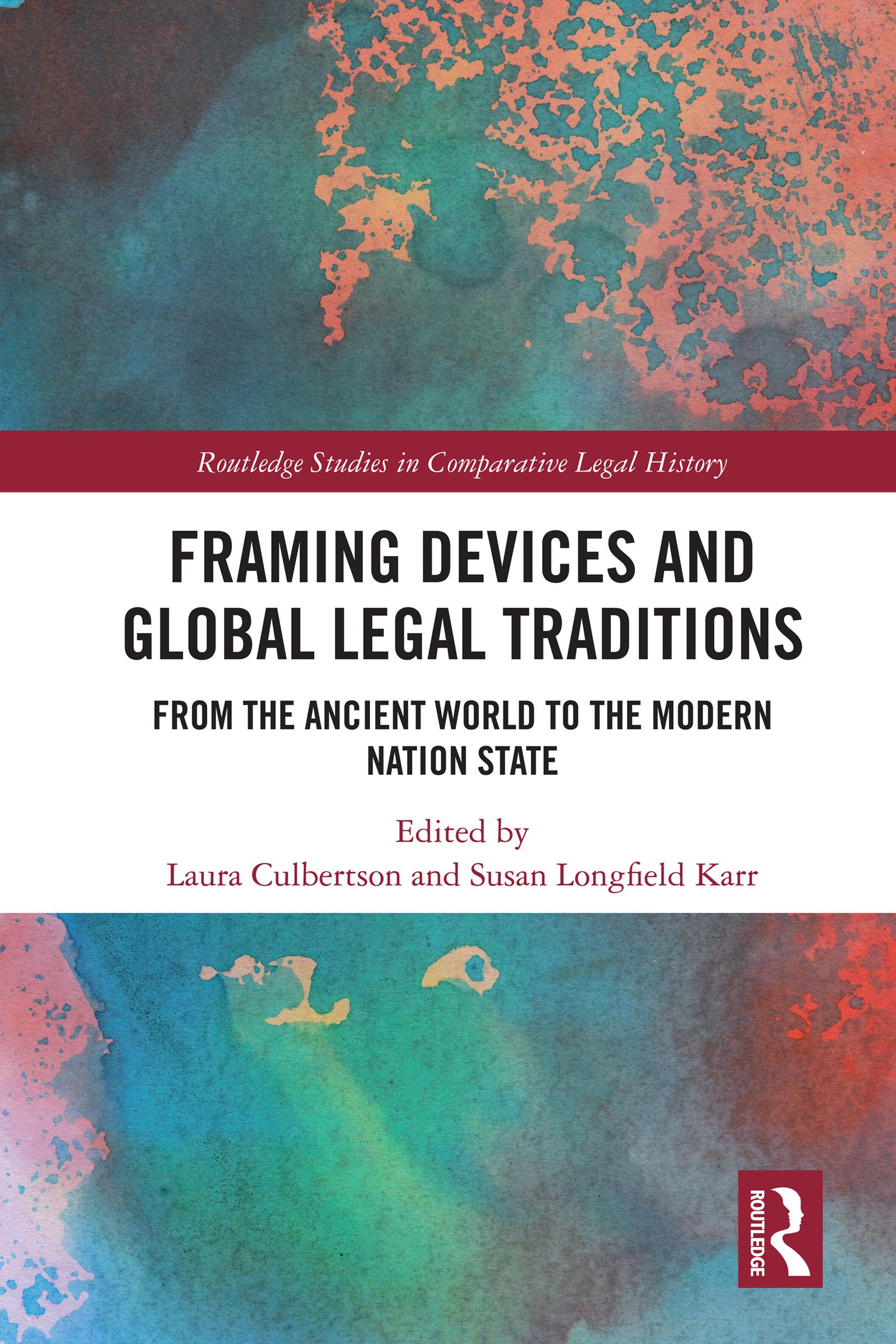
This collection explores prefaces, prologues, paratexts, and other types of framing devices. Across world history, these devices have introduced the law, articulated its context and audience, identified the basis of legal and moral authority, critiqued existing conditions, or even tried to "restore" something that never was. Scribes, lawmakers, and legal theorists also used frames to position the law in time and space, purporting to define populations and their identities. Despite the ubiquity and complexity of these phenomena, few studies have drawn out methods for studying their role in constructing, fortifying, or reimagining legal frameworks within legal cultures or traditions. This volume offers new ways to consider the significance of framing apparatuses regarding how and why they are created, remembered, forgotten, utilized, and recovered within legal traditions. The studies range from the ancient world to the modern nation-state system, aiming to explore the intersections and collisions between juridical and political interpretation practices.
The book will be of interest to academics and researchers in the areas of legal history, comparative law, legal cultures and traditions, legal theory, jurisprudence, constitutional law and legislative drafting.
Pay easily by card, Klarna, Apple Pay or Google Pay. Not happy? You always have a 14-day money-back guarantee. Read more in our terms. If you have any questions, email us at hello@memmo.org.
Memmo makes studying easier – wherever you are in the world. We bring your course books and smart study tools together in one place: summaries, quizzes, podcasts and flashcards. Plus Ted, your study buddy who answers anything you wonder. Over 50,000 students already study here – built to help you learn faster and stress less.