
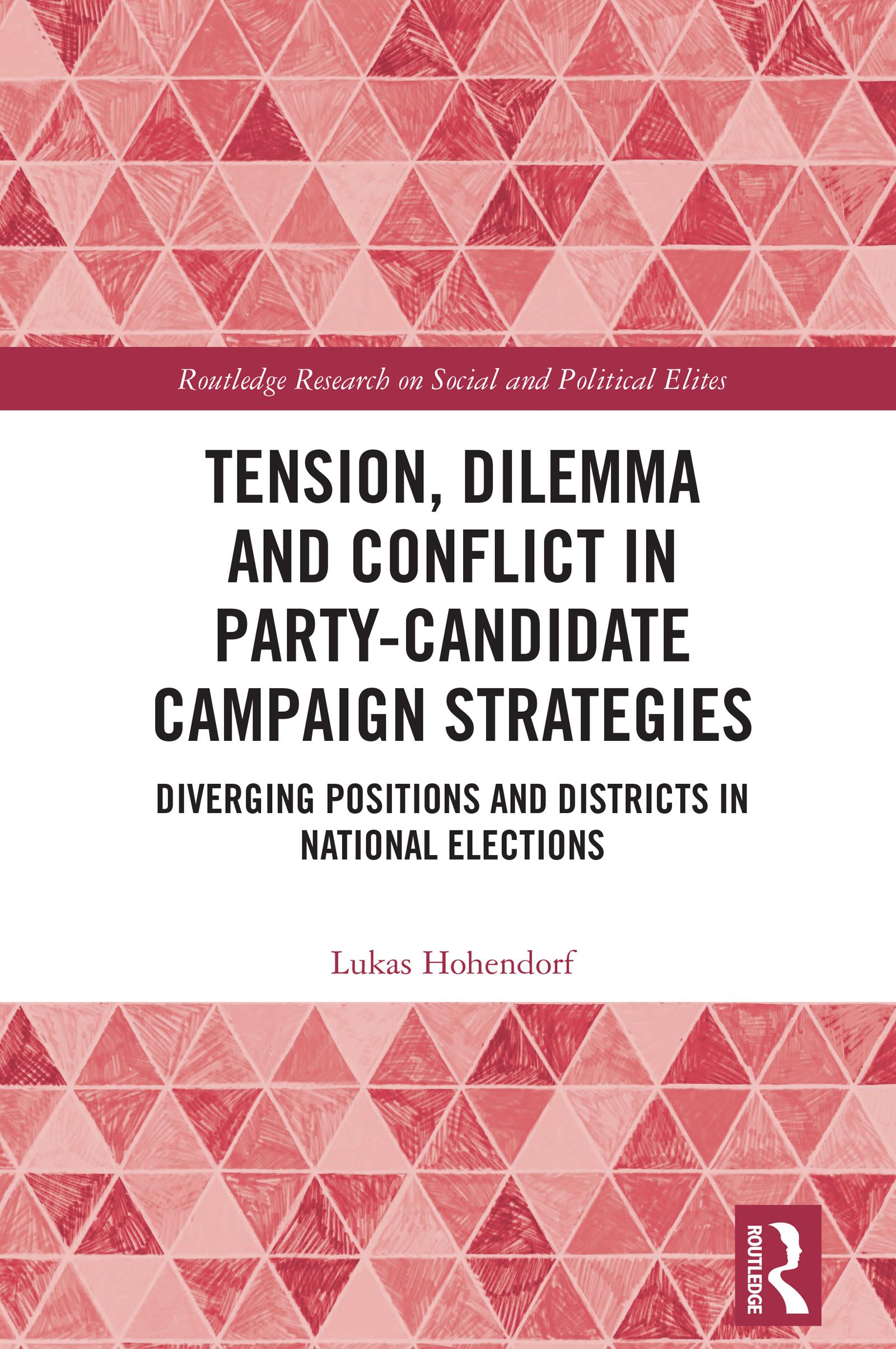
This book examines the campaign communication of political candidates in parliamentary democracies, set within the broader trends of globalization and political personalization.
It explores how district candidates balance local voter preferences, national party demands, and personal beliefs in their campaigns. Using Germany as a case study and drawing on a wide range of data sources, the book reveals how situational factors, such as electoral rules, candidate experience, and local party organization, influence campaign strategies. It demonstrates how campaign positions in parliamentary democracies often deviate from national party stances, with implications on party unity and democratic representation. Framed by the pressing challenges of regional divergence and the rise of political personalization, the book shows why studying individual candidate behavior – rather than simply focusing on party leaders – is crucial for understanding modern democratic systems.
This book will be a key resource for scholars, students, and practitioners in the fields of political parties and elites, electoral studies, political communication, and, more broadly, comparative politics.
Pay easily by card, Klarna, Apple Pay or Google Pay. Not happy? You always have a 14-day money-back guarantee. Read more in our terms. If you have any questions, email us at hello@memmo.org.
Memmo makes studying easier – wherever you are in the world. We bring your course books and smart study tools together in one place: summaries, quizzes, podcasts and flashcards. Plus Ted, your study buddy who answers anything you wonder. Over 50,000 students already study here – built to help you learn faster and stress less.