
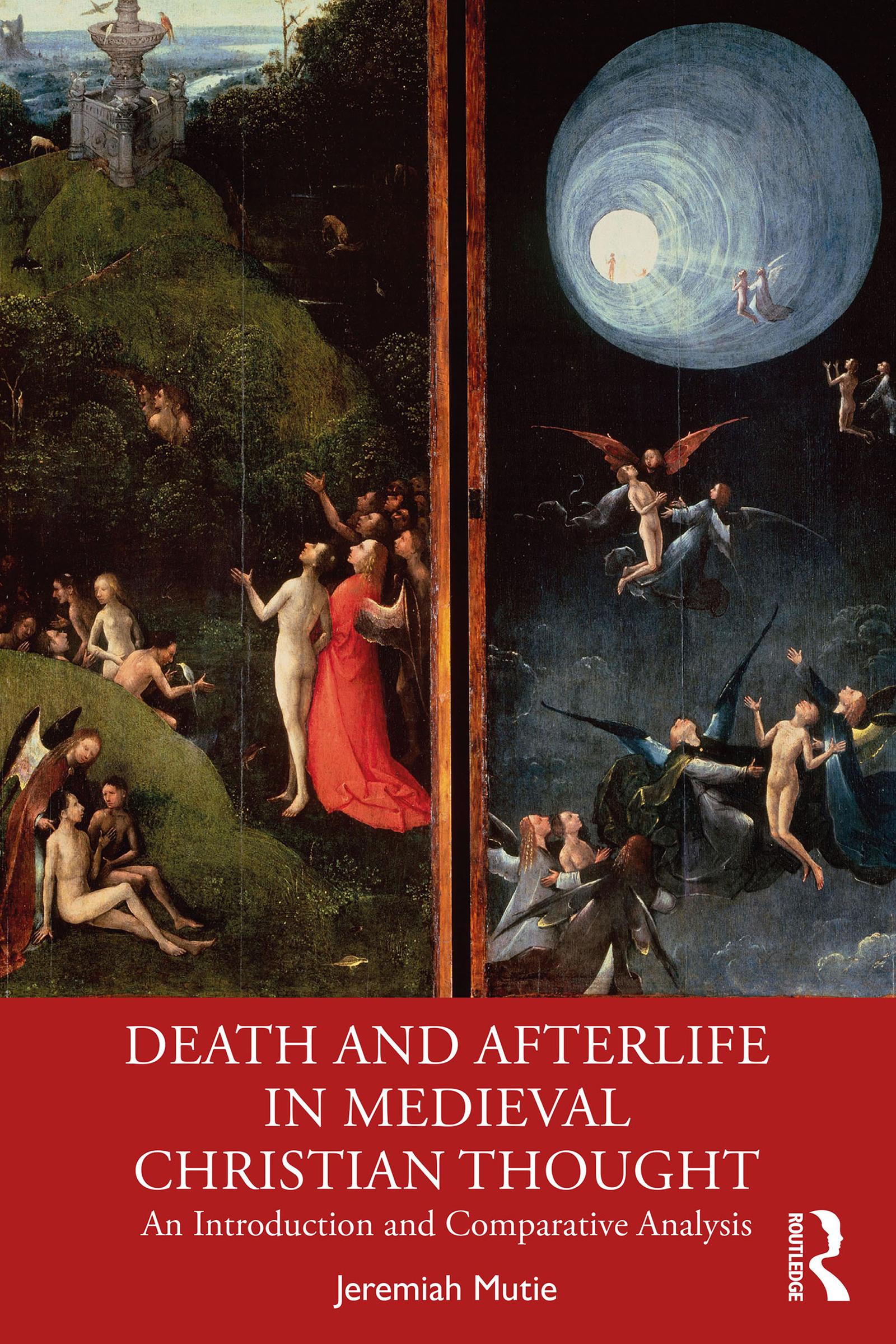
Death and Afterlife in Medieval Christian Thought explores how medieval Christians conceived the changing ideas of death and what happens thereafter to both the material and immaterial aspects of a person.
Where much scholarship has addressed this topic from a Western point of view, this book asks how these ideas emerged and progressed over this long period of time in both Western and Eastern medieval Christianities. The work examines the two leading motifs of death and the afterlife in Western medieval Christian thought: Purgatory and the cult of the saints. It then proceeds to shift the spotlight to conceptions of death in Eastern Christianity, all the while maintaining a comparative approach. This book not only delves into the theoretical, but draws on archaeological evidence, such as artefacts, to provide a broader view of the evidence. Ultimately, it finds that medieval Christians continued the process that started in Christianity’s earliest days of borrowing and modifying existing ideas of death and the afterlife in order to produce a distinctive and sophisticated Christian set of beliefs.
As an accessible introduction, this book stands as a valuable resource to students, scholars and all readers interested in early medieval Christianity, the history of ideas, and the history of death.
Pay easily by card, Klarna, Apple Pay or Google Pay. Not happy? You always have a 14-day money-back guarantee. Read more in our terms. If you have any questions, email us at hello@memmo.org.
Memmo makes studying easier – wherever you are in the world. We bring your course books and smart study tools together in one place: summaries, quizzes, podcasts and flashcards. Plus Ted, your study buddy who answers anything you wonder. Over 50,000 students already study here – built to help you learn faster and stress less.