
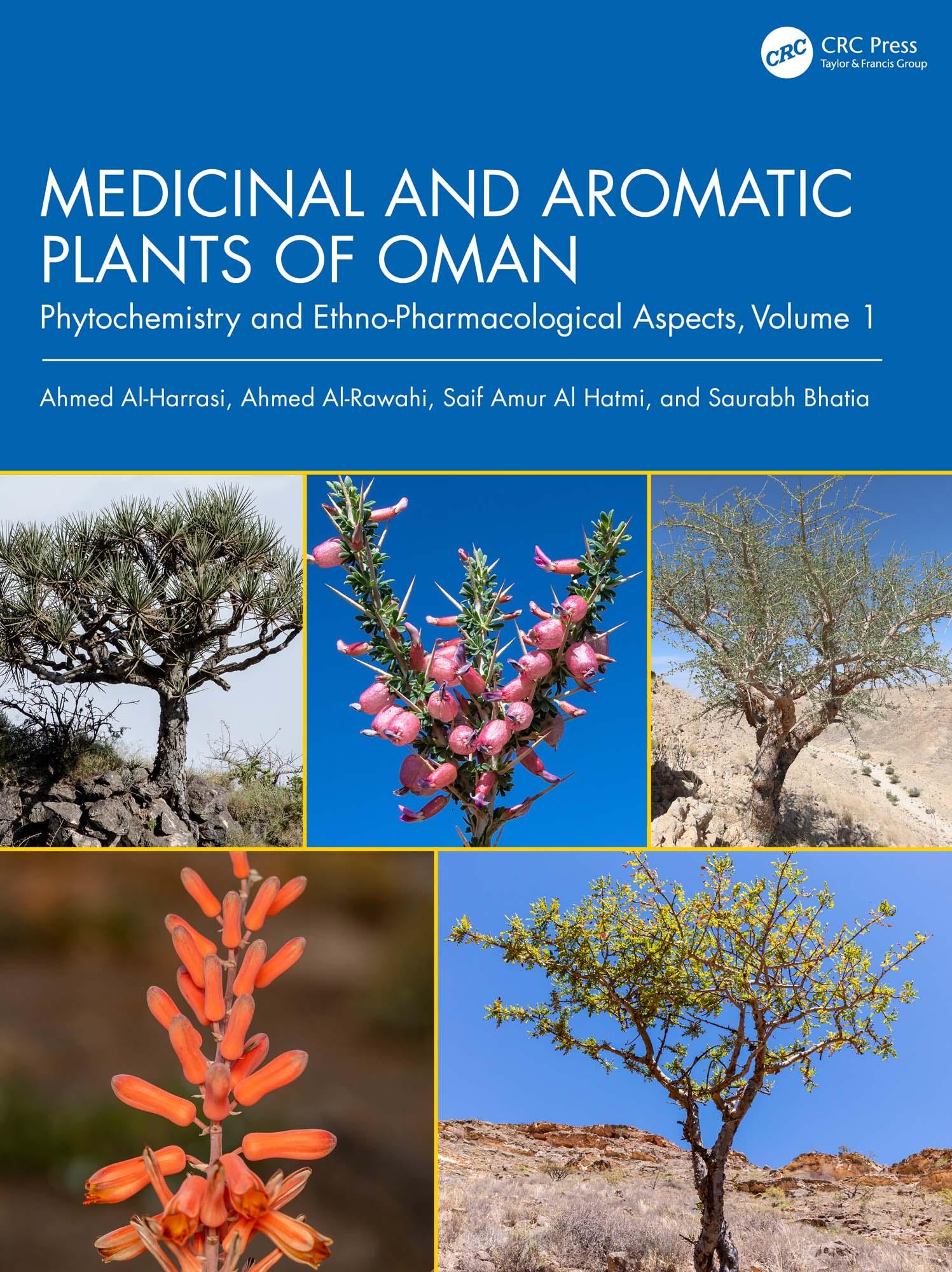
Medicinal plants have received an impetus recently due to the revival of attention to natural products in the form of herbal medicines, demanding convincing knowledge on their phytochemistry, status, cultivation, and utilization. Medicinal plants in the Sultanate of Oman have tremendous potential in terms of ethnomedicinal and food applications. However, these treasures of Oman have not been fully explored until recently. Several medicinal plants indigenous to Oman have been used for several centuries in the form of traditional medicine for the prevention and treatment of diseases. The first volume of this book covers information about sustainable use of selected medicinal plants, their phytochemistry, and efforts made to conserve them to ensure continued supply. This volume reveals systematic information about 104 to 151 promising medicinal plants in Oman with botanical names, common names, synonyms, local names, family, habitat and distribution, chemical constituents, pharmacological activity, uses (common uses, traditional uses and therapeutic uses), toxicity and clinical data, patents, and their marketed products or industrial application. Each of the 151 plants has a high-resolution color photograph (where available), plant description, and location. The chapters are written by well-experienced authors in the field. A uniform chapter structure throughout this book has been designed to maintain consistency. This book is especially valuable to academicians, phytochemists, pharmacologists, herbalists, agriculturists, biotechnologists, natural product researchers and industrialists involved in the production of herbal drugs. Salient features of this book are as follows:
- Ιt provides common uses, traditional uses, and therapeutic uses of 132 medicinal plants
- It covers the detailed phytochemistry of each medicinal plant
- It offers systematic information about the geographical distribution of these plants
- Updated information about the pharmacology, mechanisms of action, and toxicity of these plants is covered in detail
Overall, this book provides an overview of botanical description, geographical distribution, chemical composition and uses of the medicinal plants native to the Sultanate of Oman.
Many of the plants listed in this book—particularly in Volume One—are endemic, near‑endemic, or regionally endemic medicinal and aromatic species of Oman, which remain largely unexplored and are supported by limited scientific literature. Due to this scarcity of information, the authors have included relevant data from closely related species within the same genus. This approach enables readers to better understand the chemistry, taxonomy, and potential uses of the respective species in the context of their taxonomic relatives.
Pay easily by card, Klarna, Apple Pay or Google Pay. Not happy? You always have a 14-day money-back guarantee. Read more in our terms. If you have any questions, email us at hello@memmo.org.
Memmo makes studying easier – wherever you are in the world. We bring your course books and smart study tools together in one place: summaries, quizzes, podcasts and flashcards. Plus Ted, your study buddy who answers anything you wonder. Over 50,000 students already study here – built to help you learn faster and stress less.