
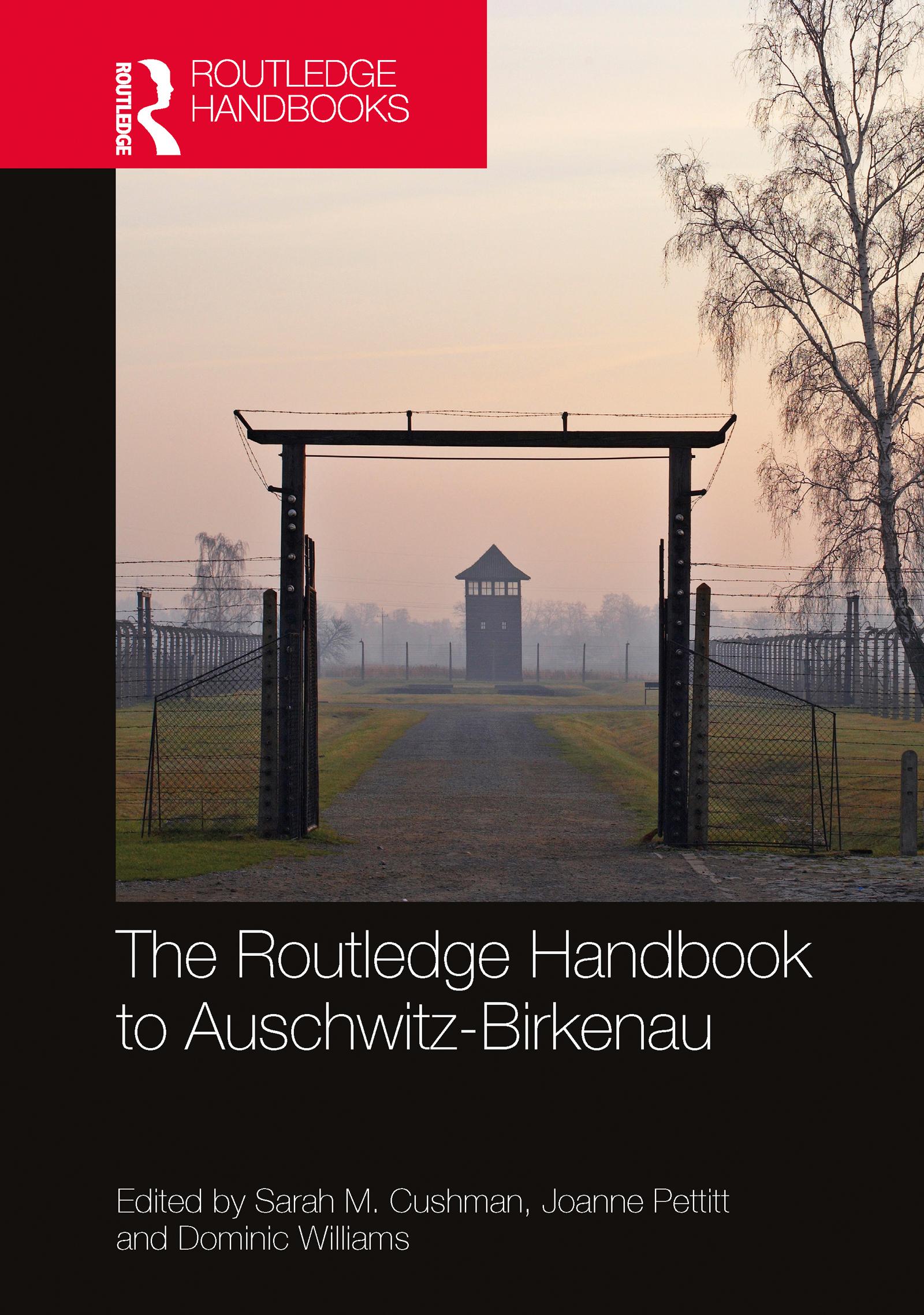
This handbook examines Auschwitz-Birkenau as both a site and a symbol of Nazi genocide. Scholars from a range of disciplinary perspectives consider Auschwitz’s history by engaging with Holocaust historiography and its place in Holocaust memory and representation, illustrating their mutual influence.
The chapters bring new insights to topics that other studies of Auschwitz have explored before, such as the Sonderkommando, the Czech family camp, and literary representations of Auschwitz. Other chapters cover recent developments and more neglected areas, such as the experience and memory of Romani prisoners, the fate of Soviet prisoners of war, and Auschwitz’s presence on social media. The handbook also responds to a number of recent trends and new paradigms in Holocaust Studies, including contributions from the fields of Environmental Studies, Spatial Studies, and Gender Studies.
As a crucial overview of the topic of Auschwitz-Birkenau and an introduction to its most recent and fruitful scholarly approaches, this handbook will be a valuable resource for undergraduates from second year and up, as well as for graduate students and researchers seeking a survey of the field.
Pay easily by card, Klarna, Apple Pay or Google Pay. Not happy? You always have a 14-day money-back guarantee. Read more in our terms. If you have any questions, email us at hello@memmo.org.
Memmo makes studying easier – wherever you are in the world. We bring your course books and smart study tools together in one place: summaries, quizzes, podcasts and flashcards. Plus Ted, your study buddy who answers anything you wonder. Over 50,000 students already study here – built to help you learn faster and stress less.