
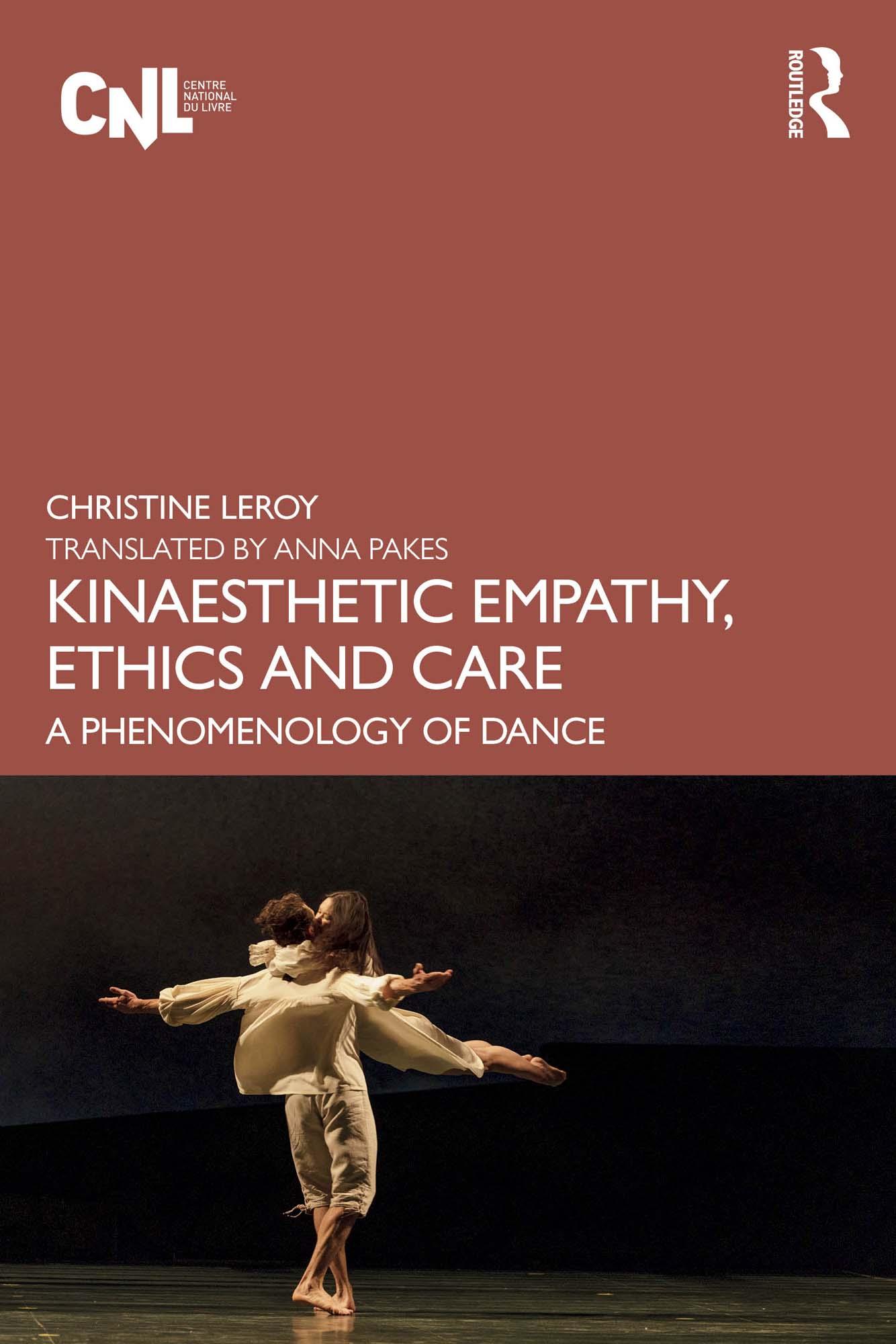
Kinaesthetic Empathy, Ethics and Care develops a philosophy of dance that highlights the psychological, aesthetic and ethical significance of dancer-viewer interaction in the moment of performance.
Leroy draws on phenomenology, psychoanalysis, dance studies and care ethics to analyse kinaesthetic empathy as a form of intersubjective performance. She shows how, in the contagion or interweaving between corporealities of dancer and viewer, each party supports or upholds the other in a process of mutual care. Dance movement involves a play with gravity which alleviates the weight of repressed desire and redefines the contours of the body-image, facilitating psychological self-repair. Through projection into the body of another, we can develop our independence and autonomy as subjects, even in the midst of relational being. Richly illustrated with theatre dance examples, Leroy’s argument develops a corporeal basis for ethics and reveals how a return to the moving body through dance helps lay the foundations for a more humane society.
This book will interest philosophers, dance researchers, care ethicists and care practitioners, as well as advanced students in these fields and general readers curious about the aesthetic and ethical potency of theatre dance.
Pay easily by card, Klarna, Apple Pay or Google Pay. Not happy? You always have a 14-day money-back guarantee. Read more in our terms. If you have any questions, email us at hello@memmo.org.
Memmo makes studying easier – wherever you are in the world. We bring your course books and smart study tools together in one place: summaries, quizzes, podcasts and flashcards. Plus Ted, your study buddy who answers anything you wonder. Over 75,000 students already study here – built to help you learn faster and stress less.