
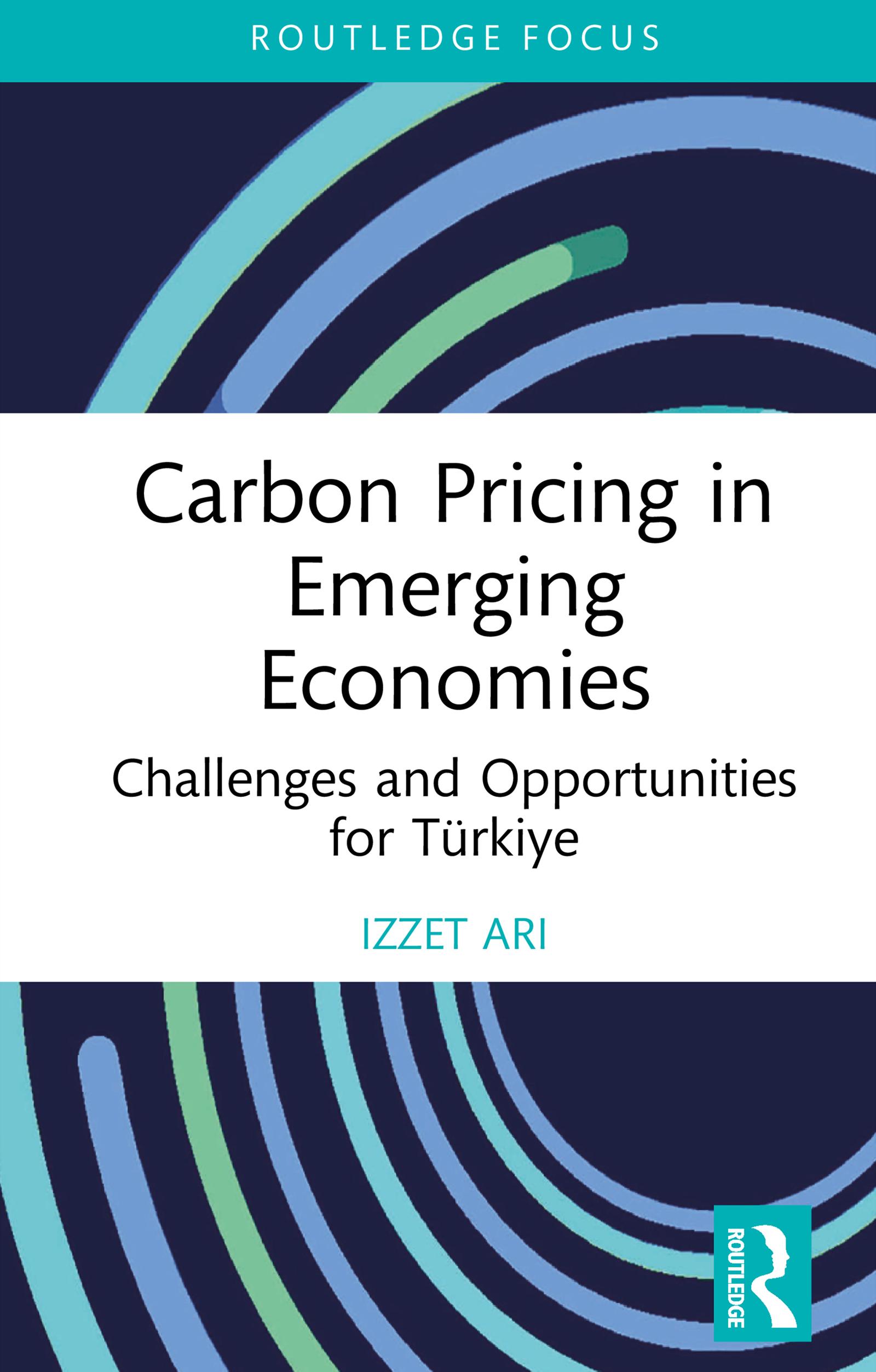
Carbon pricing is one of the key policy instruments available to help countries reach the goals of the Paris Agreement and the United Nations Framework Convention on Climate Change (UNFCCC).
This book explores the challenges and opportunities facing emerging economies in the implementation of carbon pricing with a particular focus on the case of Türkiye. After introducing the principles and practicalities of carbon pricing mechanisms, the book explores the economic feasibility of Türkiye achieving Nationally Determined Contributions (NDCs) and net zero emissions targets. It is argued that its national circumstances hinder Türkiye’s use of carbon crediting mechanisms, auctions for carbon certificate units, and building bilateral and multilateral cooperation with other countries, leaving the voluntary carbon market as the only option. The book explores the implications of this and also highlights the need for improvements and reform in Türkiye’s climate laws, public institutions, and international relations to better support carbon pricing. The book also recommends aligning carbon pricing with ongoing energy market reforms, including the replacement of fossil fuel subsidies with more targeted support.
This book will be of significant interest to readers of energy economics, environmental economics, emerging economies, and climate change more broadly.
Pay easily by card, Klarna, Apple Pay or Google Pay. Not happy? You always have a 14-day money-back guarantee. Read more in our terms. If you have any questions, email us at hello@memmo.org.
Memmo makes studying easier – wherever you are in the world. We bring your course books and smart study tools together in one place: summaries, quizzes, podcasts and flashcards. Plus Ted, your study buddy who answers anything you wonder. Over 50,000 students already study here – built to help you learn faster and stress less.