
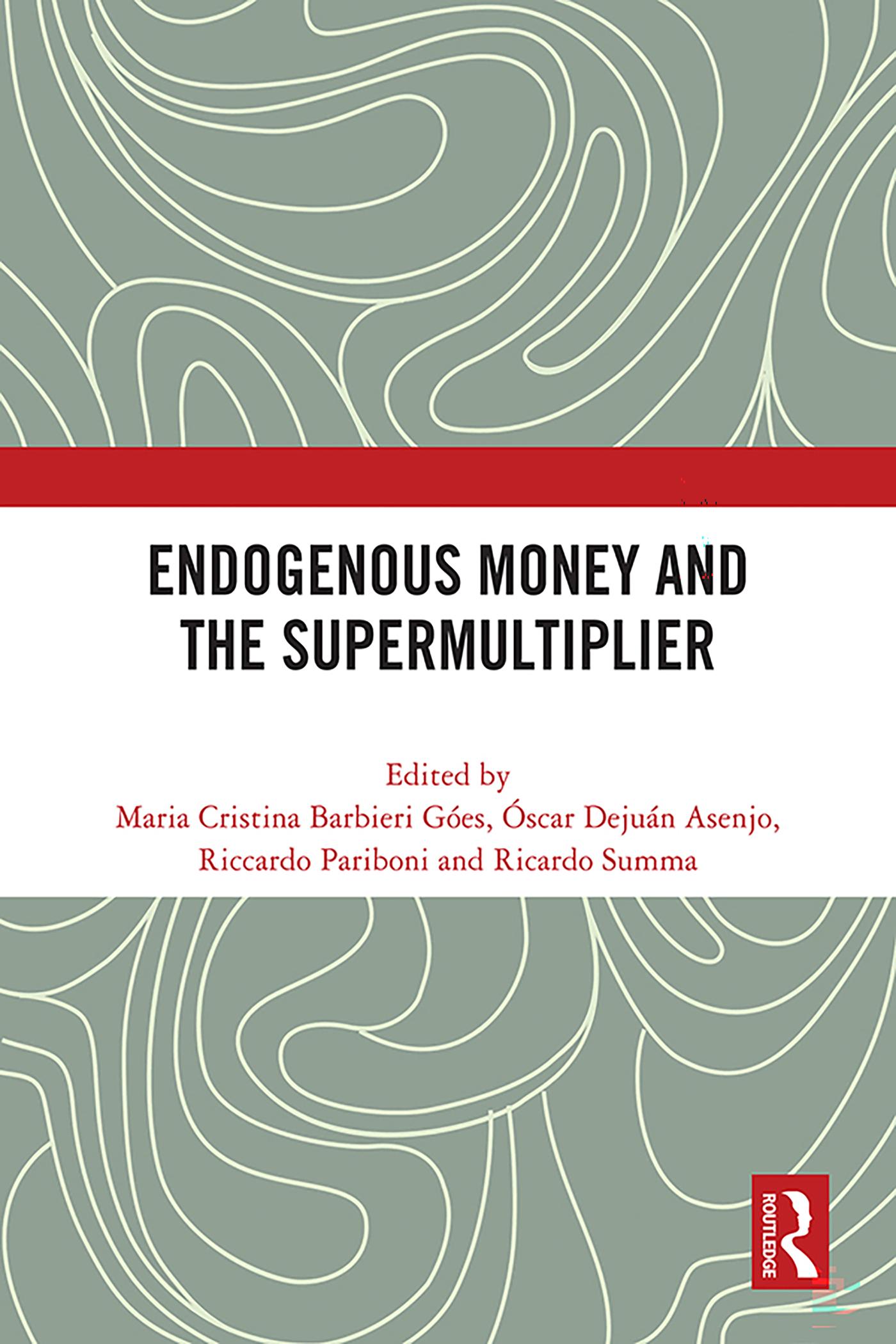
This book explores the Supermultiplier model which has rapidly evolved into a key analytical framework, embraced and debated by post-Keynesian economists across various schools of thought. At its core, the model extends Keynesian principles to the long run, asserting that economic growth and productive capacity are fundamentally shaped by effective demand. Central to this framework is the concept of autonomous demand—components of aggregate demand such as government spending, exports, and residential investment and credit-financed consumption that operate independently of income flows, driving growth and capital accumulation.
This book ventures into the relatively uncharted territory of how these autonomous demand components are financed. It highlights the indispensable role of endogenous money creation—credit expansion, state money, and external sector financing—in sustaining demand-led growth. Drawing from recent contributions, the book integrates credit and debt dynamics into the Supermultiplier model, offering insights into the financial underpinnings of autonomous demand.
A vital resource for understanding modern monetary economies, this book bridges theoretical advancements and practical policy implications, making it essential reading for economists, policymakers, and those intrigued by the intersection of demand, finance, and growth.
The chapters in this book were originally published in Review of Political Economy.
Pay easily by card, Klarna, Apple Pay or Google Pay. Not happy? You always have a 14-day money-back guarantee. Read more in our terms. If you have any questions, email us at hello@memmo.org.
Memmo makes studying easier – wherever you are in the world. We bring your course books and smart study tools together in one place: summaries, quizzes, podcasts and flashcards. Plus Ted, your study buddy who answers anything you wonder. Over 50,000 students already study here – built to help you learn faster and stress less.