
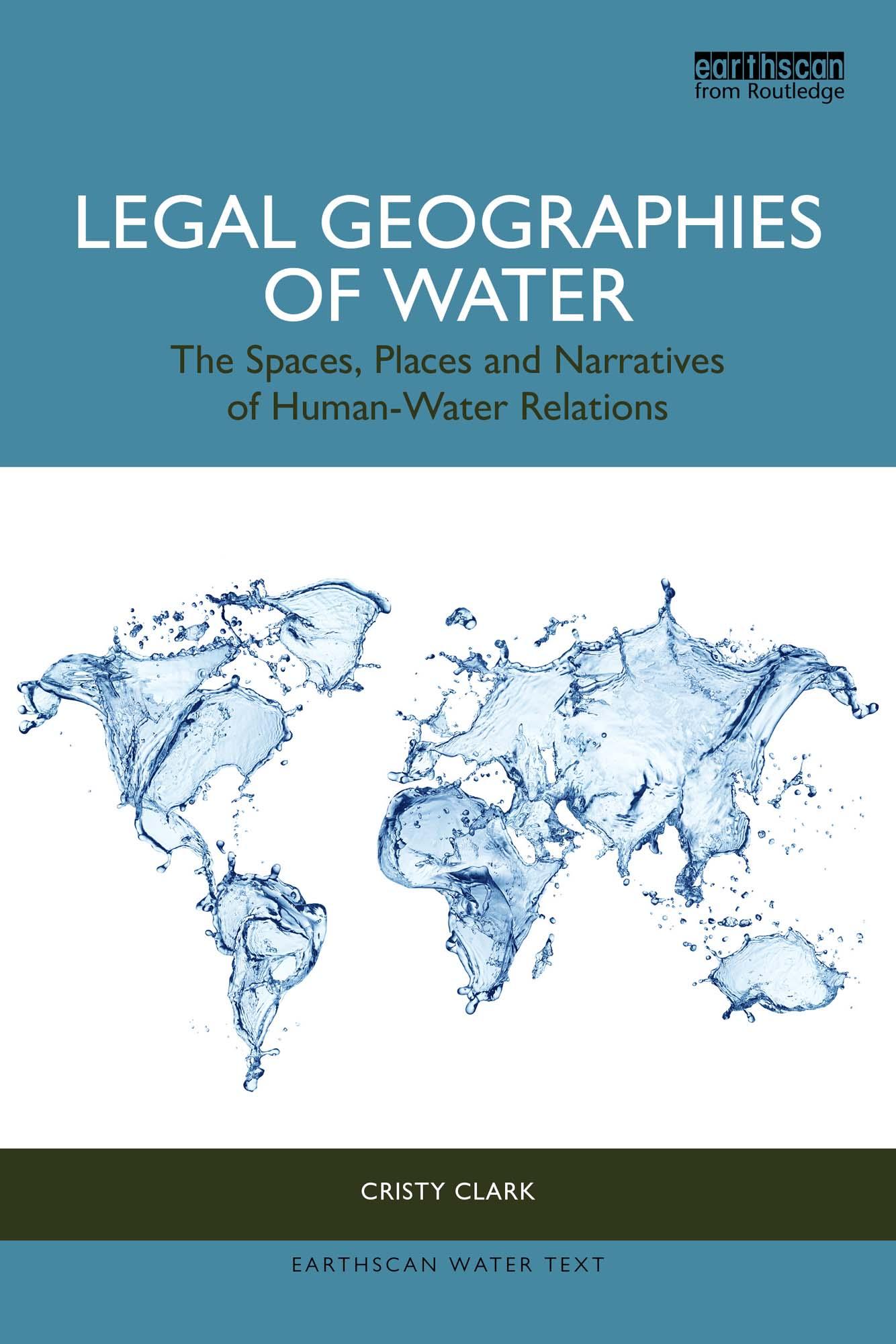
This book deepens our understanding of humanity’s diverse relationships with water and the law, providing a critical assessment of this relationship, and charting the course towards a more sustainable and just water future.
By using legal geography, this book pays particular attention to the place-based inter-relationships between water, people, and law (both formal and informal) and to the ways that law both constitutes and is constituted by the relationship between people and place. Starting in the 1980s, Chapter 2 investigates the early commodification of water through the liberalisation of rural water markets in Chile and the urban water supply and sanitation systems of England and Wales. Chapter 3 then examines the global expansion of neoliberal water governance in the 1990s, starting with donor-driven reforms in the global south and particularly Manila in the Philippines. Chapters 4 and 5 document both the grassroots response to these neoliberal water reforms and the inherent tensions in the attempts of the early 2000s to reconcile the recognition of a human right to water with the ongoing rollout of market mechanisms, both in the domestic context of South Africa and within the United Nations human rights system. Moving forward again, Chapter 6 examines the recent intensification of neoliberal water governance through financialisation and considers its specific impacts in Detroit and Flint, Michigan. Chapter 7 then considers the renewed global emphasis on living waters and Indigenous ontologies of water by examining the new legislative arrangements for the Whanganui River in Aotearoa, New Zealand. The book concludes in Chapter 8 by highlighting the stories of hope that can be found in many of the case studies explored in the book and in emerging examples from around the world.
This book is essential reading for students and scholars interested in water law, security, and justice from across a wide range of disciplines, including environmental studies, law, geography, human rights, and political ecology.
Pay easily by card, Klarna, Apple Pay or Google Pay. Not happy? You always have a 14-day money-back guarantee. Read more in our terms. If you have any questions, email us at hello@memmo.org.
Memmo makes studying easier – wherever you are in the world. We bring your course books and smart study tools together in one place: summaries, quizzes, podcasts and flashcards. Plus Ted, your study buddy who answers anything you wonder. Over 50,000 students already study here – built to help you learn faster and stress less.