
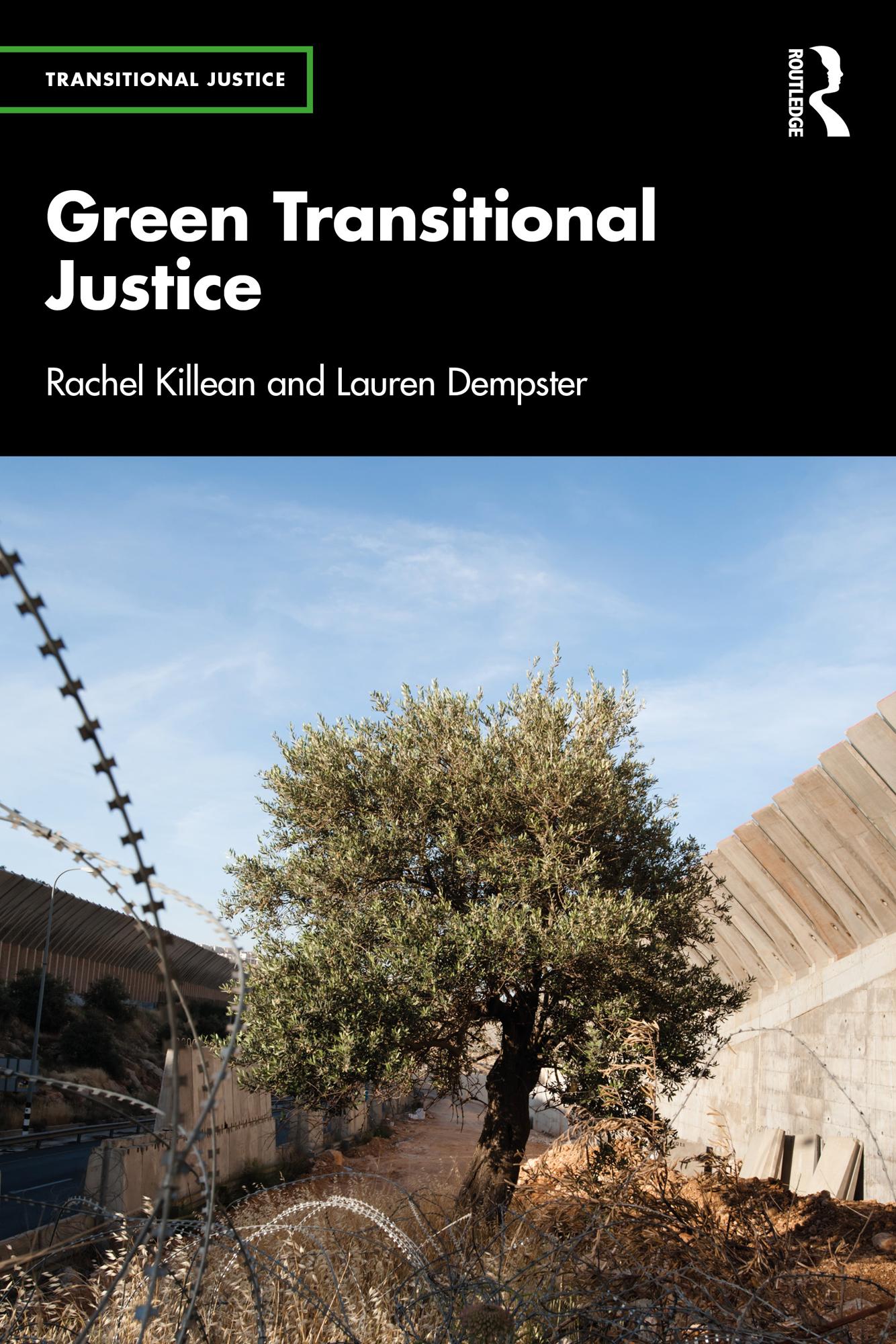
This book rethinks the boundaries of transitional justice, urging scholars and practitioners to confront the often-overlooked nexus between mass violence and ecological harm.
Through an in-depth analysis of the field’s limitations – such as its anthropocentric legalism, neocolonial practices, and alignment with neoliberalism – the book critiques the historical marginalisation of Nature in transitional justice discourse and practice. It argues that ignoring environmental harm not only undermines the possibility of holistic justice but also perpetuates structural violence and inequality. In response, the book sketches a ‘greener’ transitional justice, integrating principles from environmental justice, Indigenous knowledge systems, and ecocentric perspectives. It explores the possibilities of recognising Nature as a victim of mass violence, adapting existing mechanisms to incorporate environmental harm, and fostering transformative approaches premised on the interdependence of human and ecological well-being.
This book is written for students, researchers, and practitioners of transitional justice and fields related to conflict transformation, peacebuilding, environmental protection, and development.
Pay easily by card, Klarna, Apple Pay or Google Pay. Not happy? You always have a 14-day money-back guarantee. Read more in our terms. If you have any questions, email us at hello@memmo.org.
Memmo makes studying easier – wherever you are in the world. We bring your course books and smart study tools together in one place: summaries, quizzes, podcasts and flashcards. Plus Ted, your study buddy who answers anything you wonder. Over 50,000 students already study here – built to help you learn faster and stress less.