
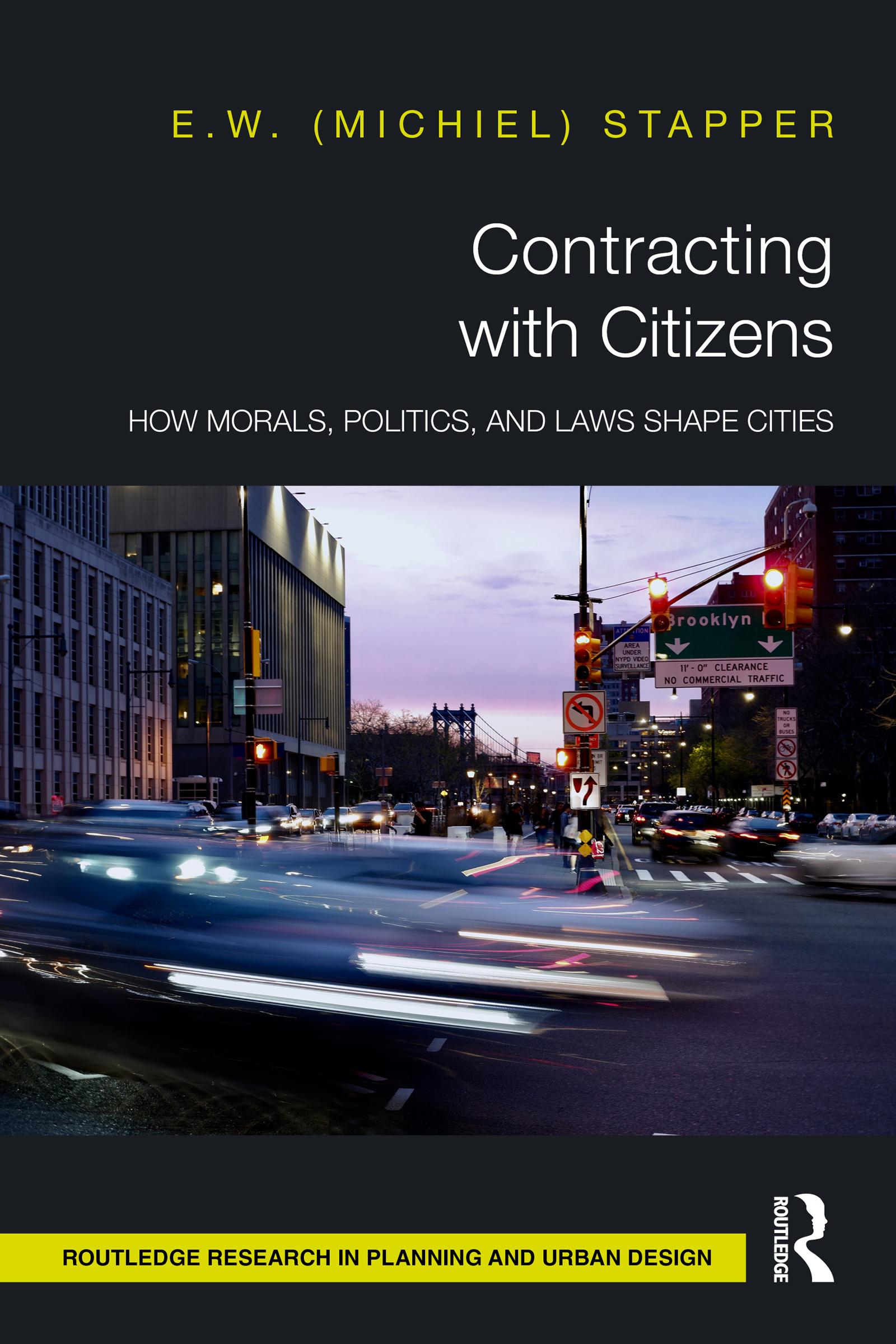
This book demonstrates that contracts, community intermediaries, and participatory processes are closely interlinked, and they can change urban politics.
In participatory processes, residents negotiate with policymakers about the future of their neighborhood. In the last few decades, this happened increasingly in co-creation sessions where citizens are deemed to have an equal position vis-a-vis developers and civil servants. The goal of this book is to understand and theorize how these negotiations affect collective action. The book will scrutinize the role of contracts, community intermediaries, and participatory processes in development projects and planning policies. Using a comparative case study of Amsterdam, Hamburg, and New York, this book reveals how seemingly fresh and novel planning practices are used to justify processes of capital accumulation and reveals how morals, politics, and law can create institutional change.
The book presents a novel theoretical approach to studying urban politics, putting emphasis on (private) law and the material arrangements of participatory processes. It will be of interest to researchers and students of planning, geography, sociology, public administration, and law and will provide valuable lessons for practitioners interested in understanding the effects of contractual governance on neighborhoods.
Pay easily by card, Klarna, Apple Pay or Google Pay. Not happy? You always have a 14-day money-back guarantee. Read more in our terms. If you have any questions, email us at hello@memmo.org.
Memmo makes studying easier – wherever you are in the world. We bring your course books and smart study tools together in one place: summaries, quizzes, podcasts and flashcards. Plus Ted, your study buddy who answers anything you wonder. Over 75,000 students already study here – built to help you learn faster and stress less.