
The challenges of teaching a successful introductory sociology course today demand materials very different from the norm. It is a question of making the practice of sociological thinking meaningful, rigorous, and relevant to today’s world of undergraduates.
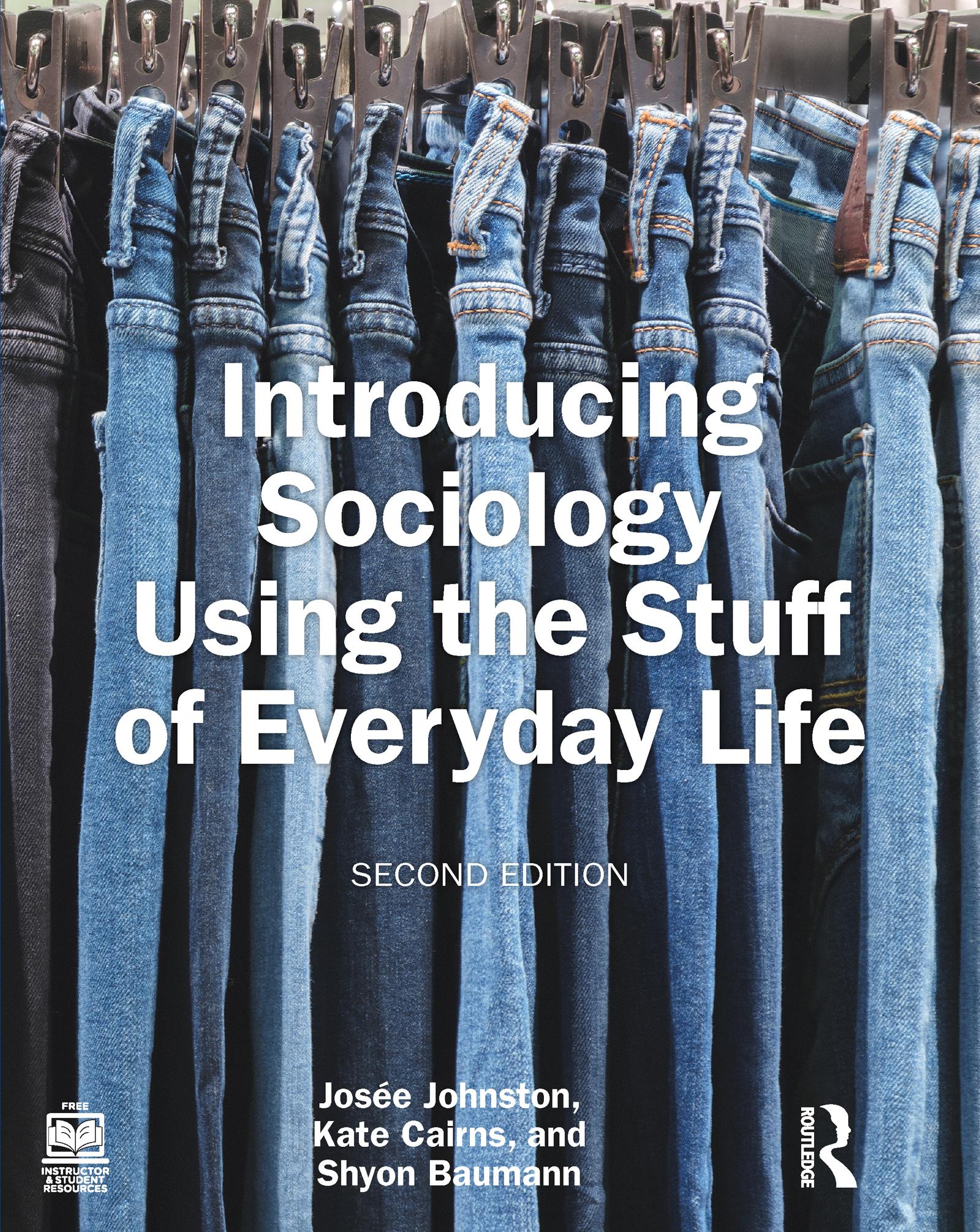
This comparatively concise, highly visual, and engaging book offers a refreshingly new way forward to reach students, using one of the most powerful tools in a sociologist’s teaching arsenal – the familiar stuff in students’ everyday lives throughout the world: the jeans they wear to class, the coffee they drink each morning, or the phones their professors tell them to put away during lectures.
A focus on consumer culture, seeing the strange in the familiar, is not only interesting for students; it is also (the authors suggest) pedagogically superior to more traditional approaches. By engaging students through their stuff, this book moves beyond teaching about sociology to helping instructors teach the practice of sociological thinking. It moves beyond describing what sociology is so that students can practice what sociological thinking can do. This pedagogy also posits a relationship between teacher and learner that is bi-directional. Many students feel a sense of authority in various areas of consumer culture, and they often enjoy sharing their knowledge with fellow students and with their instructor. Opening up the sociology classroom to discussion of these topics validates students’ expertise on their own life-worlds. Teachers, in turn, gain insight from the goods, services, and cultural expectations that shape students’ lives.
While innovative, the book has been carefully crafted to make it as useful and flexible as possible for instructors aiming to build core sociological foundations in a single semester. A map on pages xix–xx identifies core sociological concepts covered so that a traditional syllabus as well as individual lectures can easily be maintained. Theory, method, and active learning exercises in every chapter constantly encourage the sociological imagination as well as the “doing” of sociology.
This new edition is thoroughly revised and updated, incorporating the latest research around material sociology, culture, and object-oriented studies. New teaching materials and illustrations are included. Online resources to support teaching and learning include:
- Videos, flashcards, quizzes, and further reading
- Instructor’s manual, PowerPoints, and test bank
Pay easily by card, Klarna, Apple Pay or Google Pay. Not happy? You always have a 14-day money-back guarantee. Read more in our terms. If you have any questions, email us at hello@memmo.org.
Memmo makes studying easier – wherever you are in the world. We bring your course books and smart study tools together in one place: summaries, quizzes, podcasts and flashcards. Plus Ted, your study buddy who answers anything you wonder. Over 50,000 students already study here – built to help you learn faster and stress less.