
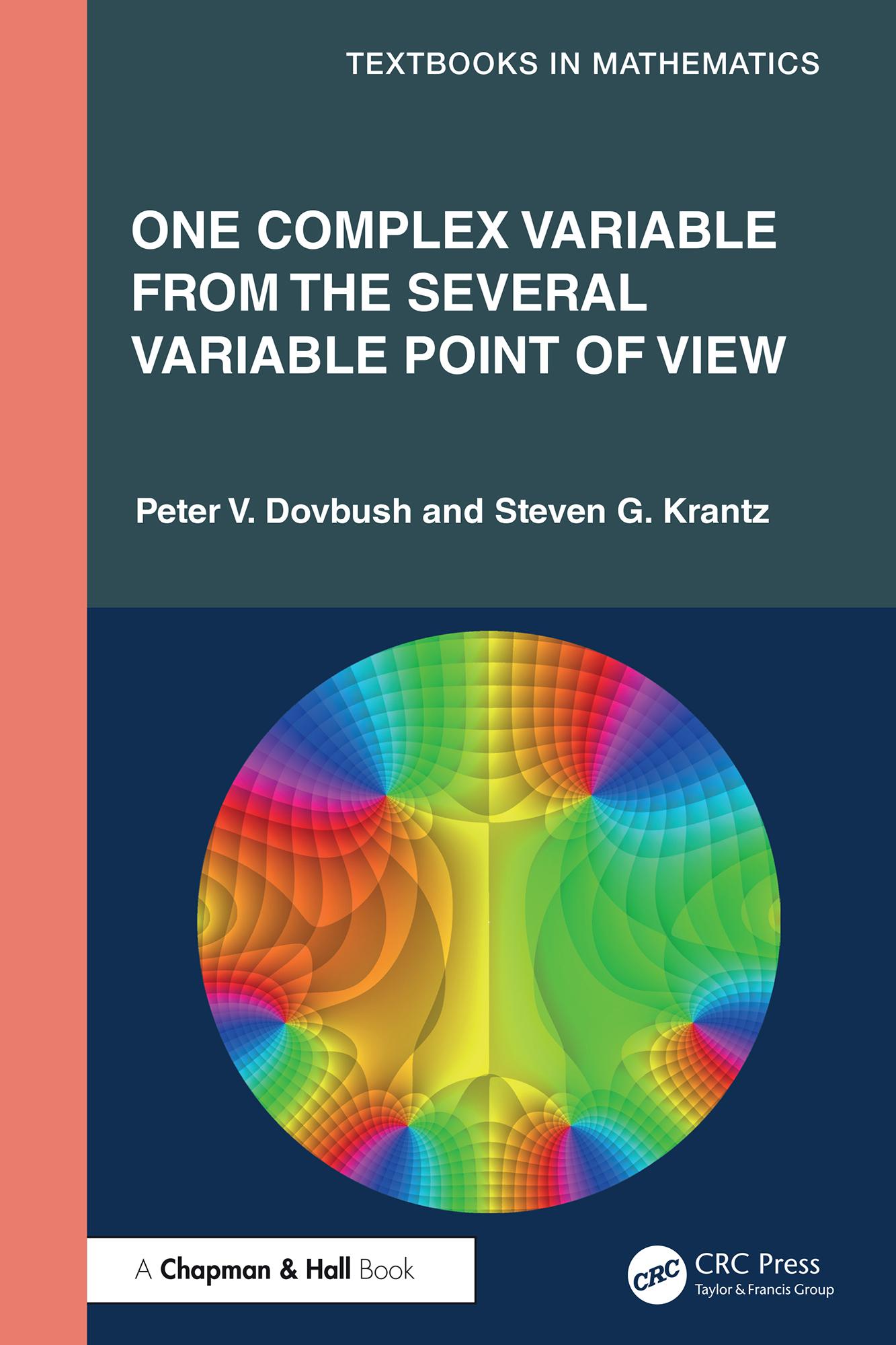
Traditionally speaking, those who study the function theory of one complex variable spend little or no time thinking about several complex variables. Conversely, experts in the function theory of several complex variables do not consider one complex variable. One complex variable is the inspiration and testing ground for several complex variables, and several complex variables are the natural generalization of one complex variable.
The authors’ thesis here is that these two subject areas have much in common. These subject areas can gain a lot by learning to communicate with each other. These two fields are logically connected, and each can be used to explain and put the other into context. This is the purpose of this book.
The point of view and the methodology of the two subject areas are quite different. One complex variable is an aspect of traditional hard analysis. Several complex variables are more like algebraic geometry and differential equations, with some differential geometry thrown in. The authors intend to create a marriage of the function theory of one complex variable and the function theory of several complex variables, leading to a new and productive dialogue between the two disciplines.
The hope is for this book to foster and develop this miscegenation in a manner that leads to new collaborations and developments. There is much fertile ground here, and this book aims to breathe new life into it.
Pay easily by card, Klarna, Apple Pay or Google Pay. Not happy? You always have a 14-day money-back guarantee. Read more in our terms. If you have any questions, email us at hello@memmo.org.
Memmo makes studying easier – wherever you are in the world. We bring your course books and smart study tools together in one place: summaries, quizzes, podcasts and flashcards. Plus Ted, your study buddy who answers anything you wonder. Over 75,000 students already study here – built to help you learn faster and stress less.