
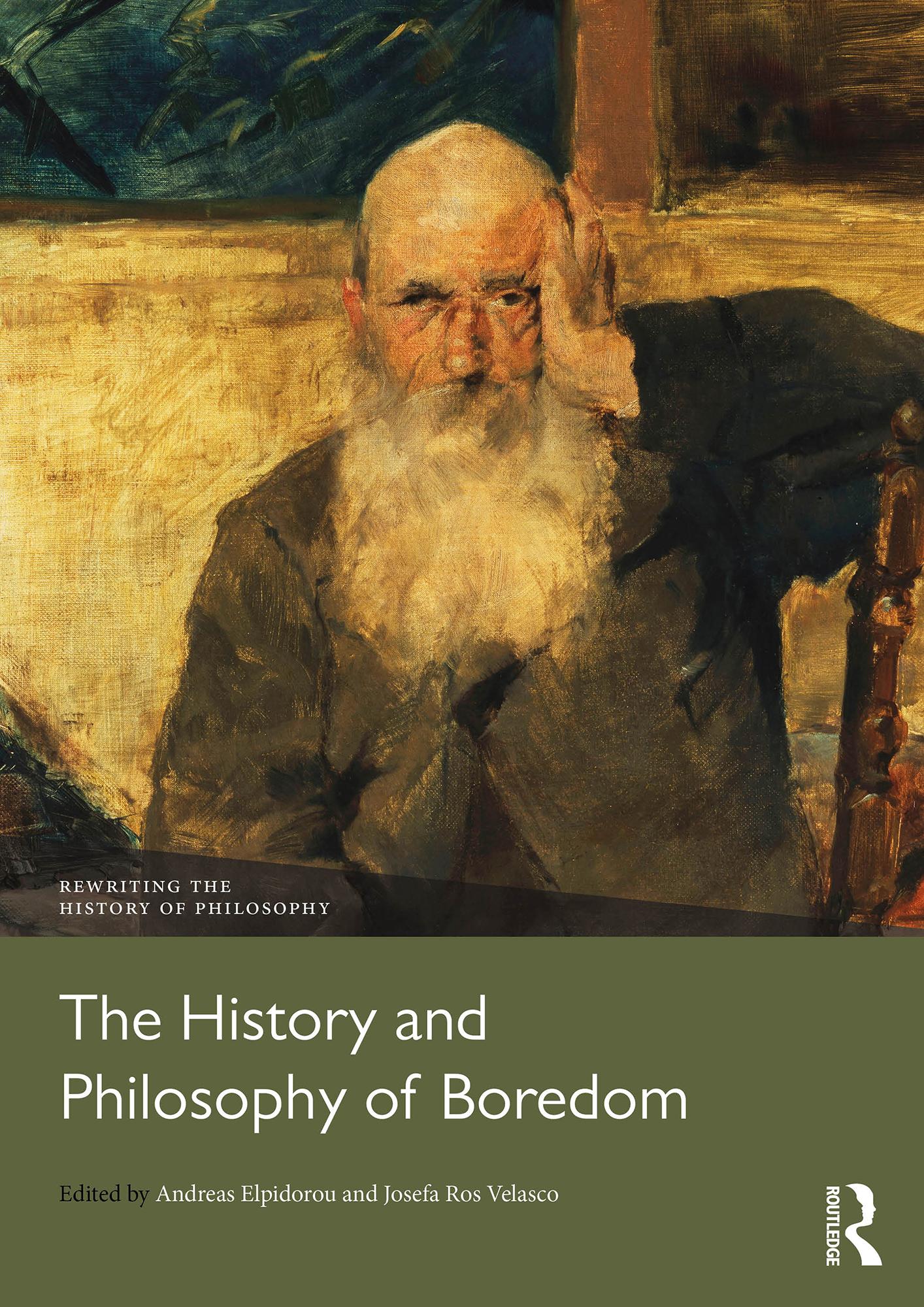
From Lucretius’s horror loci and Buddhist drowsiness to the religious boredom of acedia and the philosophical explorations of Kant, Schopenhauer, Kierkegaard, and Heidegger, boredom has long been a subject of philosophical fascination. Its story, unfolding through millennia, encompasses apathy, weariness, disaffection, melancholy, ennui, tedium, and monotony. Today, boredom assumes new forms: the drudgery of precarious work, the alienation of neoliberalism, the emptiness of leisure, and the overstimulation of our hyperconnected, technologically saturated lives.
The History and Philosophy of Boredom is an outstanding collection, exploring boredom’s intellectual history from its early origins in classical thought to its contemporary manifestations. Containing eighteen specially commissioned chapters by an international team of contributors, the volume is organized into four thematic parts:
- Ancient Philosophical Perspectives
- Religious and Medieval Explorations
- Modern Philosophical Investigations
- Critical and Interdisciplinary Approaches
Topics include boredom in Socratic dialogue, Daoist and Buddhist traditions, Stoicism, and Cynicism; the religious significance of boredom in Judaism and early Christianity; boredom’s role in the works of Kant, Kierkegaard, Schopenhauer, Mill, and Nietzsche; philosophical pessimism; phenomenological approaches; boredom as a political phenomenon; and boredom’s intersections with capitalism, socialism, racial identity, and transhumanism.
The History and Philosophy of Boredom is indispensable for students and researchers in the history of philosophy, emotion studies, phenomenology, and moral psychology. It will also interest scholars in religion, classics, sociology, and the history of psychology.
Pay easily by card, Klarna, Apple Pay or Google Pay. Not happy? You always have a 14-day money-back guarantee. Read more in our terms. If you have any questions, email us at hello@memmo.org.
Memmo makes studying easier – wherever you are in the world. We bring your course books and smart study tools together in one place: summaries, quizzes, podcasts and flashcards. Plus Ted, your study buddy who answers anything you wonder. Over 50,000 students already study here – built to help you learn faster and stress less.