
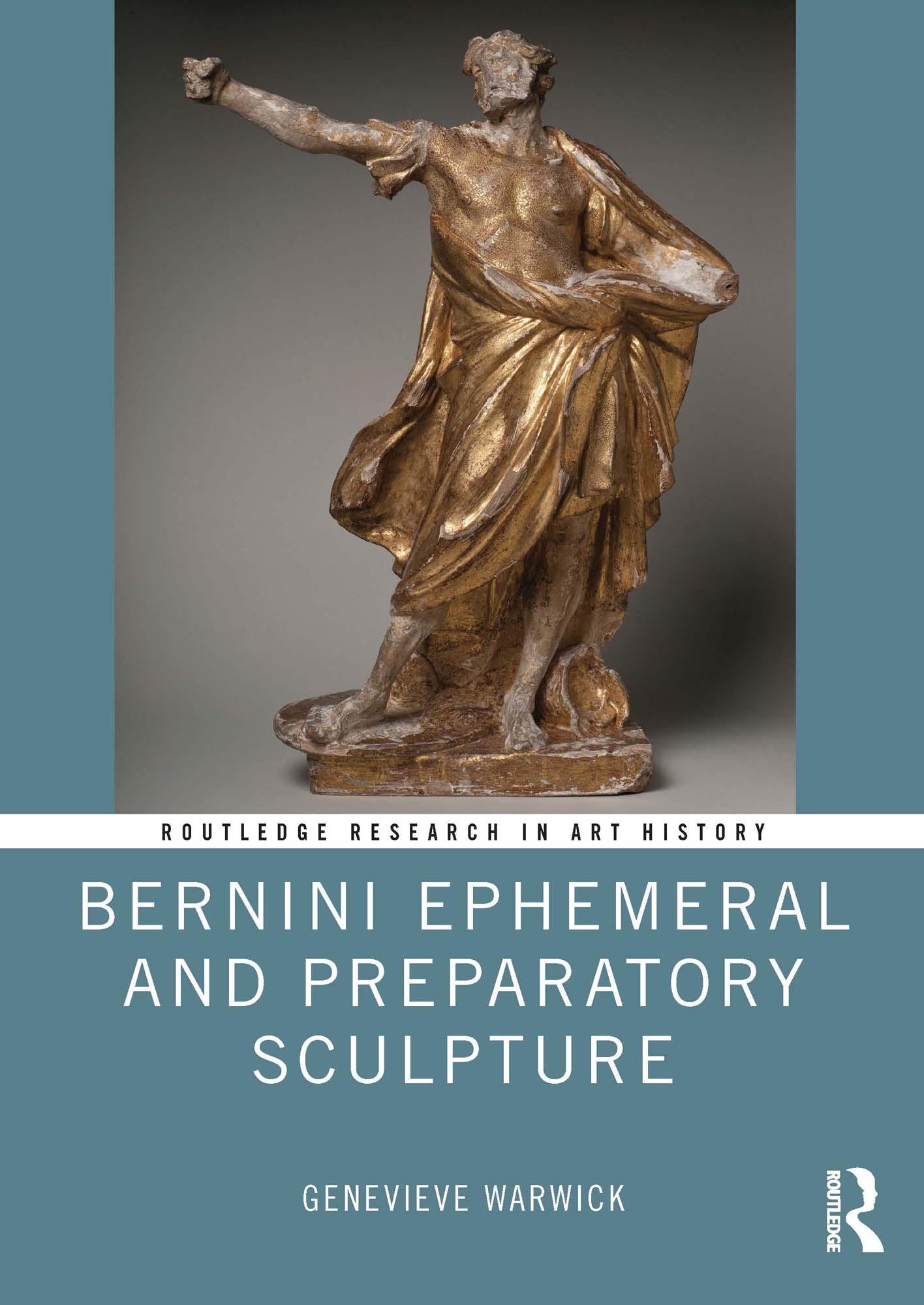
Taking up questions of artists’ materials and technical processes currently at the vanguard of art-historical scholarship, this book studies the contiguity and interchange of workshop methods in the linked fabrication of both ephemeral and preparatory works by Bernini.
Genevieve Warwick argues that the ephemeral arts of ritual occasion acted as a locus of artistic experiment for the artist in many respects similar to his use of preparatory models, to suggest that Bernini’s artistry sprang from the fabric of ritual in both material and cultural terms. From processional floats to court stage sets for the ritual occasions of church and state, such ephemeral arts were largely made of wax, clay, papier mâché, wood, stucco and plaster, assembled into scenographic ensembles with textiles, canvas and paint. Similarly, Bernini’s preparatory models for marble or bronze sculpture were of plaster and clay, even mud and straw, or wax and painted wood, as plentiful and affordable materials that were readily available for use and reuse as required.
This book will be of interest to scholars working in art history and Renaissance studies.
Pay easily by card, Klarna, Apple Pay or Google Pay. Not happy? You always have a 14-day money-back guarantee. Read more in our terms. If you have any questions, email us at hello@memmo.org.
Memmo makes studying easier – wherever you are in the world. We bring your course books and smart study tools together in one place: summaries, quizzes, podcasts and flashcards. Plus Ted, your study buddy who answers anything you wonder. Over 50,000 students already study here – built to help you learn faster and stress less.