
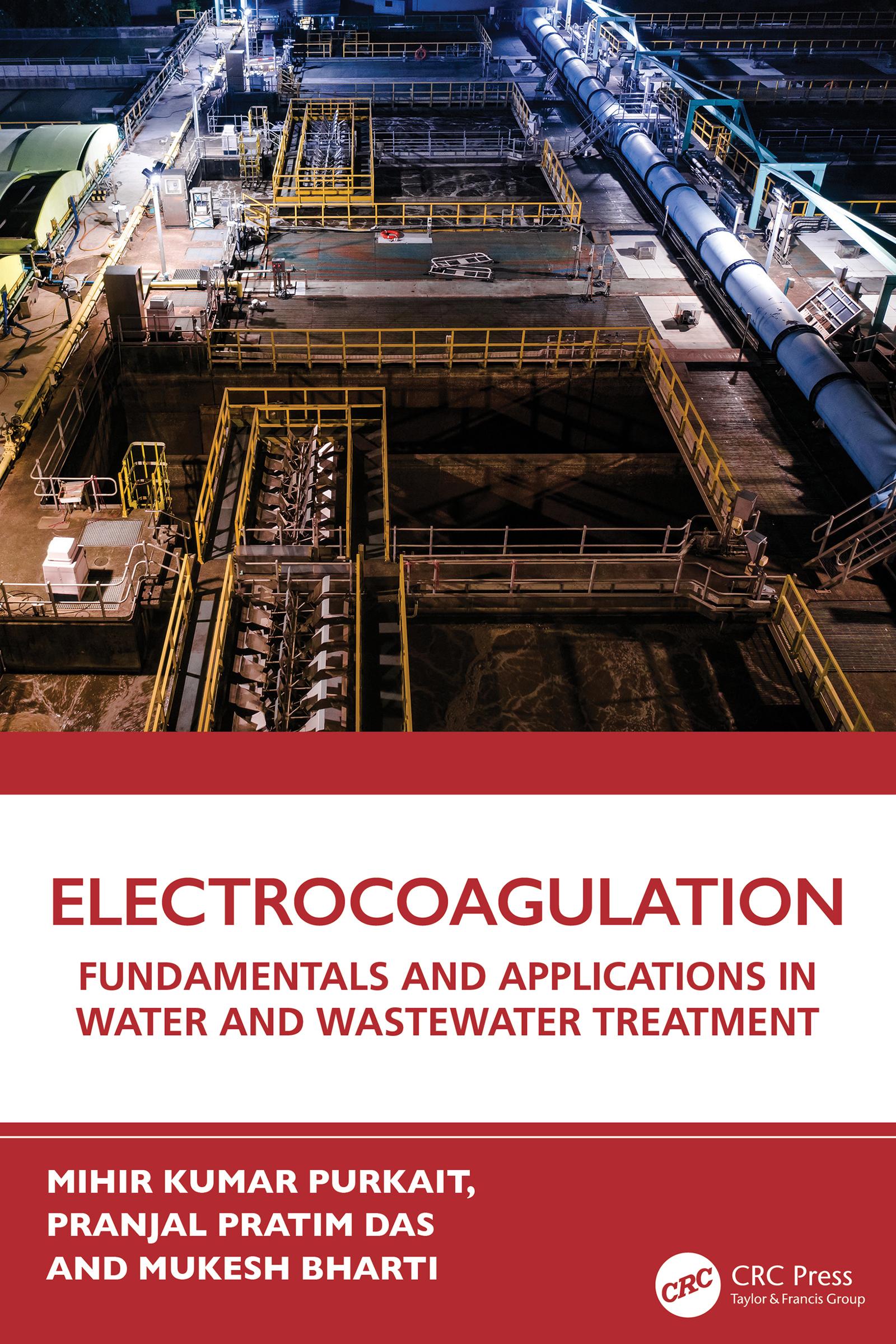
The book is a concise presentation of different applications of the electrocoagulation treatment process involved in the removal of both organic and inorganic contaminants from drinking and industrial wastewater. The fundamental concept concerning the present status of water and wastewater treatment is elaborately explained.
Features:
- Addresses the hybrid electrocoagulation approaches established for the treatment of toxic refractory contaminants
- Discusses the current status and the limitations of the electrocoagulation process, as well as the advancement in the field of modeling and simulation of electrocoagulation reactors
- Describes the economic and environmental feasibility of the process, along with future suggestions/recommendations on the electrocoagulation process
- Discusses the existing loopholes and explains the areas in which improvement can be made to make the water treatment process more feasible
- Explores the experimental studies conducted, along with their associated challenges and possible solutions, thereby providing comprehensive knowledge to the readers in the field of water and wastewater treatment, starting from the basics and gradually progressing toward the advanced level of the subject
As well as undergraduate and postgraduate students, this book is strongly recommended for people concerned with the research and development sectors of water reuse, environmental restoration, and industrial wastewater treatment.
Pay easily by card, Klarna, Apple Pay or Google Pay. Not happy? You always have a 14-day money-back guarantee. Read more in our terms. If you have any questions, email us at hello@memmo.org.
Memmo makes studying easier – wherever you are in the world. We bring your course books and smart study tools together in one place: summaries, quizzes, podcasts and flashcards. Plus Ted, your study buddy who answers anything you wonder. Over 50,000 students already study here – built to help you learn faster and stress less.