
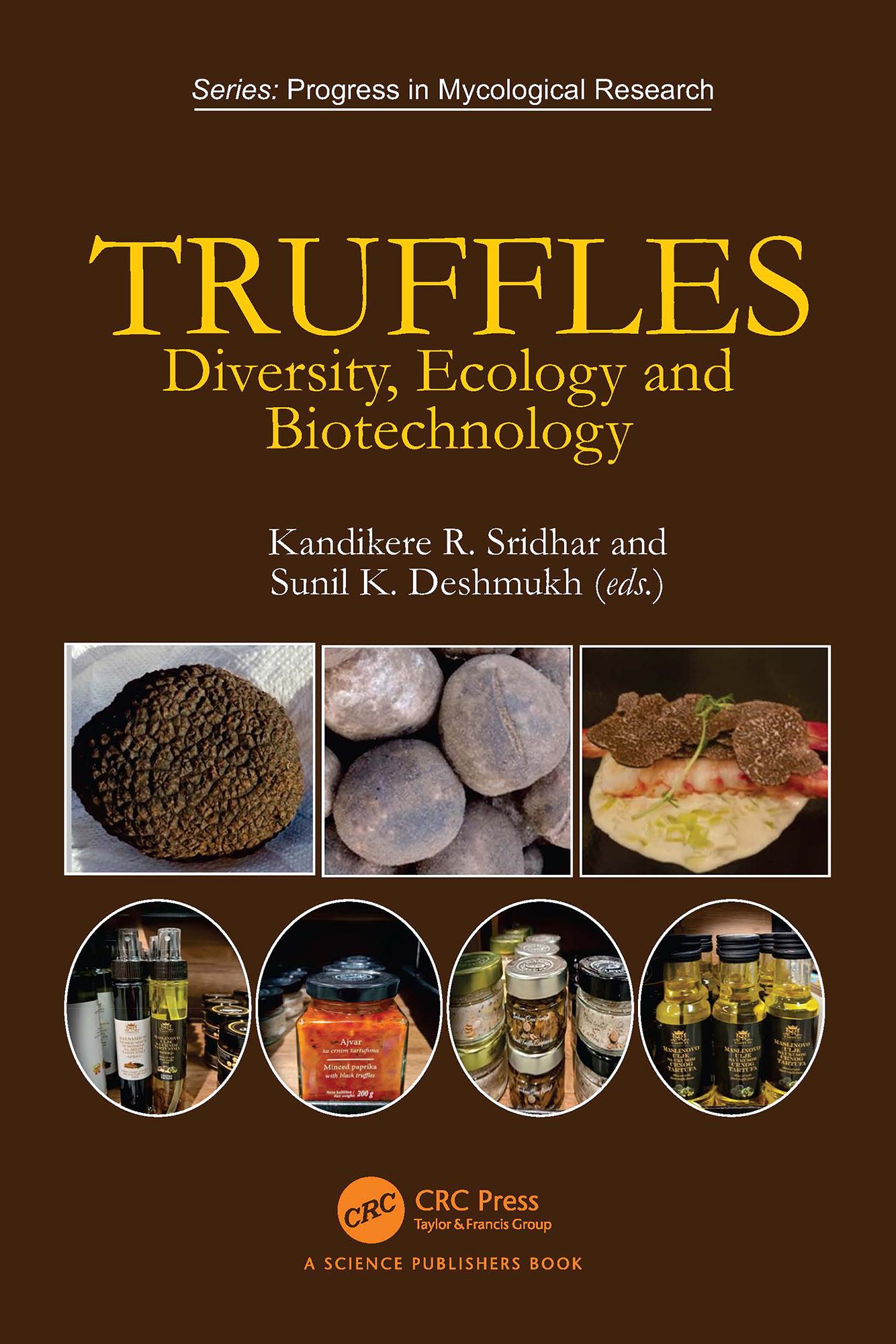
Truffles are hypogeous ectomycorrhizal ascomycetous edible mushrooms distributed worldwide in terrestrial ecosystems, including deserts, as non-timber forest products. They are seasonal and have a short shelf life. Owing to their nutraceutical value, truffles are in high demand and valuable. Of the 180 or more species of truffles reported worldwide, only around 20 are commercially viable.
Truffles: Diversity, Ecology and Biotechnology reviews the current advances in truffles from a historical perspective and covers ethnomycological profiles, habitats, ecology, geographical distribution, diversity, systematics, phylogeny, ultrastructure, sexual reproduction, cultivation, analytical techniques, and the impact of climate change and industrial applications on truffles. It also emphasizes the role of soil properties in the occurrence of truffles (e.g., Tuber spp.), their pathogens, product development and marketing. The contributors hail from academia and industries across the globe.
Pay easily by card, Klarna, Apple Pay or Google Pay. Not happy? You always have a 14-day money-back guarantee. Read more in our terms. If you have any questions, email us at hello@memmo.org.
Memmo makes studying easier – wherever you are in the world. We bring your course books and smart study tools together in one place: summaries, quizzes, podcasts and flashcards. Plus Ted, your study buddy who answers anything you wonder. Over 50,000 students already study here – built to help you learn faster and stress less.