
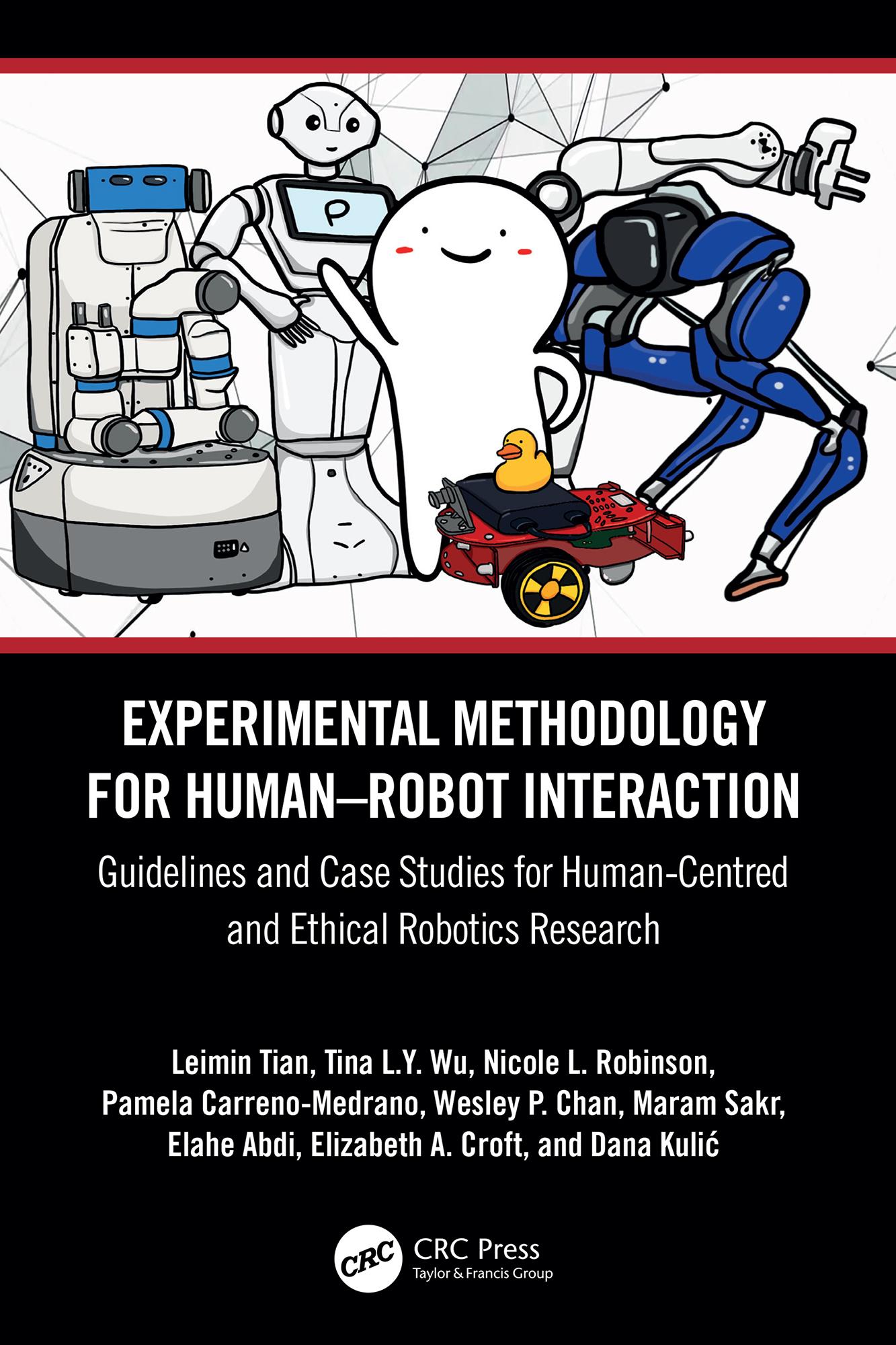
Leading figures in Australian robotics research provide an overview and guidance for human–robot interaction (HRI) experimental design and evaluation methodologies that consider the ethical implications of the research and its applications from a human-centred and contextual perspective. The authors explain introductory and advanced topics in HRI with a focus on human-centred evaluation and ethical practices. They also provide an online interactive checklist tool for novice HRI researchers and students to deploy when designing their own studies.
The book is structured into three parts. In Part I, the authors first review fundamental methodologies and provide an interactive checklist tool of the HRI experimental study life cycle to guide beginners to the field. Part II introduces an expanded set of approaches to support researchers and practitioners to create high-quality study designs that draw on practices from human-computer interaction, human-centred artificial intelligence, psychology and social science, and advance ethical HRI research. Finally, in Part III, the authors discuss a selection of HRI studies as examples of how the introduced methodologies are adopted, which will support the readers to further understand the fundamental and advanced methodologies described in Parts I and II. The diverse collection of case studies enables readers to grasp the state of the art and apply what they have learned in their own practices.
This book is a vital resource for both students new to the field and experienced researchers and practitioners. The book’s practical focus and clear elucidation of relevant case studies, from its introduction to the HRI experimental study life cycle through to advanced methods emerging in the field, ensures that this will greatly benefit progress in the field with human-centred and ethical experimental methodology.
Pay easily by card, Klarna, Apple Pay or Google Pay. Not happy? You always have a 14-day money-back guarantee. Read more in our terms. If you have any questions, email us at hello@memmo.org.
Memmo makes studying easier – wherever you are in the world. We bring your course books and smart study tools together in one place: summaries, quizzes, podcasts and flashcards. Plus Ted, your study buddy who answers anything you wonder. Over 50,000 students already study here – built to help you learn faster and stress less.