
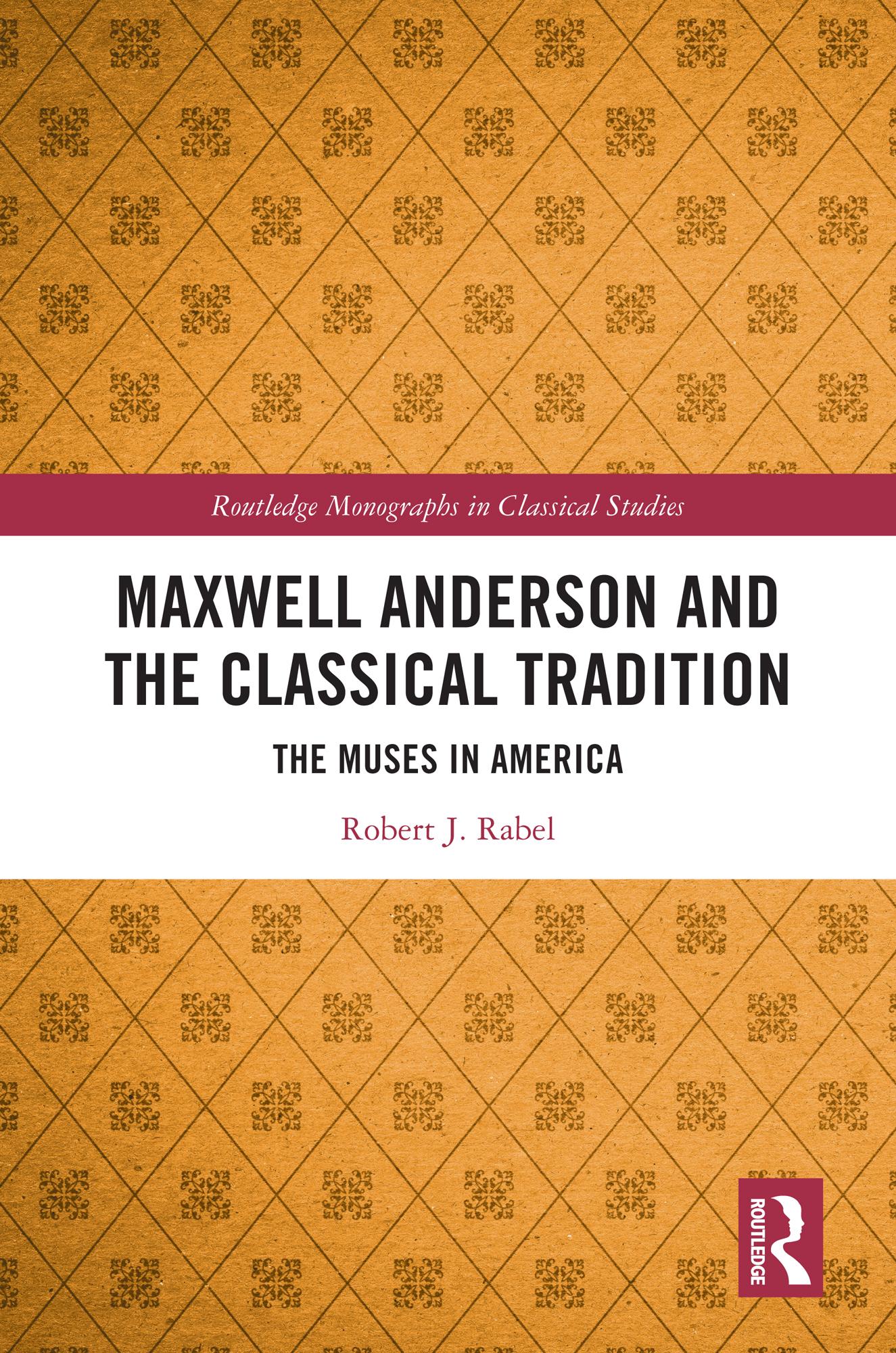
This book sheds new light on the dramatic works of the American playwright, poet, and lyricist Maxwell Anderson, assessing the pervasive influence of Greek and Roman antiquity on his plays that dominated Broadway in the first half of the twentieth century.
Anderson is an important, though often forgotten, figure in the history of American drama and the Classical Tradition. The book highlights Anderson’s remarkably creative use of classical antiquity, while also illustrating how he served as a first-hand witness and reactor to some of the main social and political events of his time. It explores Anderson’s major theatrical works and adaptations of ancient Greek drama and poetry, including Winterset, The Winged Victory, the never-published Ulysses Africanus, and Bad Seed, as well as his later minor works. Anderson found in tragedians such as Aeschylus, Sophocles, and Euripides ideal models for the dramatic portrayal of human emotion amidst the social and political backdrop of the United States from the interwar period to the nuclear age, which this book seeks to explore at length for the first time.
This volume is of interest to students and scholars of Classical Reception and the Classical Tradition, as well as those working on twentieth century American literature, drama, history, and politics.
Pay easily by card, Klarna, Apple Pay or Google Pay. Not happy? You always have a 14-day money-back guarantee. Read more in our terms. If you have any questions, email us at hello@memmo.org.
Memmo makes studying easier – wherever you are in the world. We bring your course books and smart study tools together in one place: summaries, quizzes, podcasts and flashcards. Plus Ted, your study buddy who answers anything you wonder. Over 75,000 students already study here – built to help you learn faster and stress less.