
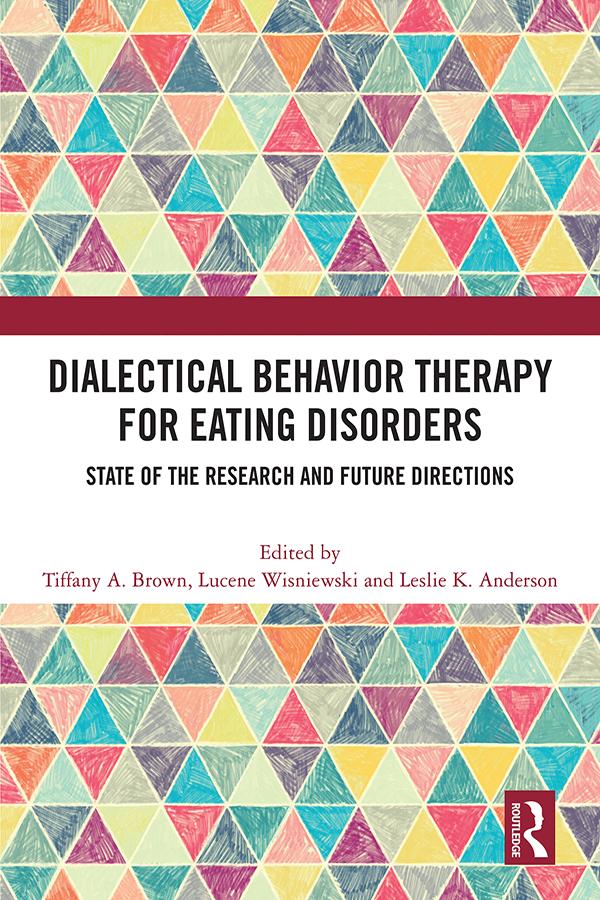
This book explores the application of dialectical behavior therapy (DBT) in treating eating disorders (EDs), highlighting its theoretical and clinical significance alongside emerging empirical support, theoretical and clinical relevance, as well as burgeoning empirical support, for the treatment of EDs.
Originally developed for patients with borderline personality disorder, DBT recognizes that maladaptive, impulsive behaviors often arise from attempts to manage intense emotions and focuses on cultivating adaptive skills for better emotional self- regulation. With robust evidence linking emotion regulation difficulties to eating disorder symptoms, research increasingly supports DBT’s effectiveness for conditions such as bulimia nervosa and binge eating disorder. The contributors to this volume are experts in the field who have decades of clinical and research experience in DBT and eating disorders and they delve into the nuances of adapting DBT for patients with complex presentations and comorbid conditions, reflecting the latest advancements in this vital area of therapy.
The chapters in this book were originally published as a special issue of Eating Disorders: The Journal of Treatment and Prevention.
Pay easily by card, Klarna, Apple Pay or Google Pay. Not happy? You always have a 14-day money-back guarantee. Read more in our terms. If you have any questions, email us at hello@memmo.org.
Memmo makes studying easier – wherever you are in the world. We bring your course books and smart study tools together in one place: summaries, quizzes, podcasts and flashcards. Plus Ted, your study buddy who answers anything you wonder. Over 50,000 students already study here – built to help you learn faster and stress less.