
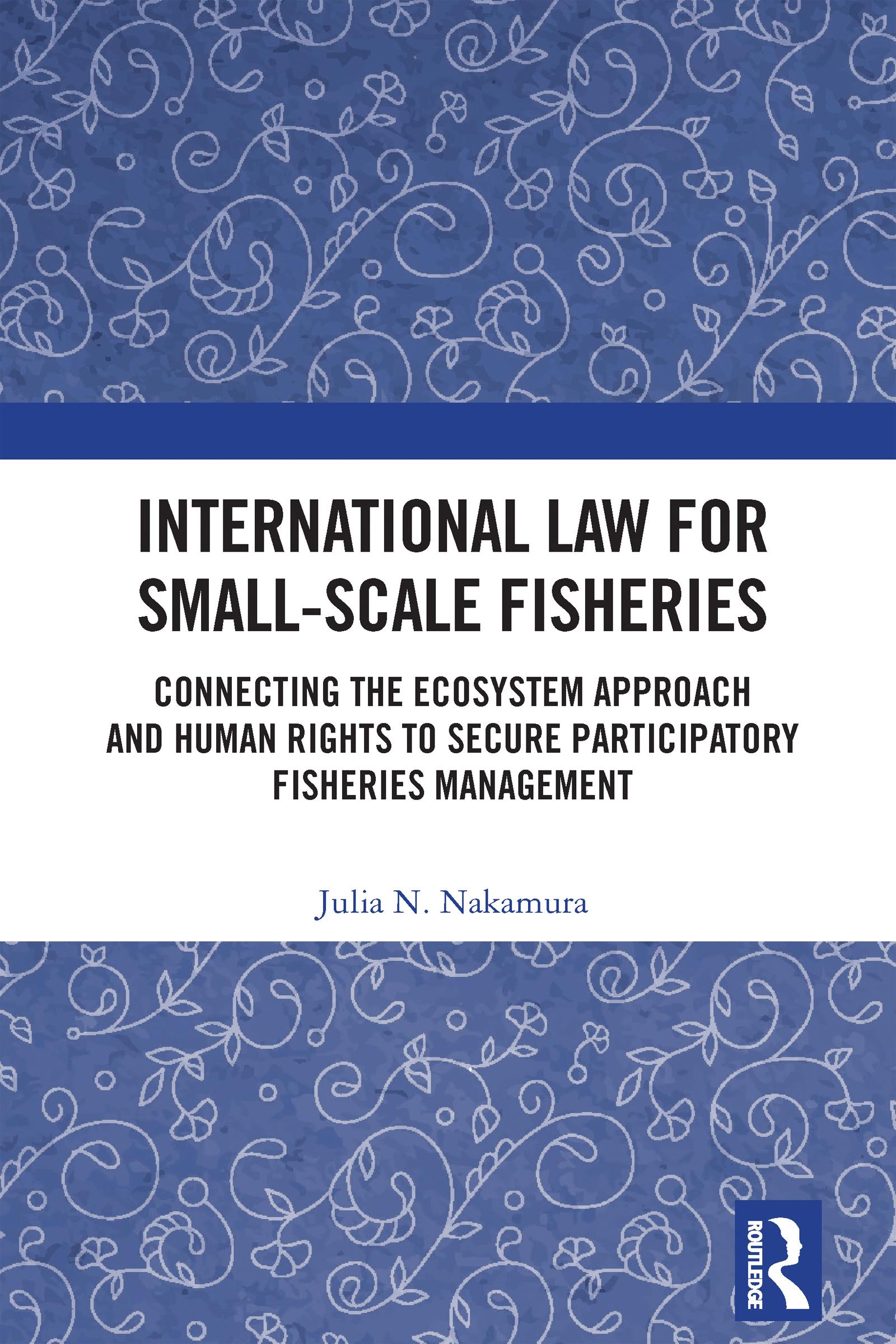
This book provides an original and groundbreaking account of the applicability and key contributions of international law to small-scale fisheries, a fisheries subsector that has been historically overlooked by governments and international legal scholarship.
Small-scale fisheries constitute most of the world’s capture fisheries workforce; they sustain the livelihoods of fishers and their communities while building and transmitting traditional knowledge and culture. Significant attention has been given to small-scale fisheries by the international community over the past decade, building the momentum for dedicated research on such a topic. Nevertheless, the literature examining small-scale fisheries from an international legal perspective remains scarce. This book fills this gap by systemically examining different international legal regimes to unravel the normative foundations for securing the meaningful participation of small-scale fisheries peoples in international fisheries management. It connects the ecosystem approach, a key principle of international fisheries law, and the human rights regime to elucidate the benefits that participatory international fisheries management brings to enhance both the ecological and social aspects of fisheries sustainability. It also examines the extent to which fisheries governance is democratic, and provides an enabling framework for the integration of fishers’ knowledge into international fisheries management. It is thereby oriented toward more justice and fair outcomes for small-scale fisheries.
This book will be a valuable resource for academics and researchers with an interest in the governance of fisheries in international law, the law of the sea, environmental law, and human rights law, as well as to practitioners and policymakers working on the development and implementation of laws and policies governing fisheries and natural resources.
Pay easily by card, Klarna, Apple Pay or Google Pay. Not happy? You always have a 14-day money-back guarantee. Read more in our terms. If you have any questions, email us at hello@memmo.org.
Memmo makes studying easier – wherever you are in the world. We bring your course books and smart study tools together in one place: summaries, quizzes, podcasts and flashcards. Plus Ted, your study buddy who answers anything you wonder. Over 50,000 students already study here – built to help you learn faster and stress less.