
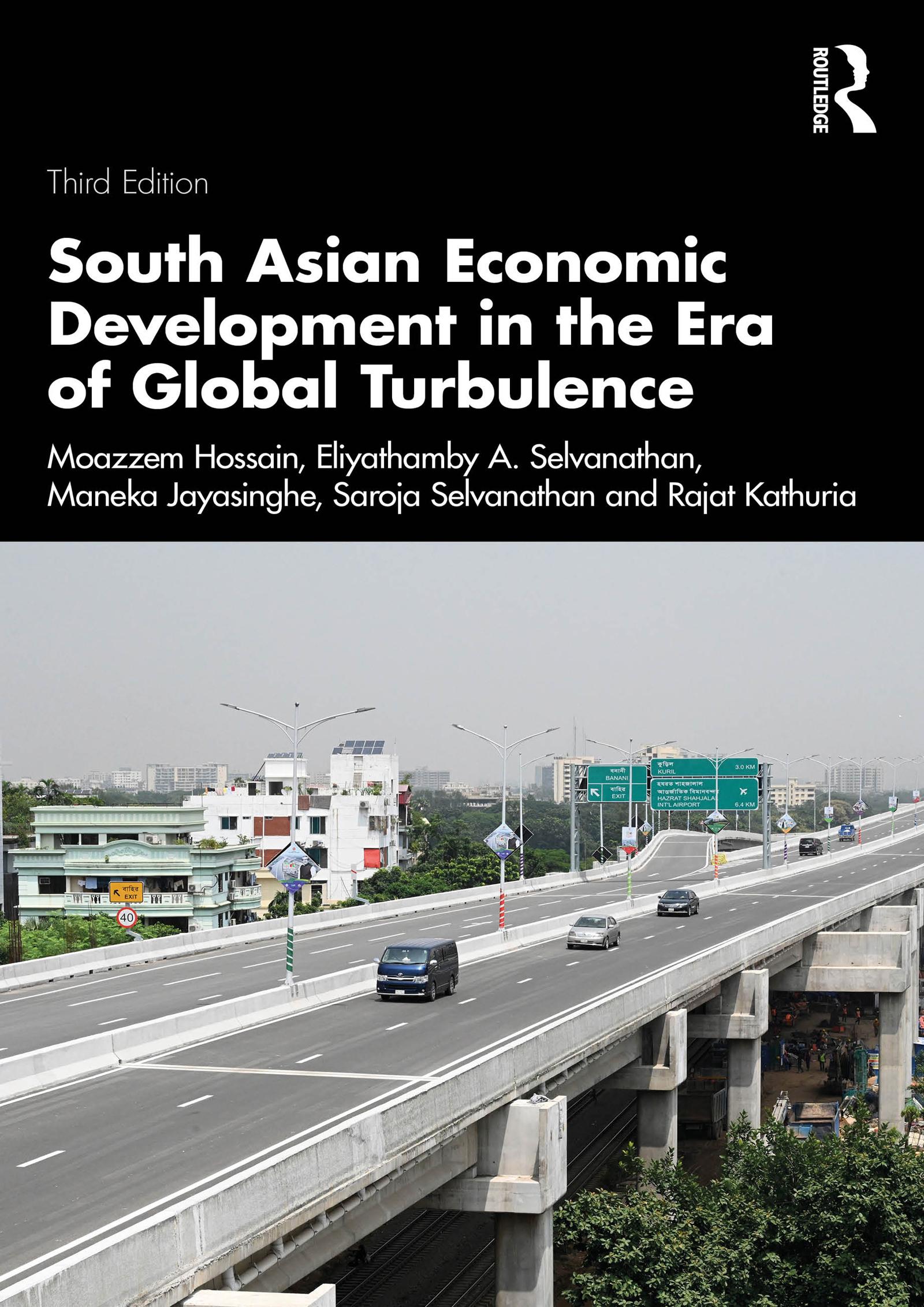
South Asia’s developing nations have been enjoying moderate to high growth over the past decade before the global pandemic of 2020 began. This new edition provides an up-to-date guide to the growing markets in South Asia in the post-COVID-19 period. It offers an analysis of the changes and consequences of high sustainable growth, investigating what has been achieved in the region over the last 2001-2023 from a macroeconomic viewpoint, identifying new challenges to 2030, and the end of the UNSDGs period.
Part I of the textbook presents an analysis of how South Asia is rated against Southeast and East Asia in recent decades in economic and social terms.
Part II focuses on South Asia’s economic development over 2000 and the bearly 2020s. It demonstrates that globalization enhanced global trade and that trade further increased the region’s prosperity up to 2020.
Part III identifies major governance issues that were responsible for South Asia’s social and economic underperformance due to the COVID-19 pandemic. This new edition includes a new chapter about AI and South Asia in the future. The textbook advocates for a shift in focus from policy reform per se to the more challenging task of implementing institutional reform that will invigorate the capability of the political leadership to bring about rapid, sustained and poverty-reducing growth in South Asia in post-Covid era. The book also considers climate change and the environment, and it analyses the impact of these changes and developments on the economic health and social conditions in South Asia. The concluding chapter demonstrates current political unrest in three South Asian nations, Sri Lanka, Pakistan, and Bangladesh, termed the South Asian Spring.
Offering an analysis of the changes and consequences of high sustainable growth in South Asia, this textbook will be useful for students and researchers in Development Economics, Business Economics, Development Studies, and Asian Studies.
Pay easily by card, Klarna, Apple Pay or Google Pay. Not happy? You always have a 14-day money-back guarantee. Read more in our terms. If you have any questions, email us at hello@memmo.org.
Memmo makes studying easier – wherever you are in the world. We bring your course books and smart study tools together in one place: summaries, quizzes, podcasts and flashcards. Plus Ted, your study buddy who answers anything you wonder. Over 50,000 students already study here – built to help you learn faster and stress less.