
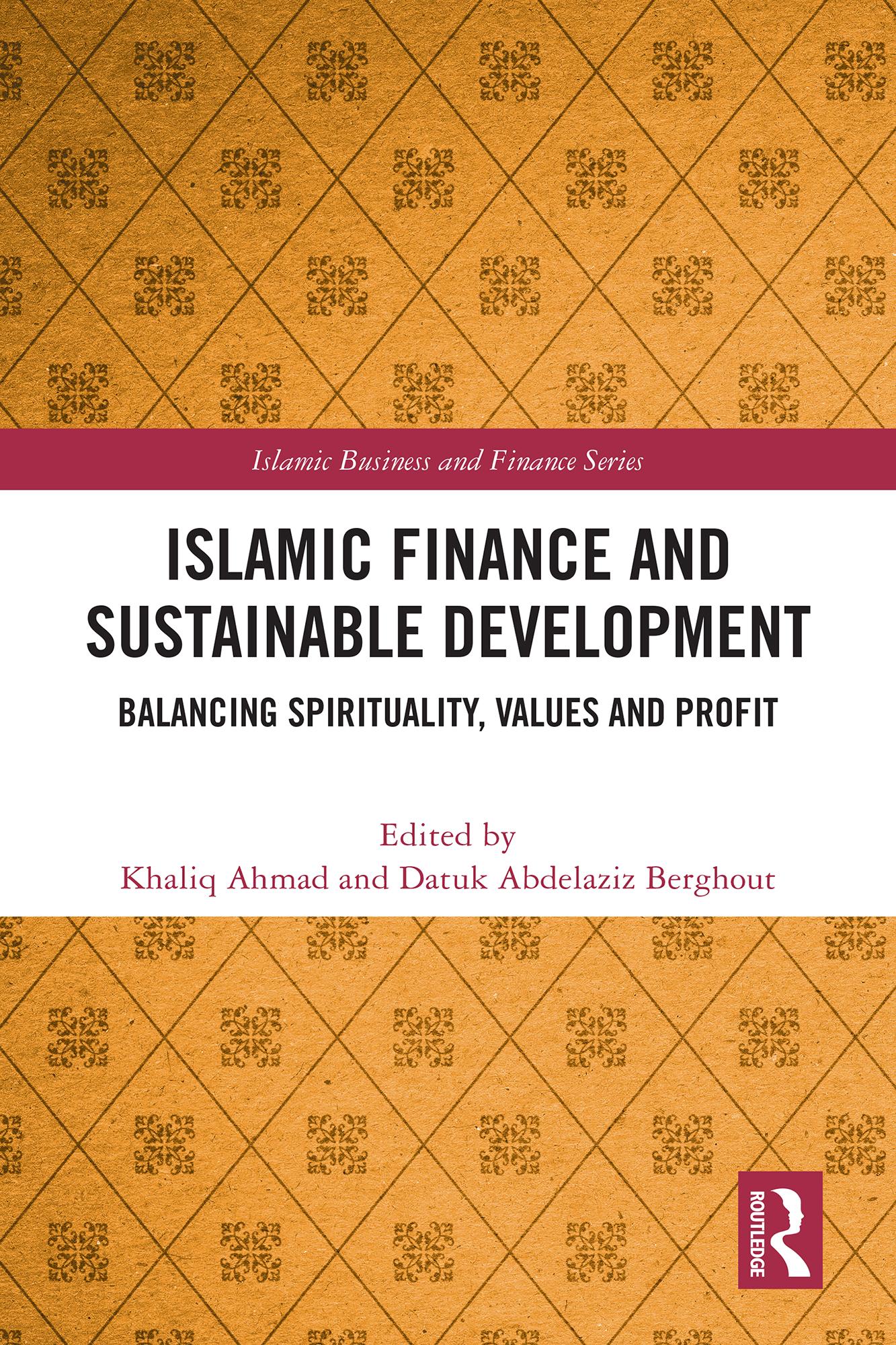
This book uncovers a new dimension in the study of sustainability, offering balanced development from a spiritual and cultural values perspective. The authors of this edited volume investigate the role of religion in the debate concerning the Sustainable Development Goals (SDGs) and offer an Islamic perspective to environment, social and governance (ESG) issues.
Applying a multidimensional approach to socio-economic development, this book contends that Islam offers a unique perspective and framework for sustainable development that is holistic and rooted in spirituality, morality and ethics. For example, the book explains how Islam lays emphasis on human talents development (SDGs 3 and 4), which is a key element in accelerating socio-economic growth (SDG-8). It also offers a wide range of social financial tools such as Zakat and Waqf that can be used to address SDGs 1 (poverty), 2 (hunger), 5 (gender equality) and 10 (reducing inequality). Islamic finance offers a number of tools for long-term financing such as sukuk that can masterfully be used for building sustainable infrastructure (SDG-9). The study also reviews some Islamic principles from the Holy Qur'an that can positively SDGs.
Students, scholars and researchers in the fields of Islamic economics and finance, sustainable development and socio-economic and environmental issues will find the book a valuable resource.
Pay easily by card, Klarna, Apple Pay or Google Pay. Not happy? You always have a 14-day money-back guarantee. Read more in our terms. If you have any questions, email us at hello@memmo.org.
Memmo makes studying easier – wherever you are in the world. We bring your course books and smart study tools together in one place: summaries, quizzes, podcasts and flashcards. Plus Ted, your study buddy who answers anything you wonder. Over 50,000 students already study here – built to help you learn faster and stress less.