
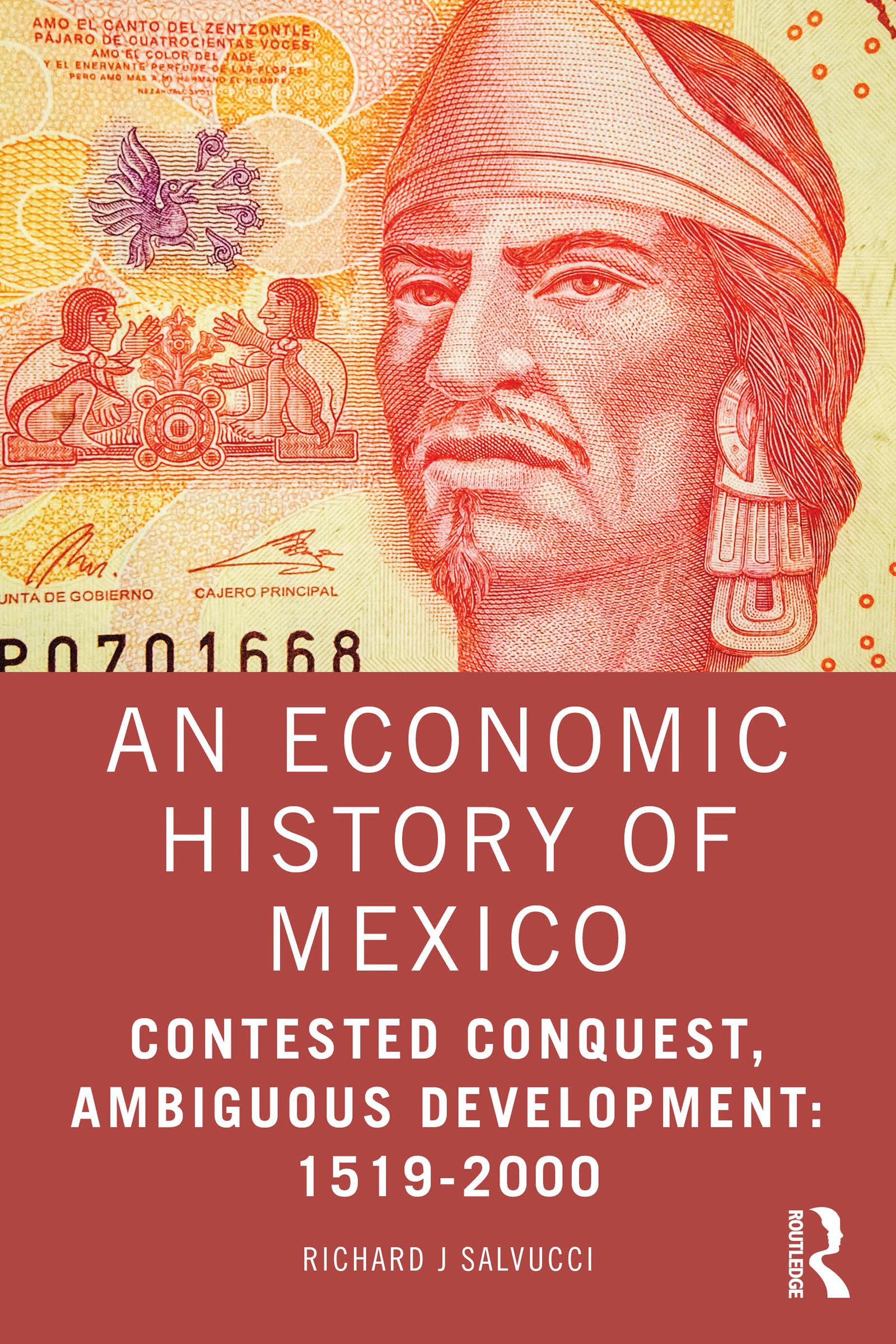
After a turbulent modern history of conquest and colonialism, Mexico has developed as an economy that may be emerging but still displays significant levels of poverty, particularly in relation to its neighbor to the north, the United States.
Drawing on archival data, decades of new Mexican historiography, and considering issues of political economy, this book explores how Mexico ended up in the relative economic position that it did. Beginning with Hernán Cortés and the invention of the Conquest of New Spain, it explores the economic history of Mexico through the lens of political economy, incorporating environment and demography, politics and power, and industrialization and inequality. The aftermath of the Conquest brought about a complete restructuring of the economy as a result of death from disease, the introduction of European-style agriculture, and a more intensive exploitation of the peasantry. The eighteenth and nineteenth centuries saw “reform” followed by a series of crises and rebellions under which sustained economic growth was impossible. Globalization and the expansion of agricultural exports provided some opportunities in the late nineteenth and twentieth centuries, but they failed to provide the booming rural population with a sustainable means of supporting domestic demand. The so-called Mexican Miracle—the period of rapid growth in the 1950s, 1960s, and early 1970s—disguised a failure to address the economic inequality embedded since the colonial period. As this book clearly demonstrates, this inequality was sometimes challenged in Mexican history but never decisively addressed, let alone reversed.
This accessible and engaging book is vital reading for students and scholars of the history of Mexico and Latin America and those interested in economic development in historical perspective.
Pay easily by card, Klarna, Apple Pay or Google Pay. Not happy? You always have a 14-day money-back guarantee. Read more in our terms. If you have any questions, email us at hello@memmo.org.
Memmo makes studying easier – wherever you are in the world. We bring your course books and smart study tools together in one place: summaries, quizzes, podcasts and flashcards. Plus Ted, your study buddy who answers anything you wonder. Over 50,000 students already study here – built to help you learn faster and stress less.