
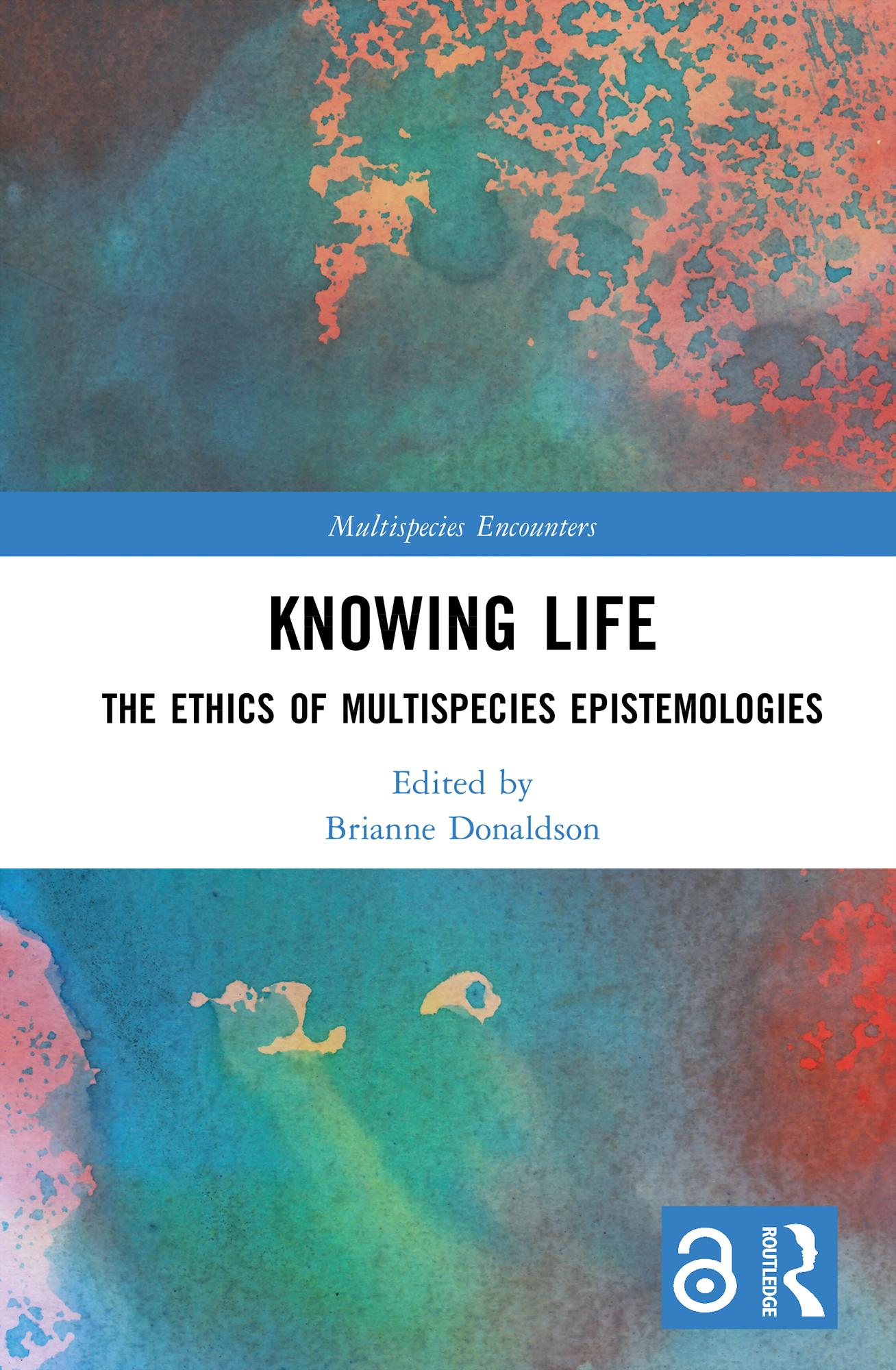
Knowing Life examines the limits of dominant knowledge forms that contribute to current practices negatively affecting more-than-human beings, while also exploring alternative approaches to knowing that are capable of reducing harm and maximizing planetary thriving.
Specifically, this volume seeks multispecies answers to long-standing questions in Western philosophy: Who or what counts as a knower? What kinds of knowing are valid? Is knowledge a product of mind, body, or something else? Historically, these epistemic questions have been answered in ways that neutralize the knowing and knowledge contribution of and for more-than-human beings, as well as those on the margins of society considered less than “human.” Consequently, these epistemic assumptions often support the destruction of ecological habitats, industrialization of food animals, widespread use of insect and plant toxins, water and air pollution, climate extinctions, ecological militarism, and the perpetual flow of living beings used for entertainment, research, clothing, companionship, and economic resources.
In this book, crosscultural and multidisciplinary contributors—including lesser-known global religious-philosophical accounts, philosophies of plant and insect life, race and disability studies, laboratory epistemology, embodied semiotics, and scholar-artists—challenge and expand these classical concepts through diverse modes of embodied engagement on multispecies knowing toward open futures of planetary co-flourishing.
Pay easily by card, Klarna, Apple Pay or Google Pay. Not happy? You always have a 14-day money-back guarantee. Read more in our terms. If you have any questions, email us at hello@memmo.org.
Memmo makes studying easier – wherever you are in the world. We bring your course books and smart study tools together in one place: summaries, quizzes, podcasts and flashcards. Plus Ted, your study buddy who answers anything you wonder. Over 50,000 students already study here – built to help you learn faster and stress less.