
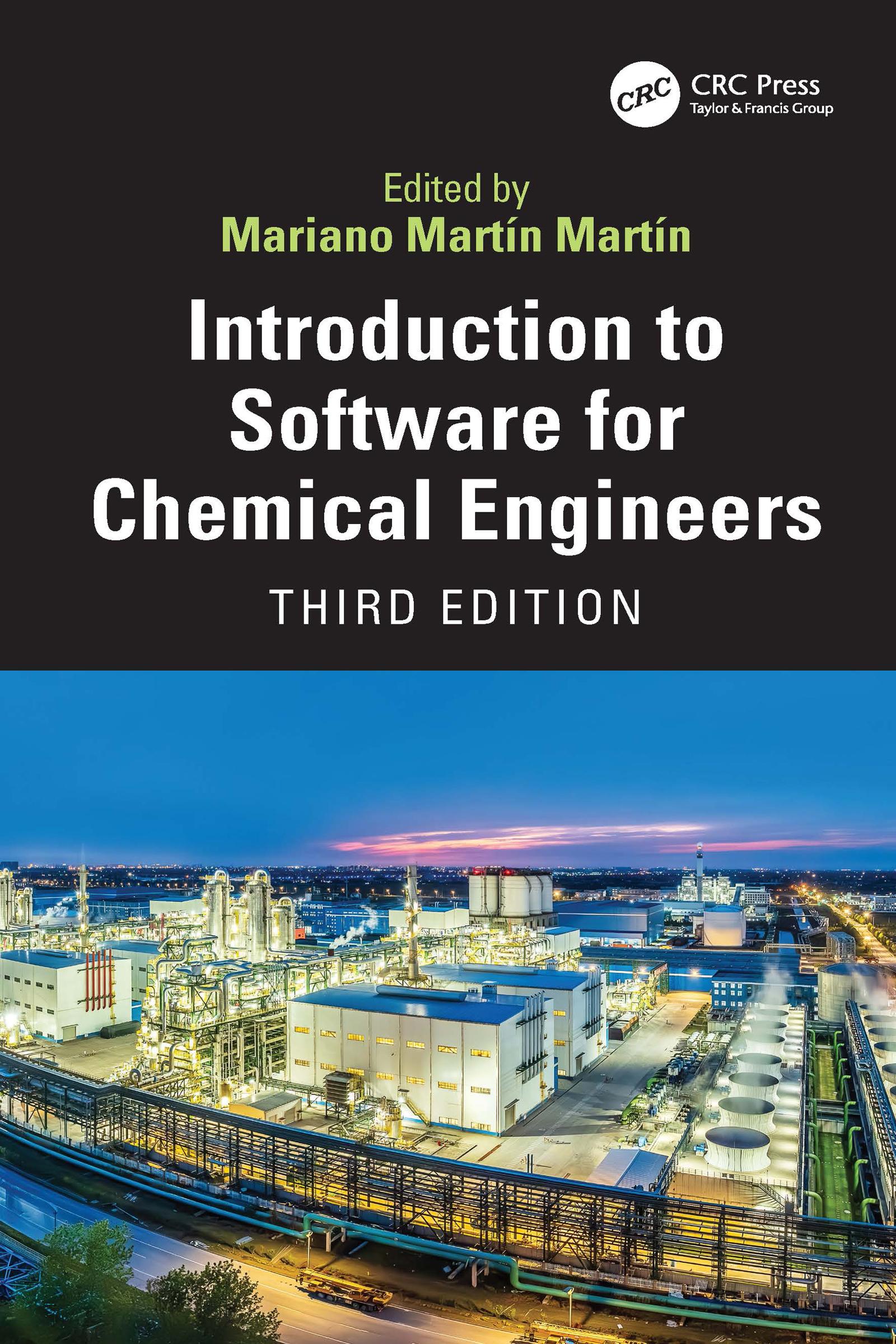
The field of chemical engineering and its link to computer science is in constant evolution, and engineers have an ever-growing variety of tools at their disposal to tackle everyday problems. Introduction to Software for Chemical Engineers, Third Edition provides a quick guide to the use of various computer packages for chemical engineering applications. It covers a range of software applications, including Excel and general mathematical packages such as MATLAB®, MathCAD, R, and Python. Coverage also extends to process simulators such as CHEMCAD, HYSYS and Aspen; equation-based modeling languages such as gPROMS; optimization software such as GAMS, AIMS and Julia; and specialized software like CFD or DEM codes. The different packages are introduced and applied to solve typical problems in fluid mechanics, heat and mass transfer, mass and energy balances, unit operations, reactor engineering, and process and equipment design and control.
This new edition is updated throughout to reflect software updates and new packages. It emphasizes the addition of SimaPro due to the importance of life cycle assessment, as well as general statistics software, SPSS, and Minitab that readers can use to analyze lab data. The book also includes new chapters on flowsheeting drawing, process control, and LOOP Pro, as well as updates to include Pyomo as an optimization platform, reflecting current trends. The text offers a global idea of the capabilities of the software used in the chemical engineering field and provides examples for solving real-world problems.
Written by leading experts, this handbook is a must-have reference for chemical engineers looking to grow in their careers through the use of new and improving computer software. Its user-friendly approach to simulation and optimization, as well as its example-based presentation of the software, makes it a perfect teaching tool for both undergraduate- and graduate-level readers.
Pay easily by card, Klarna, Apple Pay or Google Pay. Not happy? You always have a 14-day money-back guarantee. Read more in our terms. If you have any questions, email us at hello@memmo.org.
Memmo makes studying easier – wherever you are in the world. We bring your course books and smart study tools together in one place: summaries, quizzes, podcasts and flashcards. Plus Ted, your study buddy who answers anything you wonder. Over 50,000 students already study here – built to help you learn faster and stress less.