
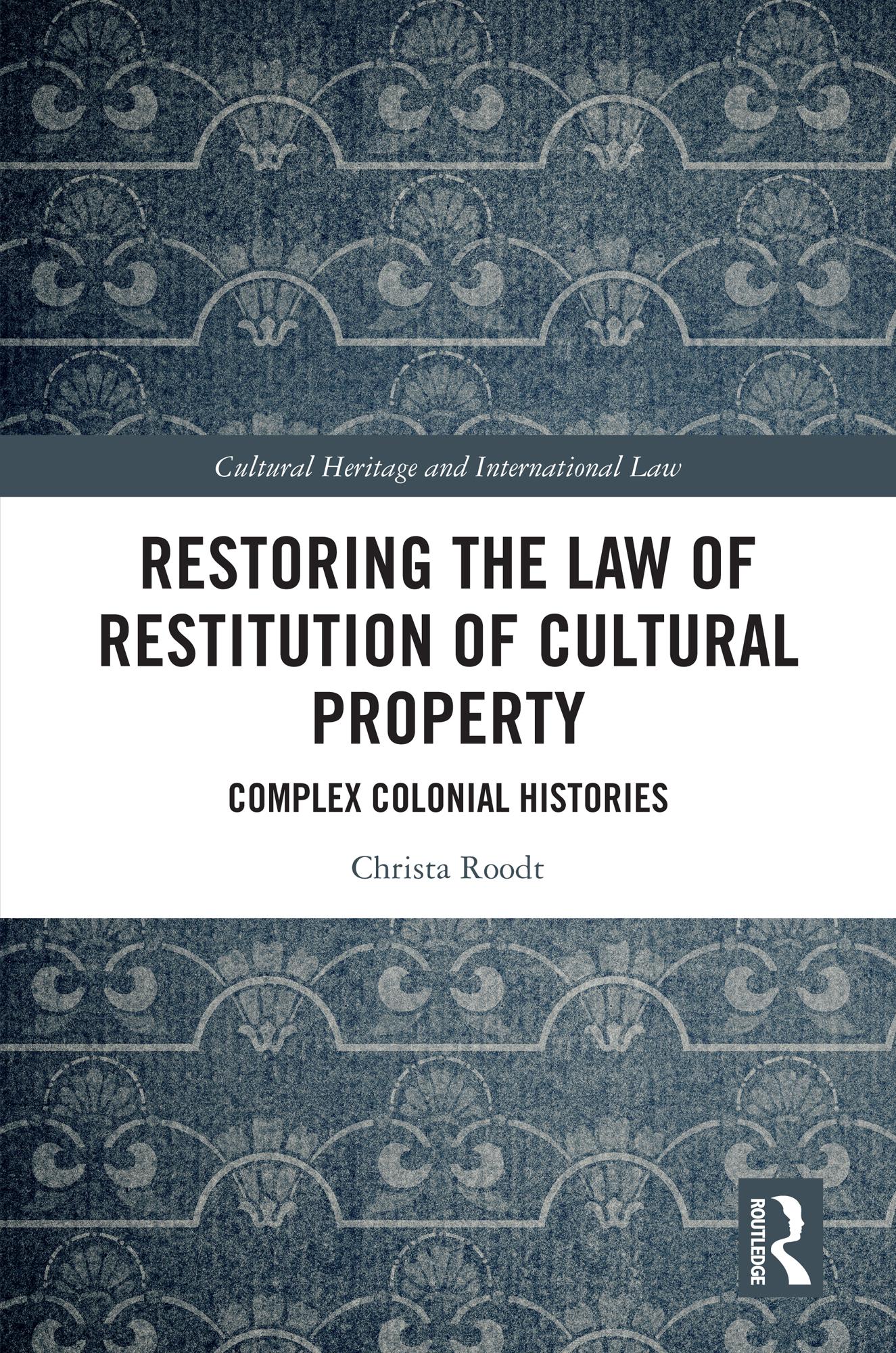
This groundbreaking book covers the restoration of the law of restitution of cultural property, matching the time, space, and depth dimensions of the law with the time, space, and ontology of events that violated persons and desecrated their heritage in the colonial era.
Using the contested ownership of the Parthenon Sculptures and the Zhanggong Zushi mummy encased in a Buddha statue as the main points of orientation, the book shows how the law of restitution could be ‘defragmented’ and ‘restored’ in respect of claims for the return of colonial-era and Indigenous cultural property disputes. The study argues that the secondary legal norms and common arguments of Private International Law can unlock governance functions and strategies that counter the effects of the narrow definition of the ‘sacred’ and the consistent refusal to consider an alternative chronosophy in restitution claims. When called upon to resist the detrimental effects of the mimetic dynamic in complex colonial contexts, the law stands to benefit from a legal-theoretical perspective that views law in relation to ethics and considers Private International Law, a model of ethics.
The book will be of interest to researchers in the field of cultural property law, heritage studies, Indigenous law, provenance, and applied ethics.
Pay easily by card, Klarna, Apple Pay or Google Pay. Not happy? You always have a 14-day money-back guarantee. Read more in our terms. If you have any questions, email us at hello@memmo.org.
Memmo makes studying easier – wherever you are in the world. We bring your course books and smart study tools together in one place: summaries, quizzes, podcasts and flashcards. Plus Ted, your study buddy who answers anything you wonder. Over 50,000 students already study here – built to help you learn faster and stress less.