
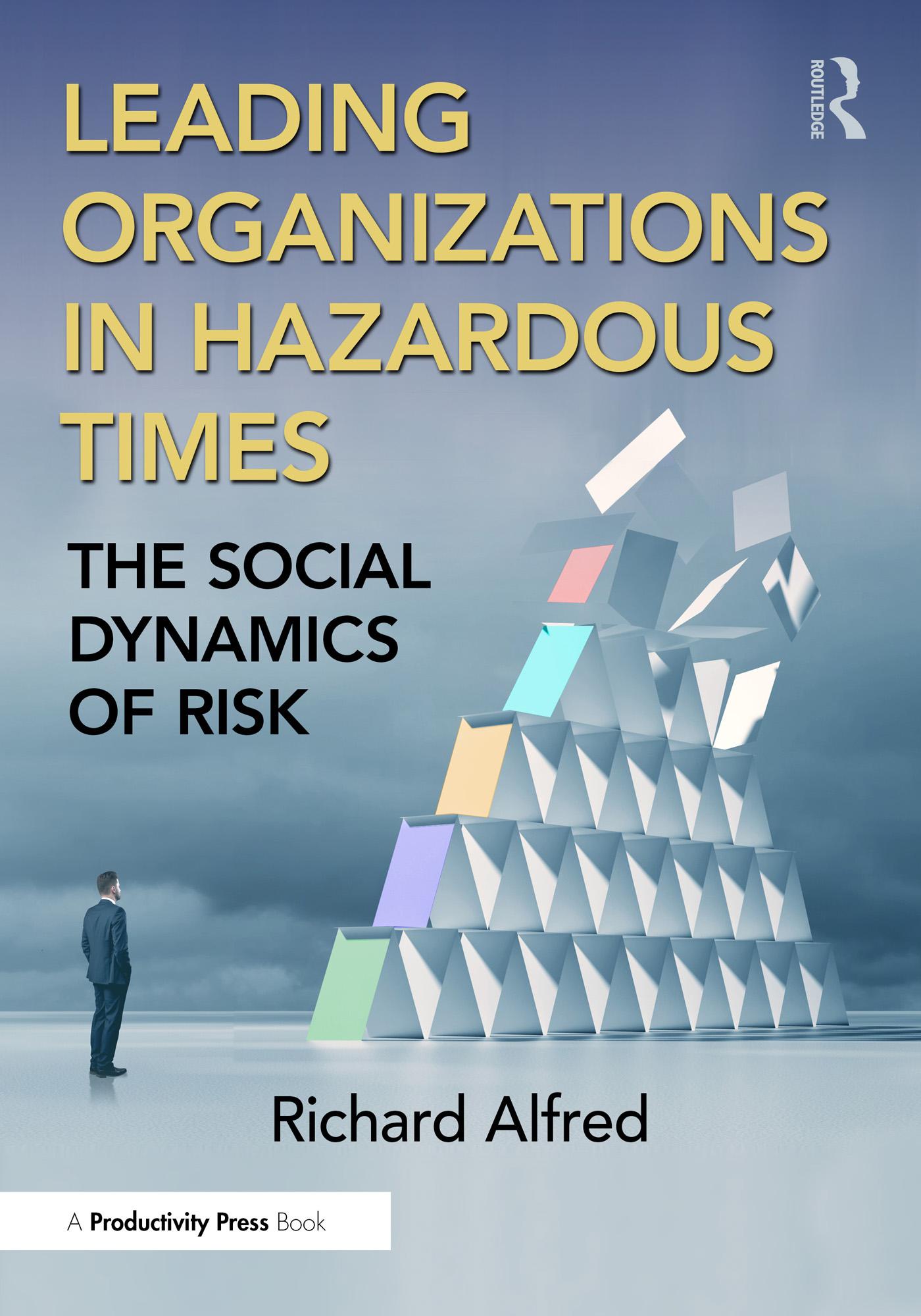
Does your organization have the capacity to respond to risk it has not anticipated or prepared for? Is its approach to risk explicit and understood by employees? Does it have a robust risk culture? Do employees take responsibility for managing risk? If your response to these questions is guarded or uncertain, this book will have value for you and your organization.
Organizations and leaders in a widening risk environment face four realities which challenge their ability to manage risk: (1) the two-dimensional nature of risk—risk itself and behavior in response to risk, (2) the diversity of attitudes and behavior in relationship to risk, (3) the influence on behavior of cognitive, psychological and contextual factors that are part of social dynamics and (4) the compounding effect of social dynamics that make risk difficult to manage. These realities add up to a conundrum: The challenge for organizations and leaders lies not in risk itself but in social dynamics that shape behavior in response to risk.
Whether triggered by an internal problem or external event, risk management failures often result from a lack of understanding of causative factors and behavior in response to risk. Effective leaders make risk a core part of their agenda. They put people at the center of strategy and face challenges head-on that impact their organizations’ ability to manage risk. Among the challenges are:
◾ the toll on organizational resources of a growing array of risk factors
◾ risk "blind spots" in the organization warranting attention
◾ cultural weaknesses and vulnerabilities elevating exposure to risk
◾ employee disengagement from risk and responsibility for managing it,
◾ variation in attitudes and behavior that make risk difficult to detect and mitigate,
◾ turning risk into advantage by envisioning it as an opportunity or strength in contrast to a threat or weakness.
Leading Organizations in Hazardous Times: The Social Dynamics of Risk builds capability in risk management by enhancing leader understanding of risk behavior and factors contributing to risk culture. It encourages leaders to invest in continuous learning to navigate asymmetries of attitude and behavior, managing, and leadership style that underlie organizational success and failure.
Pay easily by card, Klarna, Apple Pay or Google Pay. Not happy? You always have a 14-day money-back guarantee. Read more in our terms. If you have any questions, email us at hello@memmo.org.
Memmo makes studying easier – wherever you are in the world. We bring your course books and smart study tools together in one place: summaries, quizzes, podcasts and flashcards. Plus Ted, your study buddy who answers anything you wonder. Over 75,000 students already study here – built to help you learn faster and stress less.