
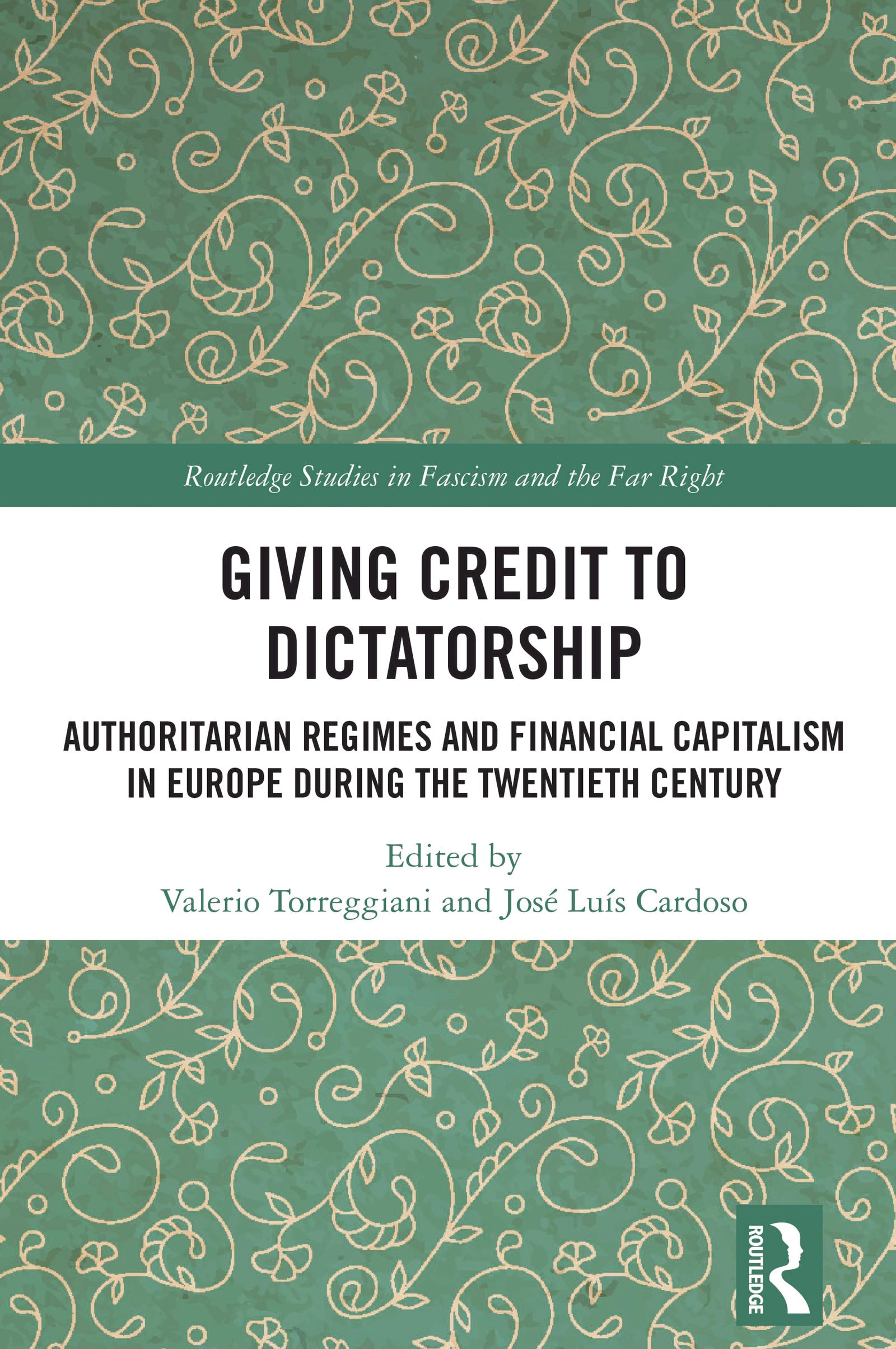
This edited volume explores the interplay between political, economic, and financial development in twentieth-century European authoritarian regimes.
The book features case studies that explore the impact of domestic and international finance on the rise, stabilization, and decline of various European dictatorships of the twentieth century, such as Italy, Germany, Yugoslavia, Portugal, Spain, Greece, and Turkey. The chapters delve into the role that the regimes played in shaping and transforming the financial system, exploring their international interconnections as well as the influence of economic theory and ideological constructs in dictatorial environments. Applying the methodological framework of the history of capitalism to the analysis of the relationship between authoritarian regimes and financial systems, the book provides new insights into the relationshipsbetween politics and economics, and it offers a fresh perspective on contemporary political issues and their interaction with the global financial system.
This collection is an ideal resource for postgraduate students and researchers in history, economics, political economy, and political sciences.
Pay easily by card, Klarna, Apple Pay or Google Pay. Not happy? You always have a 14-day money-back guarantee. Read more in our terms. If you have any questions, email us at hello@memmo.org.
Memmo makes studying easier – wherever you are in the world. We bring your course books and smart study tools together in one place: summaries, quizzes, podcasts and flashcards. Plus Ted, your study buddy who answers anything you wonder. Over 50,000 students already study here – built to help you learn faster and stress less.