
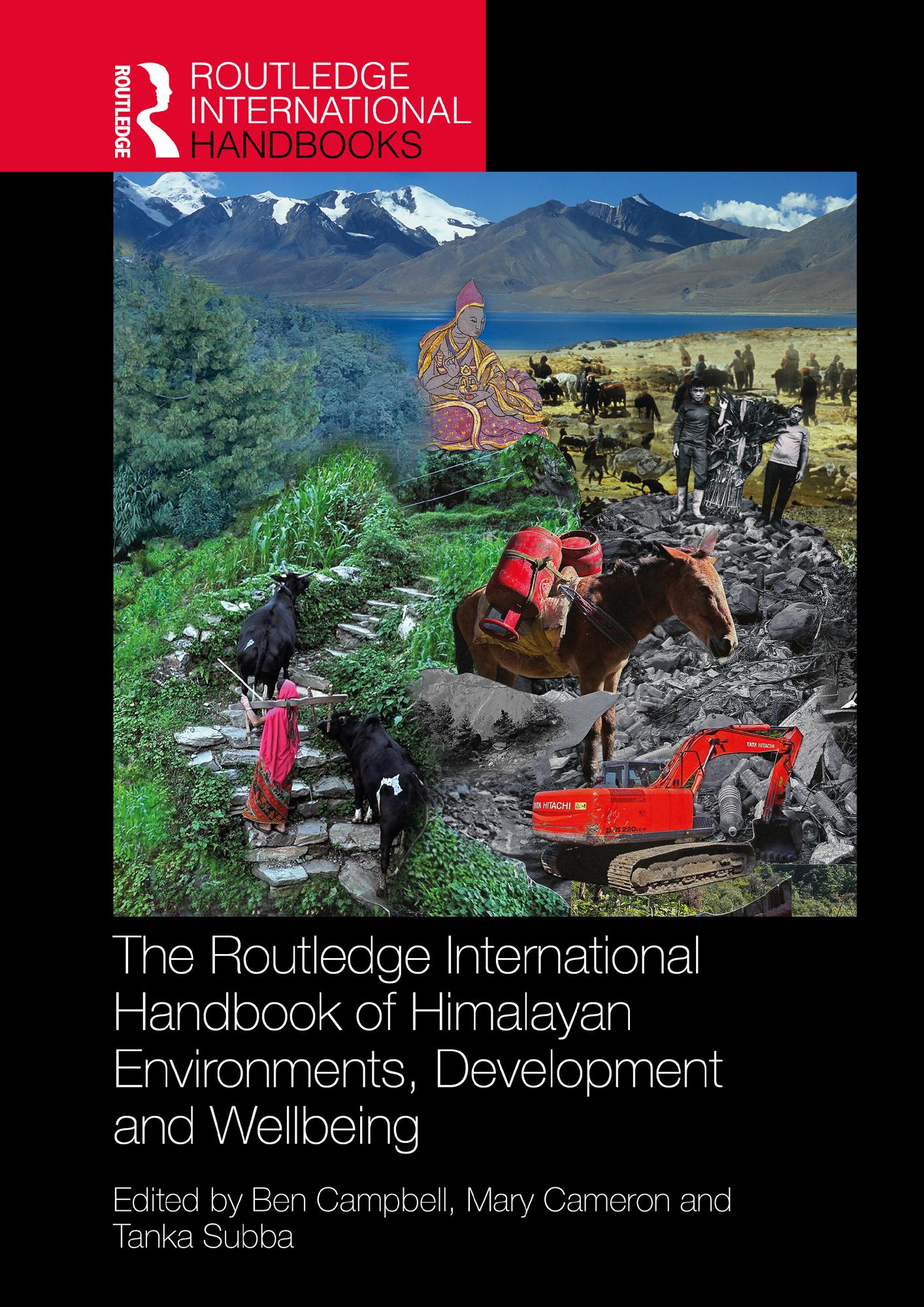
Shifting dynamics of peoples, livelihoods and territories, influenced by global warming, require new ways of thinking and new kinds of politics beyond the sovereignties of idealized traditional European nation-states. The Routledge International Handbook of Himalayan Environments, Development and Wellbeing features over 70 scholars from the social sciences, humanities and natural sciences who explore the interrelationships between environmental change, development and wellbeing across the entire Himalayan region – from the Indian Himalayas in the east to Bhutan, Nepal, Tibet (TAR), India and Gilgit-Baltistan in the west.
Within over 50 chapters, the handbook presents engaging field-based research on the region’s socio-cultural diversity, climate adaptation and socio-economic transformation. It examines creative ways Himalayan communities adapt, seek wellbeing and respond to environmental and development challenges. Lessons about learning from Indigenous and local peoples, about governance of forests and water, and grassroots conservation practices from the Himalayan region can help inform global networks of researchers and practitioners.
The handbook will interest scholars, students, stakeholders and the public about the evolving relationships between Himalayan peoples, territories and global warming, offering insights into people’s creative ways for understanding, adapting, and seeking wellbeing in environmental relations and development possibilities.
Pay easily by card, Klarna, Apple Pay or Google Pay. Not happy? You always have a 14-day money-back guarantee. Read more in our terms. If you have any questions, email us at hello@memmo.org.
Memmo makes studying easier – wherever you are in the world. We bring your course books and smart study tools together in one place: summaries, quizzes, podcasts and flashcards. Plus Ted, your study buddy who answers anything you wonder. Over 50,000 students already study here – built to help you learn faster and stress less.