
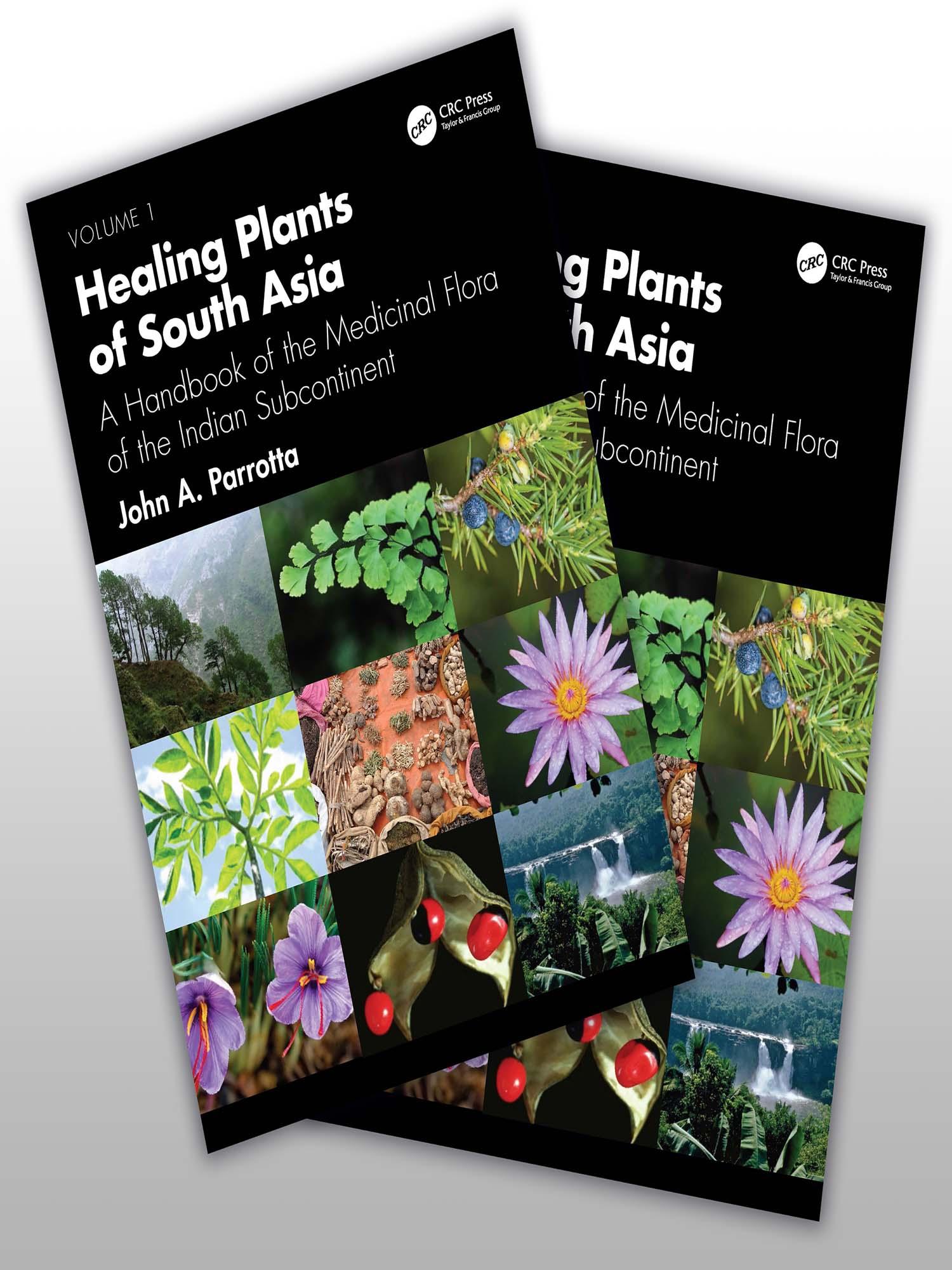
South Asia, a region of outstanding biological diversity, is home to approximately 2.1 billion people whose rich cultural traditions include sophisticated knowledge of the properties and uses of thousands of native and introduced plant species. Plant-based drugs, integral to the traditional medical systems of India and neighboring countries, play a central role in health care throughout the region and beyond, as regional and global demand for therapeutically valuable plants continues to grow.
However, the ongoing transformation and degradation of forests and other natural ecosystems in this region due to rapid environmental and socioeconomic changes, poses serious challenges for the conservation and sustainable utilization of its medicinal plant wealth. Efforts to conserve the region’s rich biodiversity and associated traditional knowledge require up-to-date information on the status and trends of these resources and their importance for health care and livelihoods. Healing Plants of South Asia: A Handbook of the Medicinal Flora of the Indian Subcontinent helps to address this need.
The work’s introduction provides overviews of South Asia’s diverse systems of traditional medicine, as well as the region’s biogeography, ecosystem and plant species diversity and associated conservation challenges. Subsequent chapters focus on nearly 2,000 species of plants most commonly used in traditional medicine within the region. In chapters devoted to ferns and lycophytes (including 59 species), conifers (20 species) and flowering plants (1849 species), the information provided draws upon a wide variety of authoritative published sources as well as reliable online databases. Entries for each species include: currently accepted scientific names and common synonyms; vernacular names in the major regional languages; a complete botanical description; information on the species’ ecology and conservation status; traditional therapeutic uses in Ayurveda, Unani, Siddha, Tibetan medicine, and more localized folk medical systems; and key references. The majority of these species are also beautifully illustrated with photos and/or botanical drawings.
Healing Plants of South Asia: A Handbook of the Medicinal Flora of the Indian Subcontinent will be of value to students, scientists and professionals in a number of fields, including pharmacology, pharmaceutics, food chemistry and nutrition, natural products chemistry, ethnobotany and ethnomedicine. It should also appeal to conservationists, community development practitioners, industry, and policy makers, among a host of those involved in the world of medicinal plants and traditional medicine in South Asia.
Pay easily by card, Klarna, Apple Pay or Google Pay. Not happy? You always have a 14-day money-back guarantee. Read more in our terms. If you have any questions, email us at hello@memmo.org.
Memmo makes studying easier – wherever you are in the world. We bring your course books and smart study tools together in one place: summaries, quizzes, podcasts and flashcards. Plus Ted, your study buddy who answers anything you wonder. Over 50,000 students already study here – built to help you learn faster and stress less.