
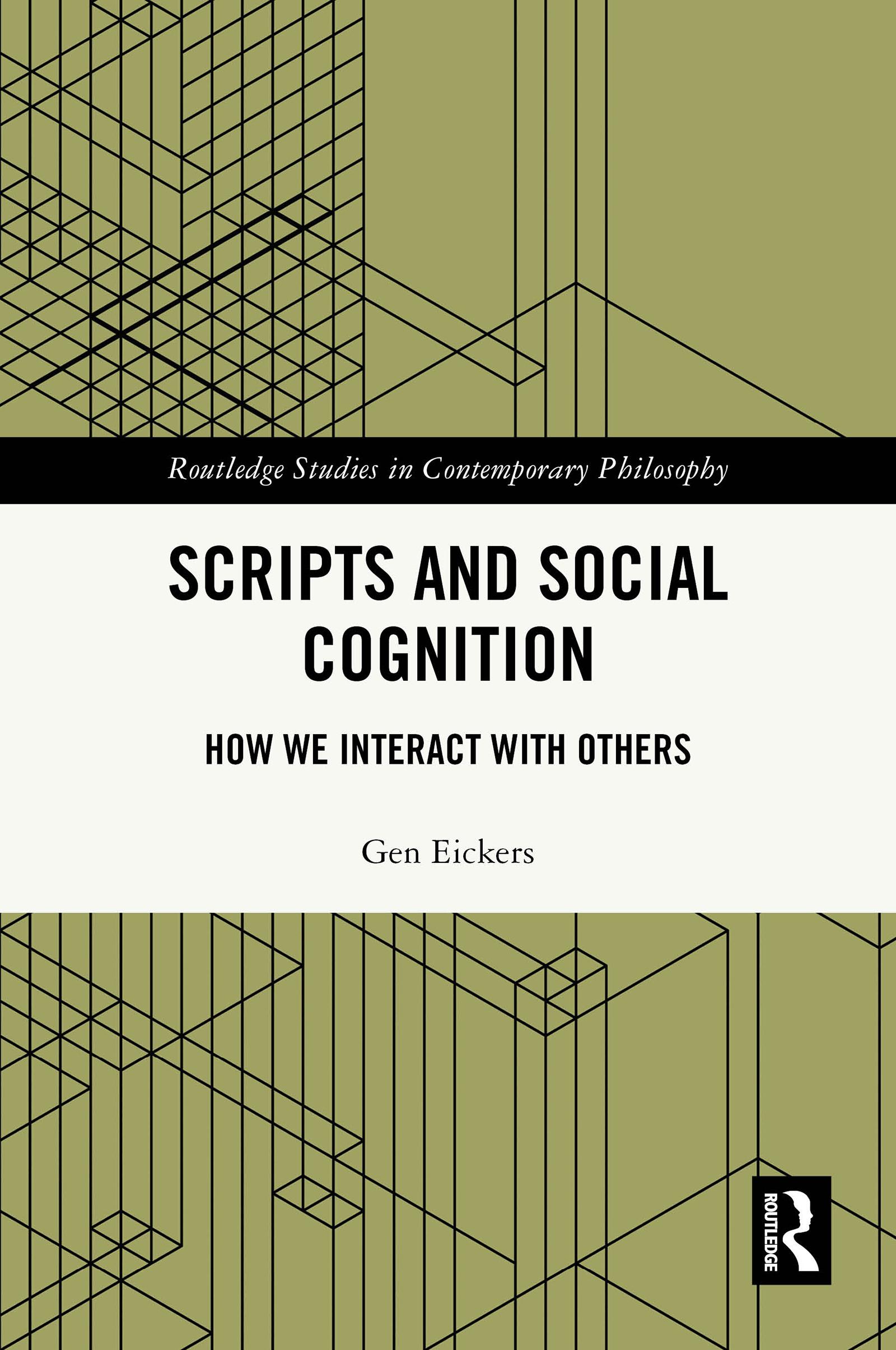
This book argues that our success in navigating the social world depends heavily on scripts. Scripts play a central role in our ability to understand social interactions shaped by different contextual factors.
In philosophy of social cognition, scholars have asked what mechanisms we employ when interacting with other people or when cognizing about other people. Recent approaches acknowledge that social cognition and interaction depend heavily on contextual, cultural, and social factors that contribute to the way individuals make sense of the social interactions they take part in. This book offers the first integrative account of scripts in social cognition and interaction. It argues that we need to make contextual factors and social identity central when trying to explain how social interaction works, and that this is possible via scripts. Additionally, scripts can help us understand bias and injustice in social interaction. The author’s approach combines several different areas of philosophy – philosophy of mind, social epistemology, feminist philosophy – as well as sociology and psychology to show why paying attention to injustice in interaction is much needed in social cognition research, and in philosophy of mind more generally.
Scripts and Social Cognition: How We Interact with Others will appeal to scholars and graduate students working in philosophy of mind, philosophy of psychology, social epistemology, social ontology, sociology, and social psychology.
Pay easily by card, Klarna, Apple Pay or Google Pay. Not happy? You always have a 14-day money-back guarantee. Read more in our terms. If you have any questions, email us at hello@memmo.org.
Memmo makes studying easier – wherever you are in the world. We bring your course books and smart study tools together in one place: summaries, quizzes, podcasts and flashcards. Plus Ted, your study buddy who answers anything you wonder. Over 50,000 students already study here – built to help you learn faster and stress less.