
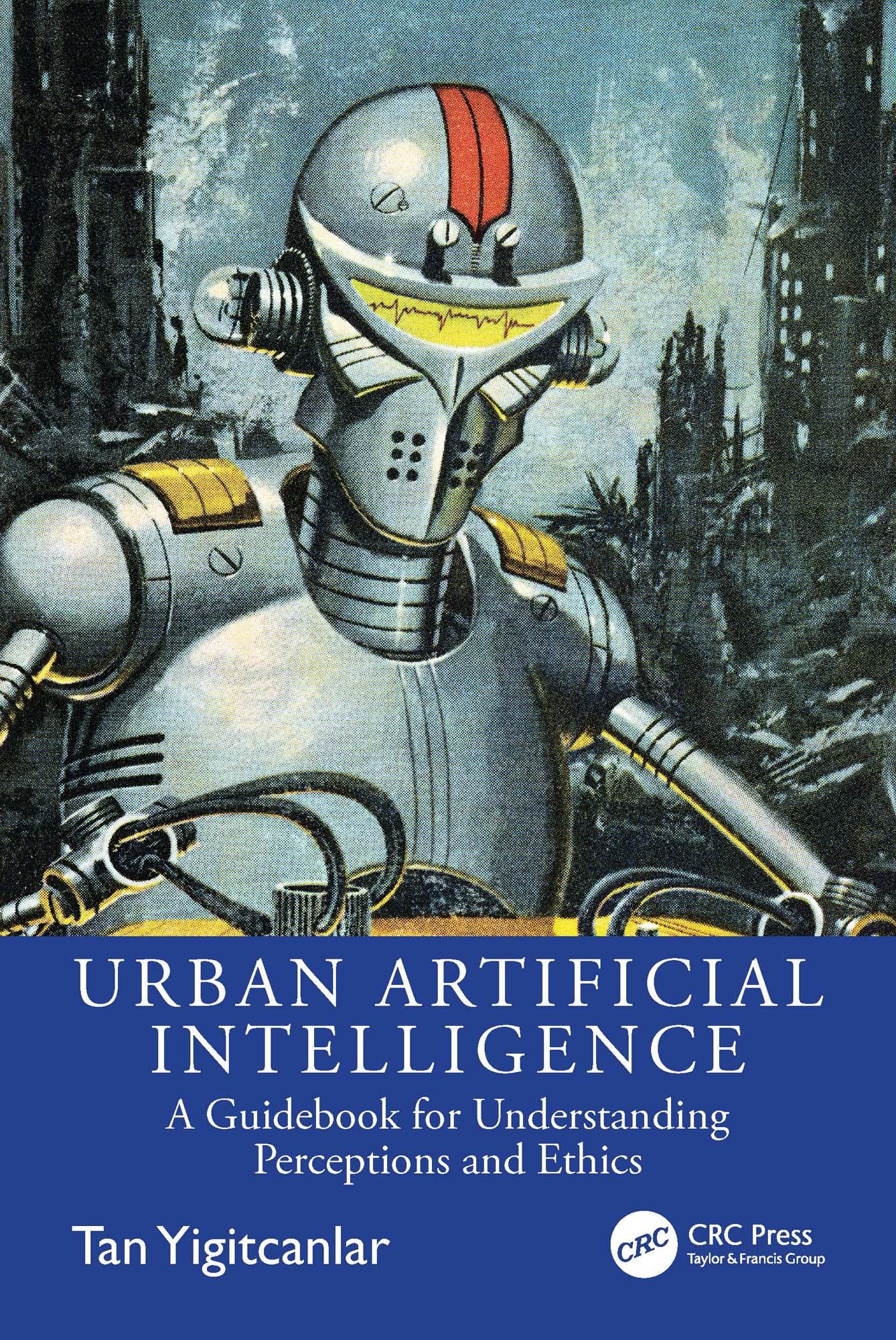
This volume thoroughly explores the perceptions and ethical considerations surrounding urban artificial intelligence (AI). Tan Yigitcanlar delves into the complex public and professional views on AI, offering invaluable insights for policymakers, urban planners, and developers.
As the world rapidly advances technologically, the role of AI has become increasingly significant. AI’s transformative power spans various sectors, revolutionising how we operate and innovate in fields such as healthcare, finance, agriculture, and space exploration. Despite its wide‑reaching impact, the integration of AI into urban planning and development remains relatively underexplored. This is surprising given AI’s immense potential to revolutionise urban design, management, and experience. Comprising eight comprehensive and insightful chapters, this book examines AI’s role in urban contexts, including its applications, public perceptions, and ethical implications. The first part of the guidebook delves into varied perceptions of AI within different urban sectors, presenting detailed perception analyses on AI’s role in urban planning, local government services, disaster management, and the construction industry. The second part shifts focus to the ethical implications and responsible implementation of AI in urban settings. It provides frameworks and strategies to ensure AI technologies contribute positively to urban development while mitigating potential risks and ethical concerns.
This volume, alongside its companion Urban Artificial Intelligence: A Guidebook for Understanding Concepts and Technologies, offers a holistic view of Urban Artificial Intelligence. Together, these books provide essential insights for urban planners, policymakers, researchers, and anyone interested in AI and urban development, guiding responsible AI integration to foster smarter, more sustainable, and equitable urban environments.
Pay easily by card, Klarna, Apple Pay or Google Pay. Not happy? You always have a 14-day money-back guarantee. Read more in our terms. If you have any questions, email us at hello@memmo.org.
Memmo makes studying easier – wherever you are in the world. We bring your course books and smart study tools together in one place: summaries, quizzes, podcasts and flashcards. Plus Ted, your study buddy who answers anything you wonder. Over 75,000 students already study here – built to help you learn faster and stress less.