
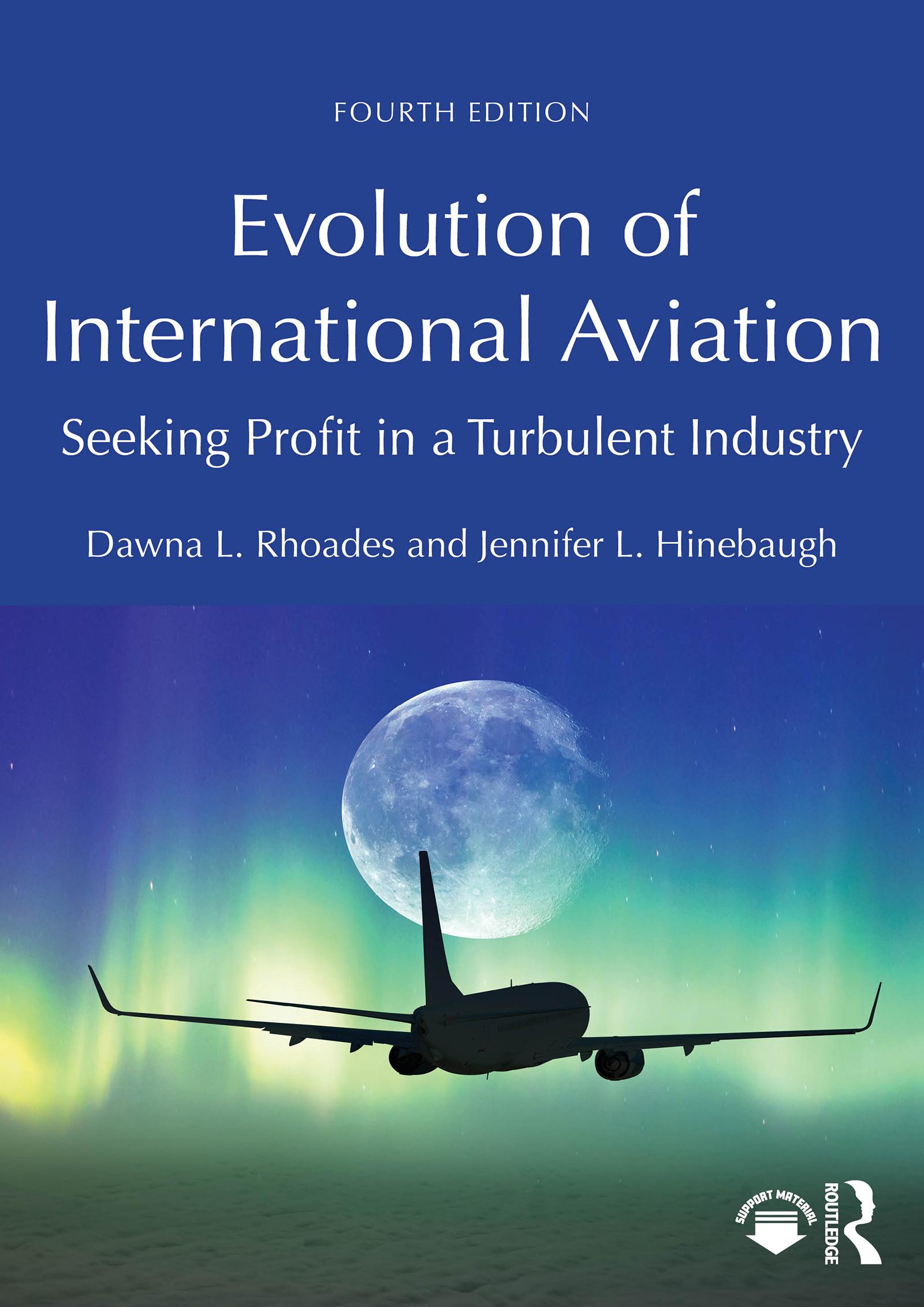
The purpose of this book is twofold. First, it lays out the forces that shaped the international aviation industry and that changed all the rules in the drive for liberalization. Second, it looks at the many interesting and difficult choices ahead that the airline industry in general and the international aviation industry in particular face. These choices include many dichotomies: pulling back from the trend toward liberalization or embracing the liberalization trend, merging in search of profitability or fragmenting the industry in search of economies. These possible futures are explored, including the pros and cons of each future from a national, consumer, employer, and employee perspective. Evolution of International Aviation has been substantially revised to place the triple crises – 9/11, the 2008 Global Financial Crisis, and the COVID-19 pandemic – into context with the declared new Golden Age of 2018 (A4A), Brexit, renewed government aid around the globe, and the Ukraine conflict. It includes a new chapter on safety and security that will start with processes and technology introduced after 9/11 (such as the 24-hour rule, known shippers, and Global Entry programs) and end with recent biometrics and digital identity. As with the previous three editions, this fourth edition of Evolution of International Aviation reviews the historical development of the international aviation system. From this foundation it then provides an updated and expanded account of the current state of the aviation and aerospace industry, including profitability, consolidation, and merger activity. The book includes coverage of the industry segments – airlines, air cargo, and manufacturing – to include the emerging commercial space sector. It also emphasizes the relationship between aviation and the political process, exploring the sustainability of this mode of transportation in a world of climate change, high oil prices, and political instability. Because this book is intended for both the interested amateur and the more serious student, references are provided in the text and at the end of each chapter to allow for further in-depth study.
Pay easily by card, Klarna, Apple Pay or Google Pay. Not happy? You always have a 14-day money-back guarantee. Read more in our terms. If you have any questions, email us at hello@memmo.org.
Memmo makes studying easier – wherever you are in the world. We bring your course books and smart study tools together in one place: summaries, quizzes, podcasts and flashcards. Plus Ted, your study buddy who answers anything you wonder. Over 75,000 students already study here – built to help you learn faster and stress less.