
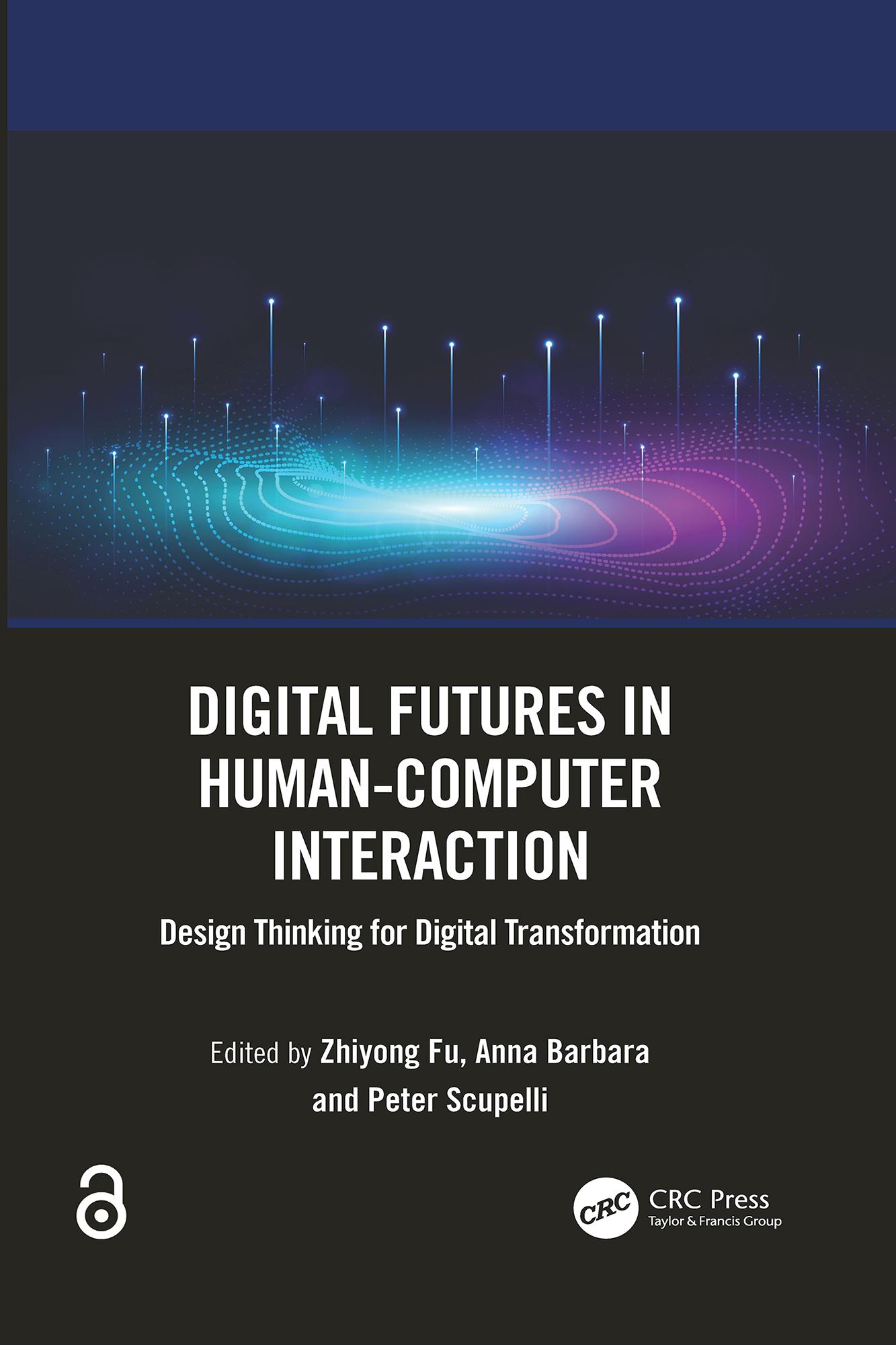
The application of futures thinking in Human-Computer Interaction (HCI) has become increasingly important in recent years. Integrating speculative thinking with future design approaches has allowed HCI researchers to explore the potential impacts of technology on digital society. However, the implementation and application of futures thinking in HCI research is an emerging area. Digital Futures in Human-Computer Interaction: Design Thinking for Digital Transformation fills this gap by systematically analyzing HCI's innovation trends in the digital era.
This book explores the dialogue between digital transformation and futures thinking for alternative visions of HCI research. The book highlights significant trends and advancements in futures thinking related to HCI. Case studies illustrate the role of futures thinking, offering readers a broad overview of the subject while detailing the competencies and practices that can lead to successful futures design.
This engaging and informative reference will appeal to students, academics, and researchers interested in various design aspects related to HCI. These aspects include service design, sustainable design, product design, space design, visual communication, design education, futures studies, and social innovation.
The Open Access version of this book, available at http://www.taylorfrancis.com, has been made available under a Creative Commons [Attribution-Non Commercial-No Derivatives (CC BY-NC-ND)] 4.0 license.
Pay easily by card, Klarna, Apple Pay or Google Pay. Not happy? You always have a 14-day money-back guarantee. Read more in our terms. If you have any questions, email us at hello@memmo.org.
Memmo makes studying easier – wherever you are in the world. We bring your course books and smart study tools together in one place: summaries, quizzes, podcasts and flashcards. Plus Ted, your study buddy who answers anything you wonder. Over 50,000 students already study here – built to help you learn faster and stress less.