
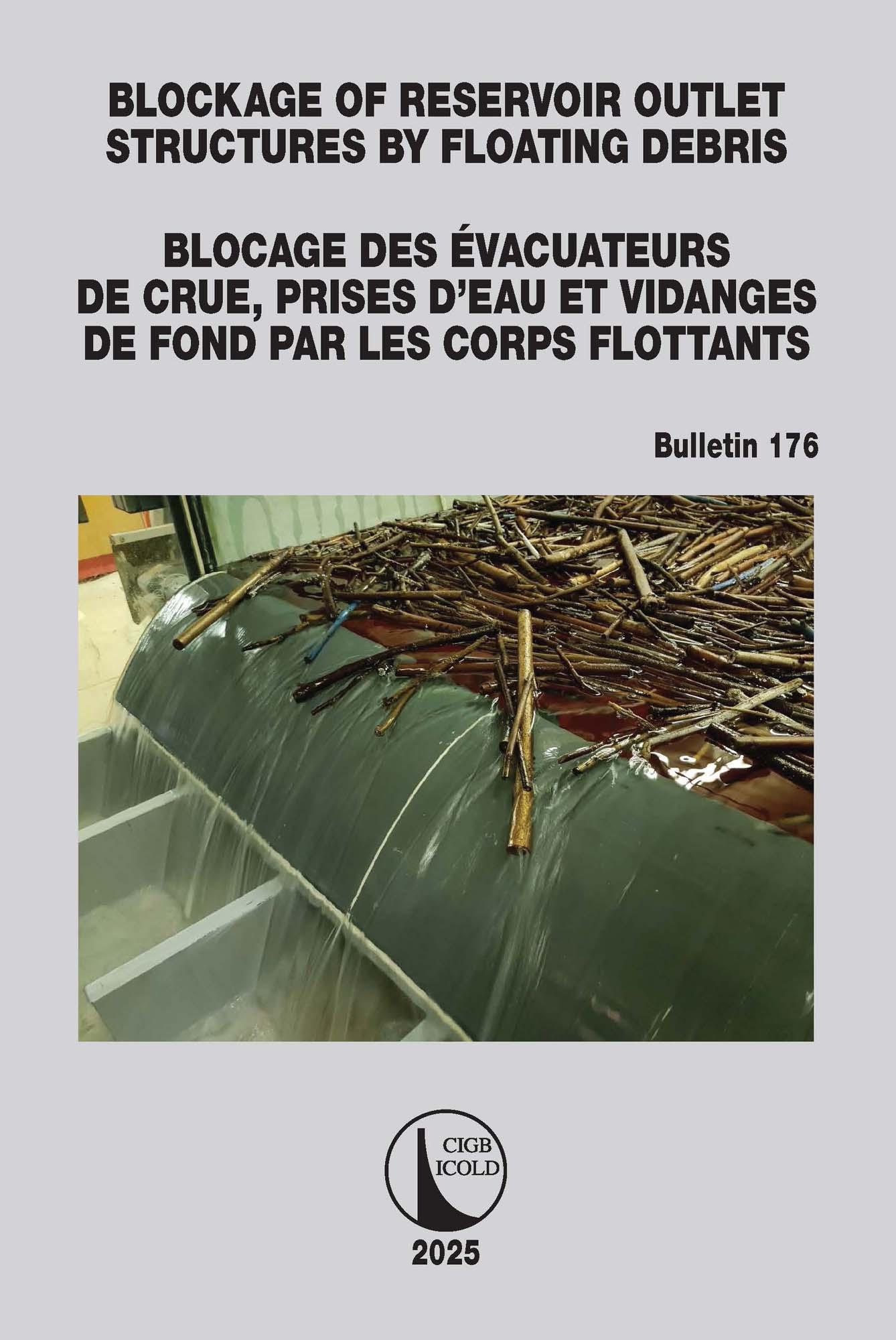
The production of this Bulletin is a joint effort by the Committees on Hydraulics for Dams and on Dams and Floods to pool resources in producing an overview of the state of the art, latest research and industry developments relating to the subject of blockage of spillways, intakes and bottom outlets by floating debris. The topic is of common interest to both committees as the risks involved can be significant, potentially leading to partial or complete loss of hydraulic functionality or even to dam failure with far reaching public safety and economic consequences. A number of previous bulletins have addressed some of these issues in a range of different ways as outlined in the following paragraphs but none of them was specifically dedicated to this rather complex subject. This Bulletin therefore aims to fill this gap by further improving the awareness of the impact of blockage by floating debris on the economy and safety of reservoir projects and by providing practical guidance on the evaluation and management of the risk of blockage. In particular, it updates the topic by dealing in further detail with the relevant processes within the catchment, in the river basin and through the reservoir, while discussing the various methods and best practice techniques for floating debris characterisation and measures for blockage mitigation. In addition, the Bulletin discusses the uncertainties and residual risks associated with the current practices of dealing with floating debris and highlights areas where further research and development would be required.
La production de ce Bulletin est un effort conjoint des Comités sur l'Hydraulique des Barrages et sur les Barrages et les Inondations pour mettre en commun les ressources afin de produire une vue d'ensemble de l'état de l'art, des dernières recherches et des développements industriels relatifs au sujet du blocage des évacuateurs de crue, des prises d'eau et des vidanges de fond par des débris flottants. Le sujet est d'intérêt commun pour les deux comités car les risques encourus peuvent être significatifs, menant potentiellement à une perte partielle ou complète de la fonctionnalité hydraulique ou même à la rupture du barrage avec des conséquences économiques et de sûreté publique majeures. Un certain nombre de bulletins précédents ont abordé quelques-unes de ces questions de différentes manières, comme indiqué dans les paragraphes suivants, mais aucun d'entre eux n'était spécifiquement consacré à ce sujet plutôt complexe. Le présent bulletin vise donc à combler cette lacune en améliorant la conscience de l'impact du blocage par des débris flottants sur l'économie et la sûreté des projets de réservoirs et en fournissant des conseils pratiques sur l'évaluation et la gestion du risque de blocage. En particulier, il met à jour le sujet en traitant plus en détail les processus pertinents dans le bassin versant, dans le lit des cours d’eau et à travers le réservoir, tout en discutant les différentes méthodes et techniques pour mieux caractériser les débris flottants et les mesures d'atténuation de leurs effets négatifs. En outre, le Bulletin aborde les incertitudes et les risques résiduels associés aux pratiques actuelles de traitement des débris flottants et met en évidence les domaines dans lesquels des recherches et des développements supplémentaires seraient nécessaires.
Pay easily by card, Klarna, Apple Pay or Google Pay. Not happy? You always have a 14-day money-back guarantee. Read more in our terms. If you have any questions, email us at hello@memmo.org.
Memmo makes studying easier – wherever you are in the world. We bring your course books and smart study tools together in one place: summaries, quizzes, podcasts and flashcards. Plus Ted, your study buddy who answers anything you wonder. Over 50,000 students already study here – built to help you learn faster and stress less.