
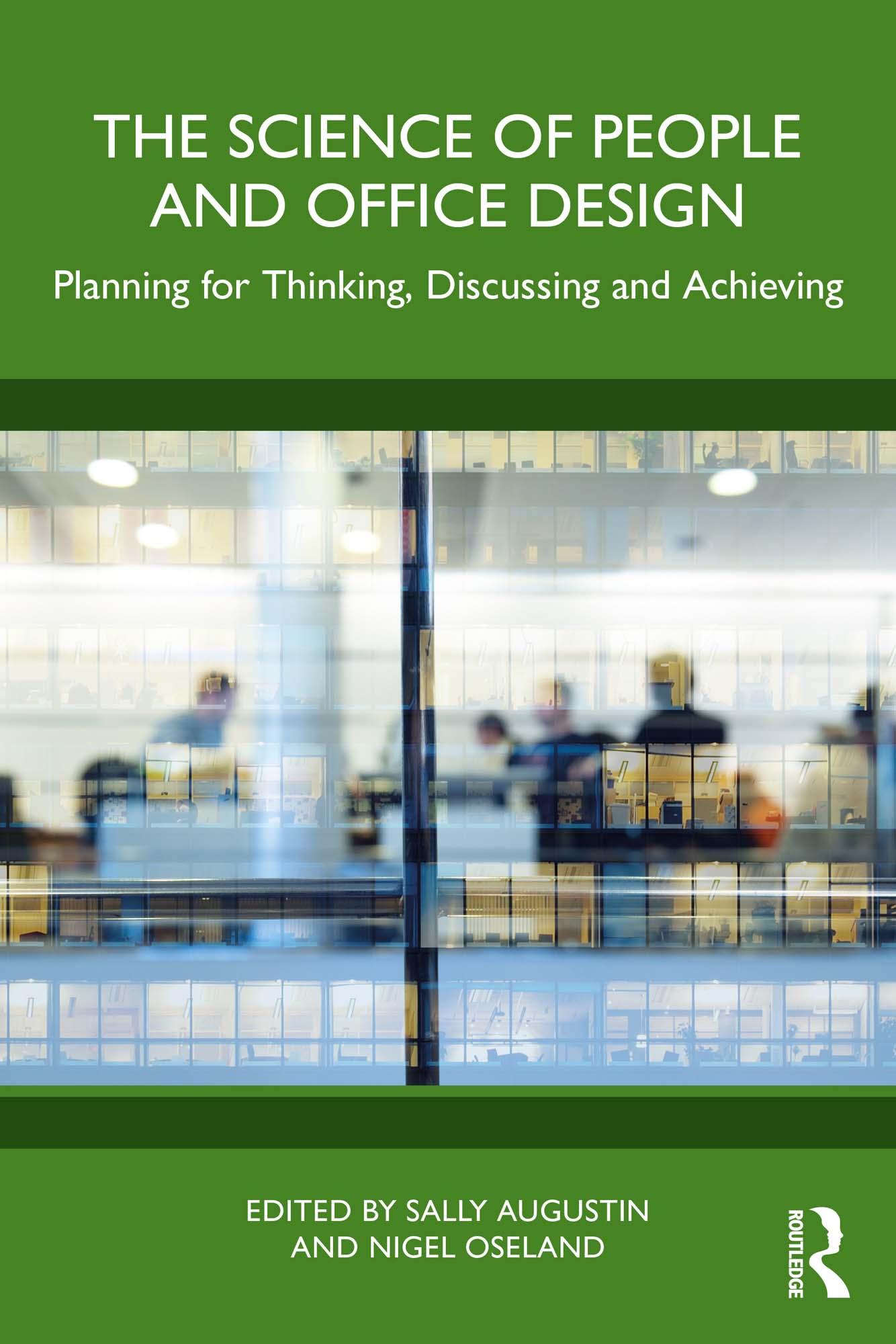
The Science of People and Office Design: Planning for Thinking, Discussing and Achieving has been written for practitioners who would like to apply evidence-based and human-centric design principles to office and workplace design. Practitioner-researcher disconnects often arise due to a lack of meaningful connection between their professional worlds. This book seeks to rectify this disconnect and make it clear that research can significantly affect the likelihood that design projects achieve the objectives outlined in their briefs, and that practitioners need to have a real influence on research conducted.
The book consists of 16 chapters,each grouped into three major sections, with an overview chapter and a conclusion drawn together by the editors. Each chapter addresses a real-world workplace design-related issue. The first part of each chapter presents the editors' overview of the problem in practice and the objectives that must be achieved via design solutions. The second portion of each chapter presents peer-reviewed research related to the chapter’s topic, written by a researcher focused on practical issues. The final part of each chapter is written by a workplace design practitioner and details their efforts to resolve the section’s real-world workplace design-related concern by applying relevant peer-reviewed research.
The book is aimed at professionals working in business, interior design, architecture, surveying, facilities management, building services engineering, human resources and psychology who are key stakeholders in the design and delivery of modern office spaces. Postgraduates studying design, architecture, engineering, facilities management, environmental psychology and wellbeing will also find the book useful.
Pay easily by card, Klarna, Apple Pay or Google Pay. Not happy? You always have a 14-day money-back guarantee. Read more in our terms. If you have any questions, email us at hello@memmo.org.
Memmo makes studying easier – wherever you are in the world. We bring your course books and smart study tools together in one place: summaries, quizzes, podcasts and flashcards. Plus Ted, your study buddy who answers anything you wonder. Over 75,000 students already study here – built to help you learn faster and stress less.