
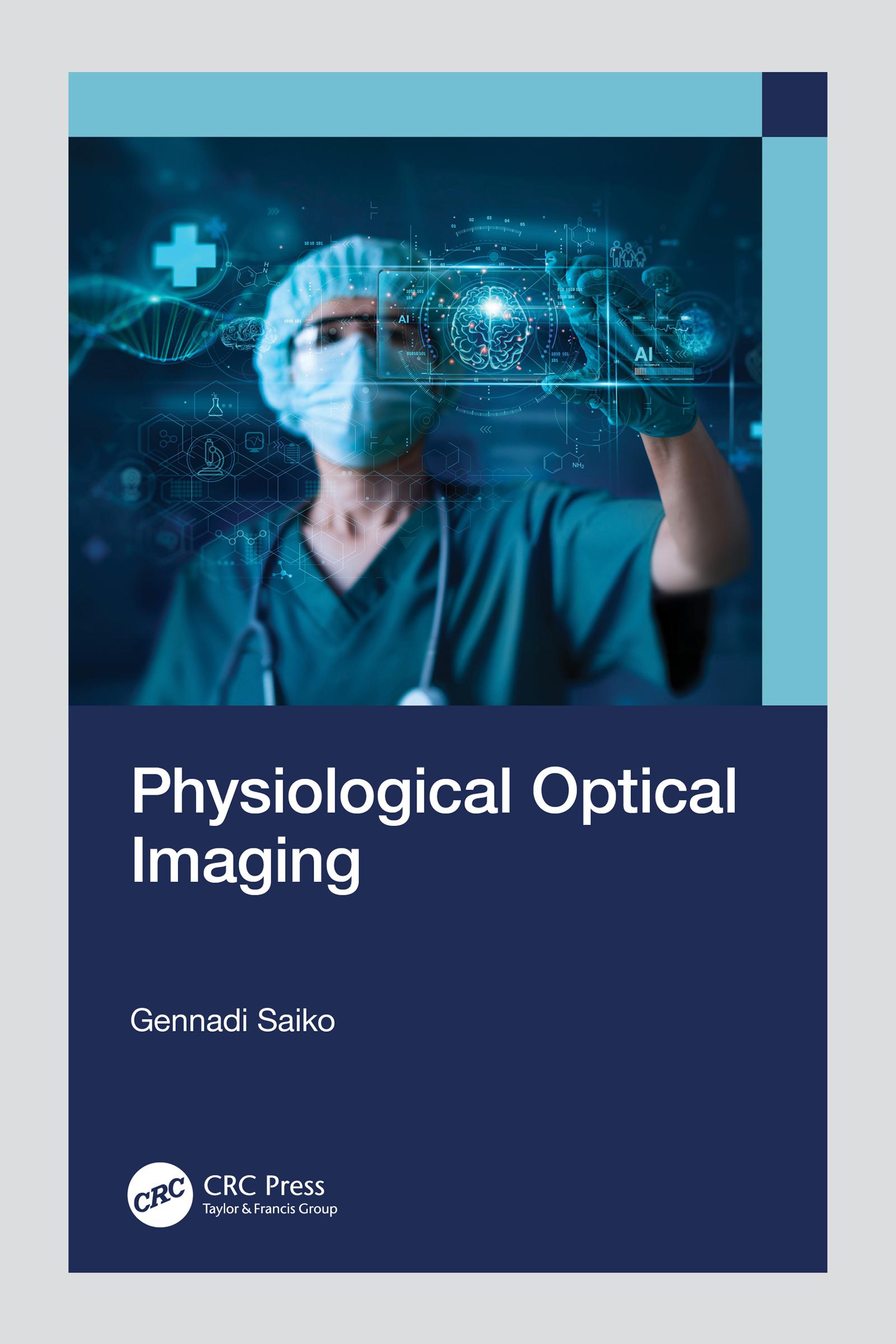
Physiological optical imaging is a group of emerging technologies that aim to provide healthcare practitioners and biomedical researchers with information about tissue physiology or pathophysiology using approaches different from traditional medical imaging (PET, ultrasound, MRI, X-ray, or CT scan).
This book provides a comprehensive review of this group of technologies, combining a current medical literature review with an overview of cutting-edge technologies, the physics behind them, and common features across different technologies. It presents technical and physiological considerations that impact the sensitivity and spatial resolution of each technology and practical ways to improve them. The book emphasises low-cost technologies, which can be implemented in point-of-care settings. It is illustrated primarily with examples from wound care and oncology, with additional examples from other medical fields, including ophthalmology and neuroimaging.
It can be used as a one-stop reference and practical guide for healthcare professionals, clinical researchers, and engineers working with emerging bioimaging technologies who are looking to utilise physiological optical imaging technologies in biomedical research or clinical practice.
Key Features:
- Provides a comprehensive review of current technologies.
- Written as a practical guide with physiological and design considerations and illustrations.
- Presents a 360-degree view on the topic: a combination of clinical information alongside a technological background.
Pay easily by card, Klarna, Apple Pay or Google Pay. Not happy? You always have a 14-day money-back guarantee. Read more in our terms. If you have any questions, email us at hello@memmo.org.
Memmo makes studying easier – wherever you are in the world. We bring your course books and smart study tools together in one place: summaries, quizzes, podcasts and flashcards. Plus Ted, your study buddy who answers anything you wonder. Over 75,000 students already study here – built to help you learn faster and stress less.