
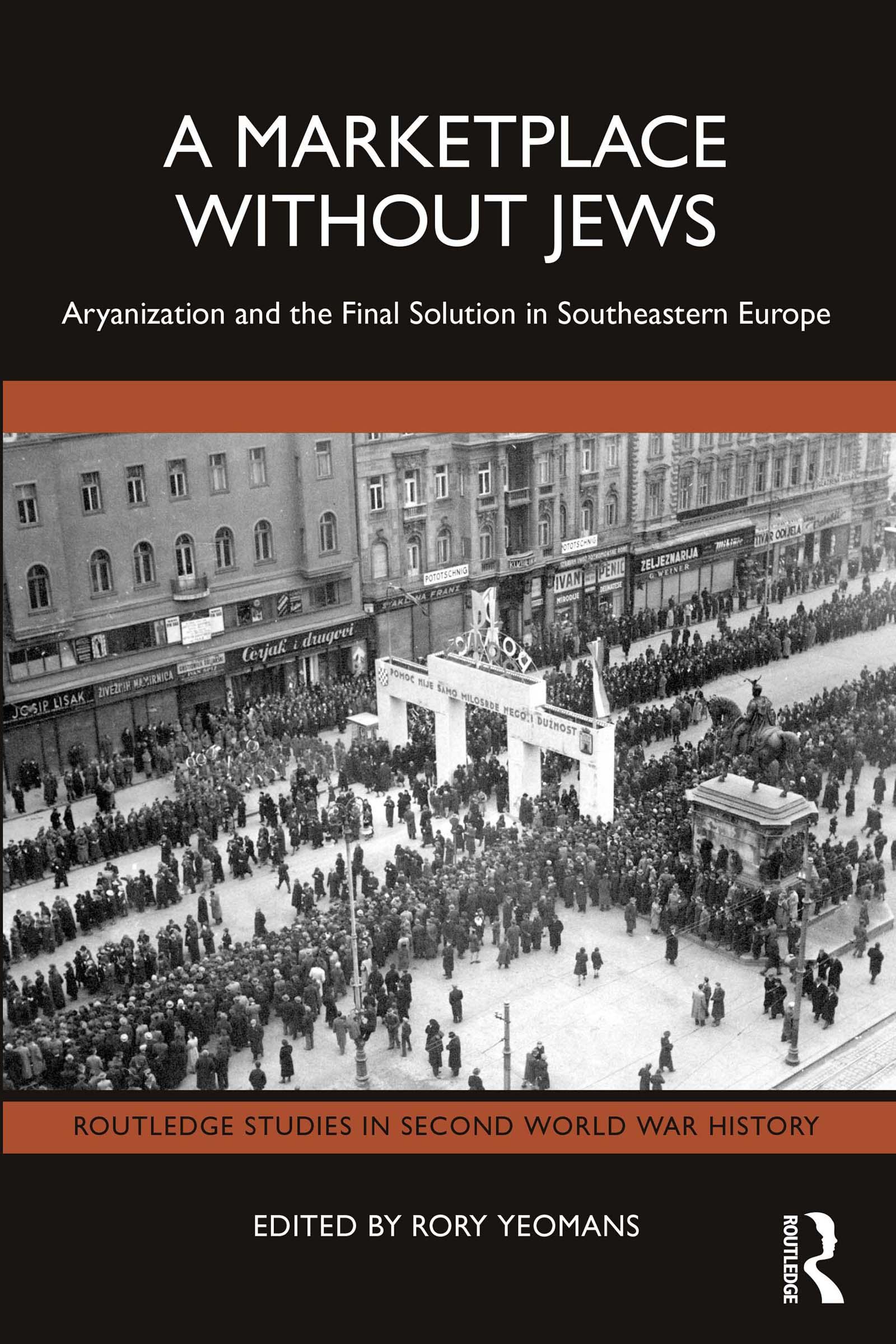
This book examines the economics of everyday life and the Final Solution in Southeastern Europe, specifically the role that the mass confiscation of Jewish property and exclusion of Jews as well as other undesired population groups from the national marketplace in Southeastern Europe played in transforming economic life and social relations.
It aims to understand how ordinary people in the region responded as beneficiaries, bystanders, perpetrators, rescuers, and, above all, victims to Aryanization, and how regimes and governments adapted its basic principles to their specific national contexts and ideological and ethnic agendas. Aryanization appeared in some of its most radical, accelerated, and yet idiosyncratic forms in Southeastern Europe, representing a staging post or parallel process on the journey to the Final Solution. At the same time, it represented a modernizing project through which states on the periphery of Hitler’s new Europe could not only catch up with the rest of the continent but also seek to gain legitimacy among their own citizens by using systems of mass robbery to satisfy consumer demand and aspirations of social mobility in economies of want and scarcity.
This volume is aimed at scholars and students of the Second World War and European fascism, genocide and occupation politics, Jewish studies, and Southeastern Europe.
Pay easily by card, Klarna, Apple Pay or Google Pay. Not happy? You always have a 14-day money-back guarantee. Read more in our terms. If you have any questions, email us at hello@memmo.org.
Memmo makes studying easier – wherever you are in the world. We bring your course books and smart study tools together in one place: summaries, quizzes, podcasts and flashcards. Plus Ted, your study buddy who answers anything you wonder. Over 50,000 students already study here – built to help you learn faster and stress less.