
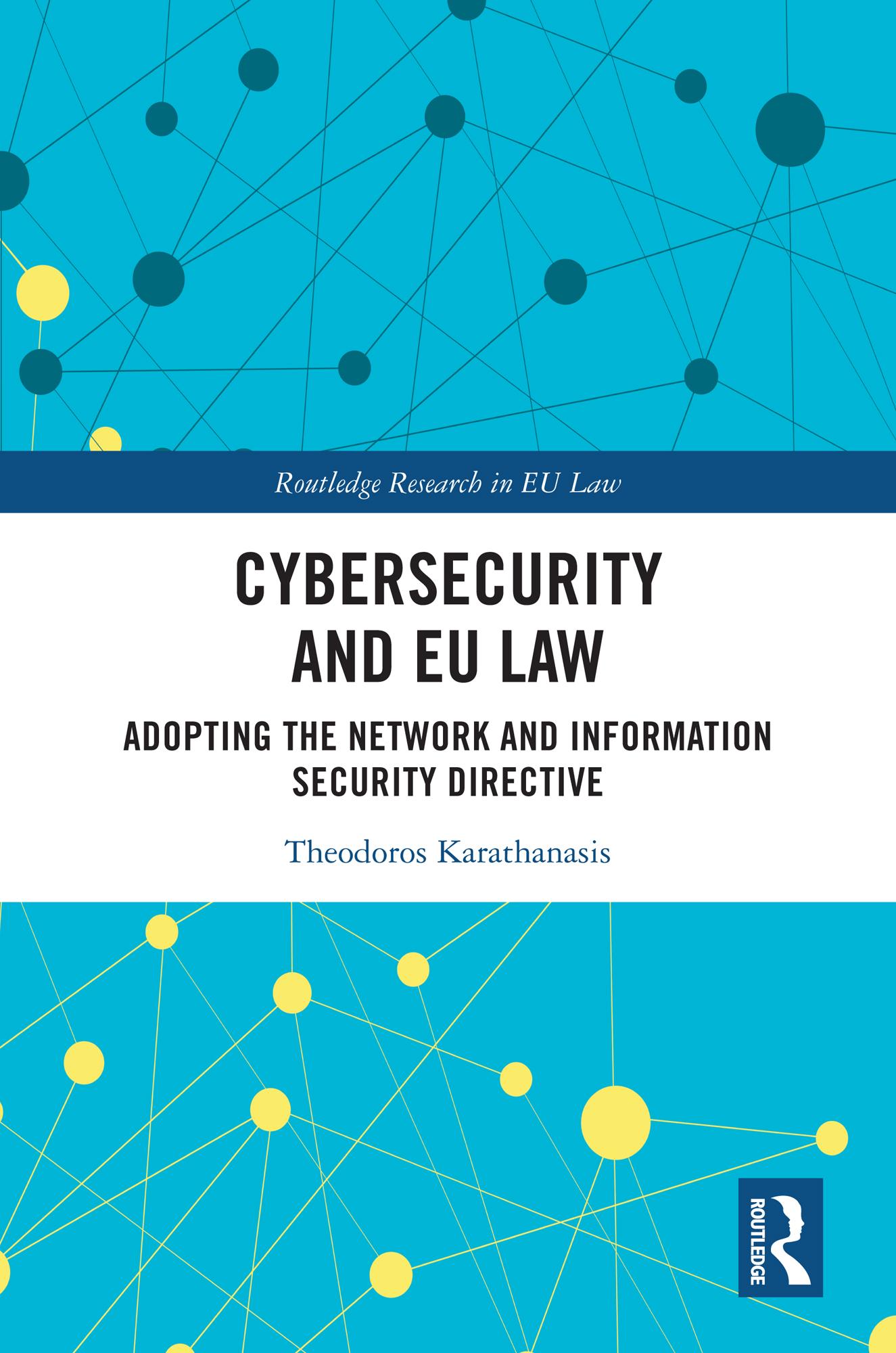
Cybersecurity is set to be one of the dominant themes in EU governance in the coming years, and EU law has begun to adapt to the challenges presented by security with the adoption of the Network and Information Security (NIS) Directive. This book explores the binding effects of the legal instruments and analyzes the impact of the constraining factors originating from NIS-related domestic policies across Finland, France, Greece, Ireland, Luxembourg, and Poland upon the transposition of the NIS Directive.
Combining insights from law and political science, the book offers a comparative empirical analysis of national policies and regulations regarding network and information security, as well as the national legal framework deriving from the NIS Directive’s transposition. The book argues that the more the Directives offer a regulatory leeway to EU Member States for the transposition of their content, the more the preservation of national interests by EU Member States affects the uniform application of directives across the EU. Highlighting the need to go beyond the study of the legal compliance of European directives, the volume offers a new perspective on the interests of Member States and European law, bridging the gap between the politics and law of European integration.
It will be of interest to students, academics, and practitioners with an interest in EU Law and cybersecurity.
Pay easily by card, Klarna, Apple Pay or Google Pay. Not happy? You always have a 14-day money-back guarantee. Read more in our terms. If you have any questions, email us at hello@memmo.org.
Memmo makes studying easier – wherever you are in the world. We bring your course books and smart study tools together in one place: summaries, quizzes, podcasts and flashcards. Plus Ted, your study buddy who answers anything you wonder. Over 50,000 students already study here – built to help you learn faster and stress less.