
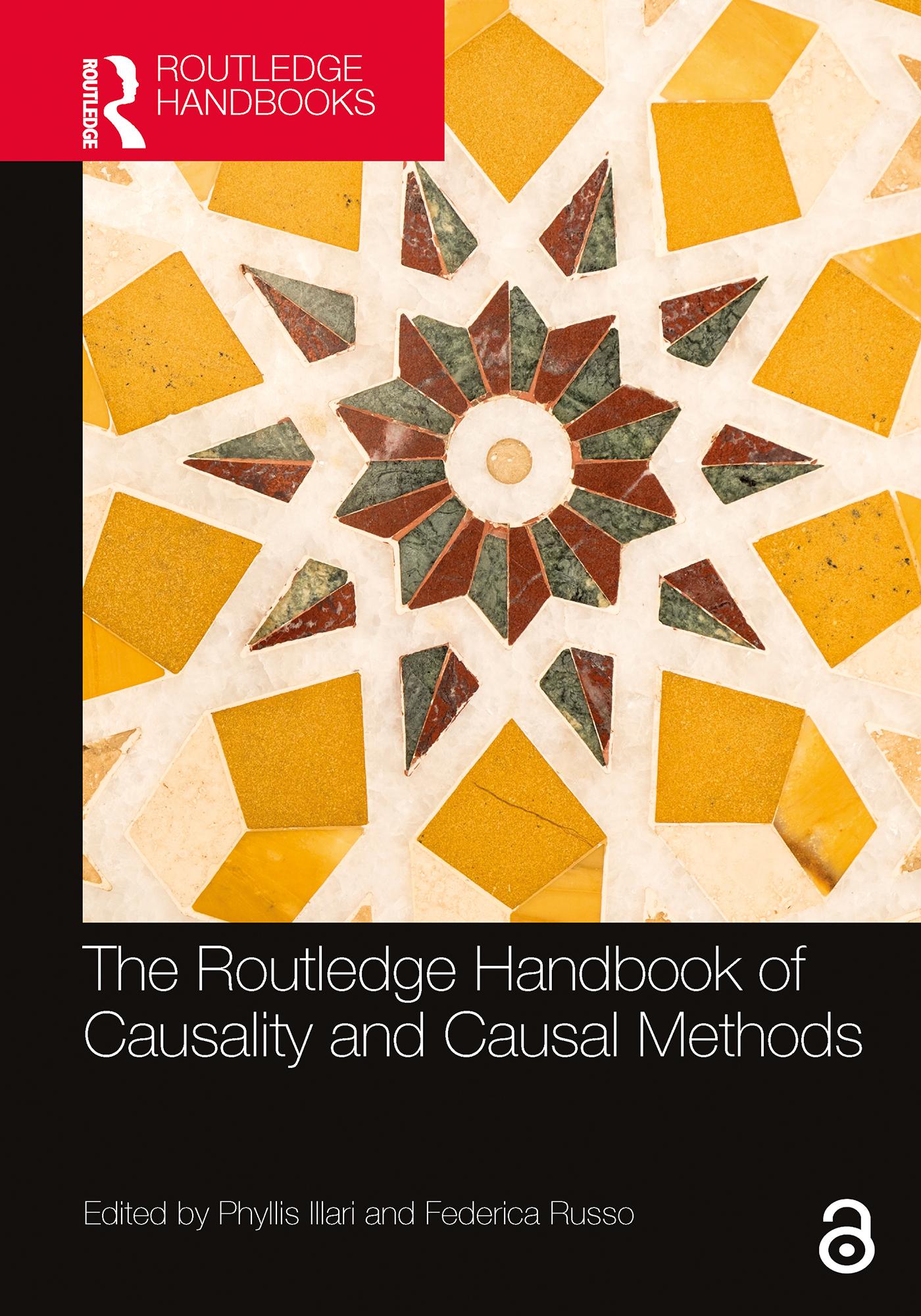
The Routledge Handbook of Causality and Causal Methods adopts a pluralistic, interdisciplinary approach to causality. It formulates distinct questions and problems of causality as they arise across scientific and policy fields. Exploring, in a comparative way, how these questions and problems are addressed in different areas, the Handbook fosters dialogue and exchange. It emphasizes the role of the researchers and the normative considerations that arise in the development of methodological and empirical approaches. The Handbook includes authors from all over the world and with many different disciplinary backgrounds, and its 50 chapters appear in print here for the first time. The chapters are organized into the following seven parts:
- Causal Pluralism from Theory to Practice
- Causal Theory and the Role of Researchers
- Features of Causal Systems
- Causal Methods, Experimentation and Observation
- Measurement and Data
- Causality, Knowledge, and Action
- Causal Theory across Disciplinary Borders
Essential reading for scholars interested in an interdisciplinary approach to causality and causal methods, the volume is also a valuable resource for advanced undergraduates as well as for graduate students interested in delving into the rich field of causality.
Chapters 15 and 36 of this book are freely available as downloadable Open Access PDFs at http://www.taylorfrancis.com under a Creative Commons [Attribution-Non Commercial-No Derivatives (CC-BY-NC-ND)] 4.0 license.
Pay easily by card, Klarna, Apple Pay or Google Pay. Not happy? You always have a 14-day money-back guarantee. Read more in our terms. If you have any questions, email us at hello@memmo.org.
Memmo makes studying easier – wherever you are in the world. We bring your course books and smart study tools together in one place: summaries, quizzes, podcasts and flashcards. Plus Ted, your study buddy who answers anything you wonder. Over 50,000 students already study here – built to help you learn faster and stress less.