
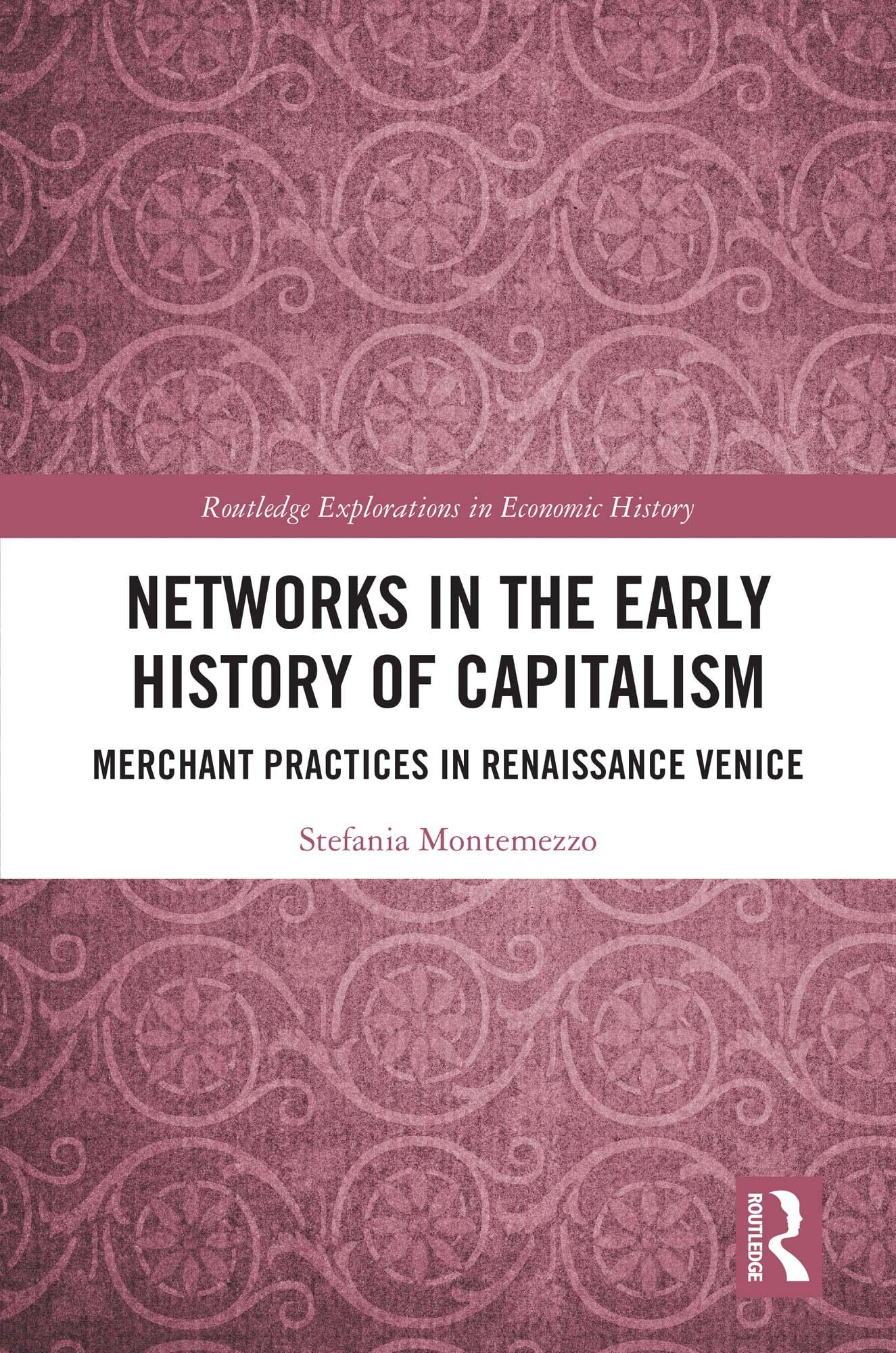
Drawing on a detailed examination of Venetian commerce in the Middle Ages, this book explores the business practices and structures that enabled merchants to compete in a challenging international market.
Contributing to the literature on the early history of capitalism, this book demonstrates how Venetian merchants combined innovation with traditional methods to maintain their edge in a competitive world, providing valuable lessons on resilience and strategic planning in commerce. Small- and mid-sized commercial companies operating across borders and geographies in the early Renaissance period faced numerous challenges, including identifying profitable sectors and businesses, developing effective business strategies, dealing with peers and subordinates, managing the flow of information, and assessing risks and potential rewards. The chapters explore a range of topics in this context, including the roles of family-based firms, the strategic deployment of agents, and the impact of state policies on private enterprise. Readers are introduced to the ways Venetian merchants managed capital, adapted to market demands, and overcame obstacles like wars and resource shortages.
This book will be of significant interest to historians and social scientists researching economic history, the history of trade, the history of capitalism, medieval and Renaissance history, and historical network analysis.
Pay easily by card, Klarna, Apple Pay or Google Pay. Not happy? You always have a 14-day money-back guarantee. Read more in our terms. If you have any questions, email us at hello@memmo.org.
Memmo makes studying easier – wherever you are in the world. We bring your course books and smart study tools together in one place: summaries, quizzes, podcasts and flashcards. Plus Ted, your study buddy who answers anything you wonder. Over 50,000 students already study here – built to help you learn faster and stress less.