
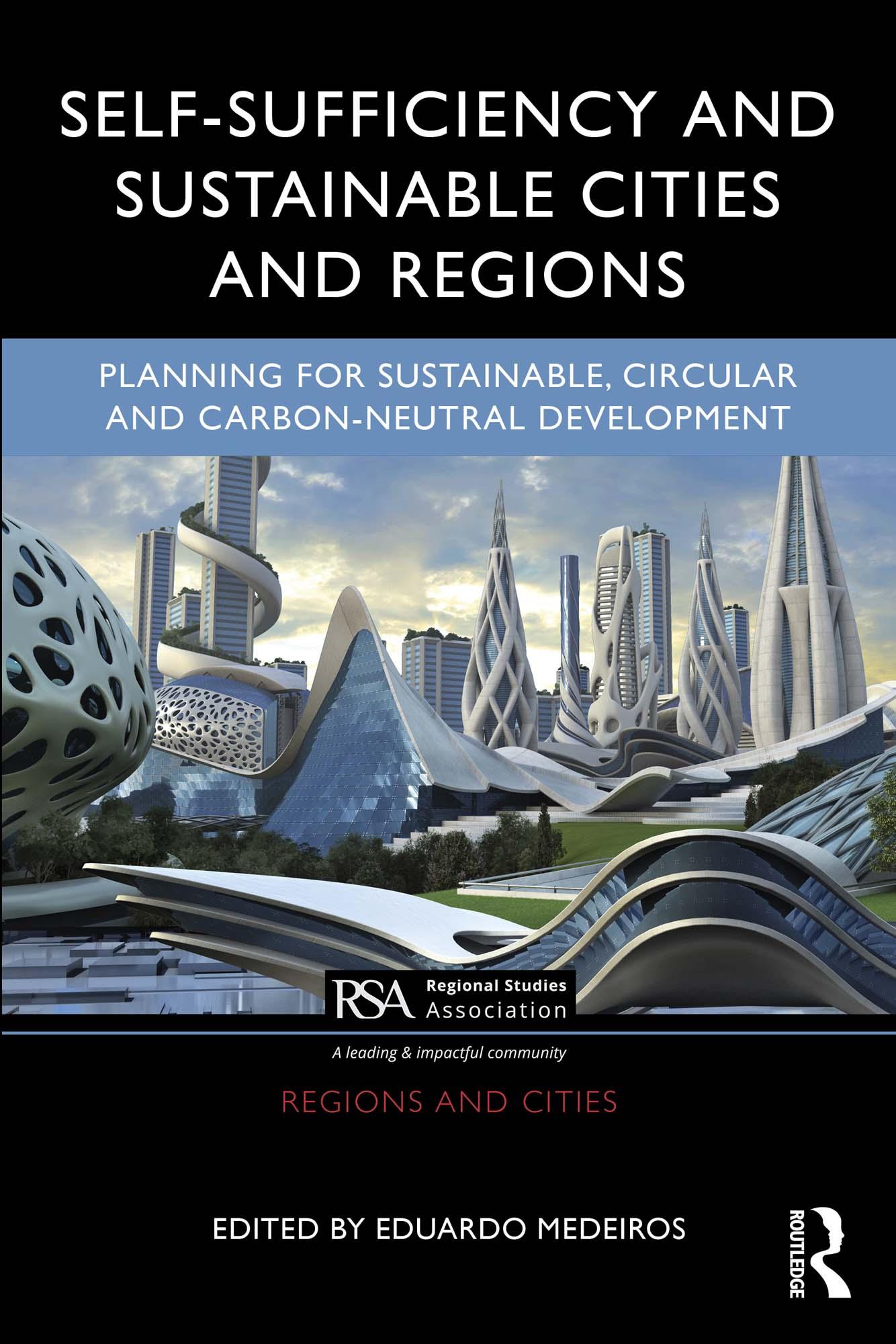
The concept of self-sufficiency involves the notion of sustainable, circular, and carbon-neutral cities. This book examines how urban planning can lead to greater self-sufficiency.
It sheds light on how urban and regional circular and self-sufficiency development can effectively contribute towards the ultimate goals of the United Nations (UN) Agenda 2030 and the European Union (EU) Green Deal. It not only embraces the scientific fields of regional and urban studies but also addresses environmental sustainability-related and regional resilience aspects, such as renewable energy production, sustainable mobility, and the circular economy. This book offers a full toolkit of knowledge on how to effectively implement planning approaches for circular and self-sufficiency development at both urban and regional levels. It begins by presenting a theoretical framework and debate on urban and regional planning approaches that can effectively make cities and regions circular and self-sufficient in certain development domains, such as producing intra-city electric energy, sustainable mobility, and promoting a circular economy. Further, it advances a range of policy development proposals aiming at providing a comprehensive introduction to contemporary thinking about how cities and regions can design innovative planning and governance processes and, where appropriate, build capacity to implement systemic and integrated climate-neutral policies, building on existing place-based territorial capital and experiences developed by local and regional networks. The chapters are written by established authors in their respective domains.
This book will thoroughly prepare students and provide knowledge to academics, researchers, and policymakers in the fields of urban and regional planning/development and studies, environmental sustainability, regional resilience, human geography, economic development, and public/EU/UN policies.
Pay easily by card, Klarna, Apple Pay or Google Pay. Not happy? You always have a 14-day money-back guarantee. Read more in our terms. If you have any questions, email us at hello@memmo.org.
Memmo makes studying easier – wherever you are in the world. We bring your course books and smart study tools together in one place: summaries, quizzes, podcasts and flashcards. Plus Ted, your study buddy who answers anything you wonder. Over 75,000 students already study here – built to help you learn faster and stress less.