
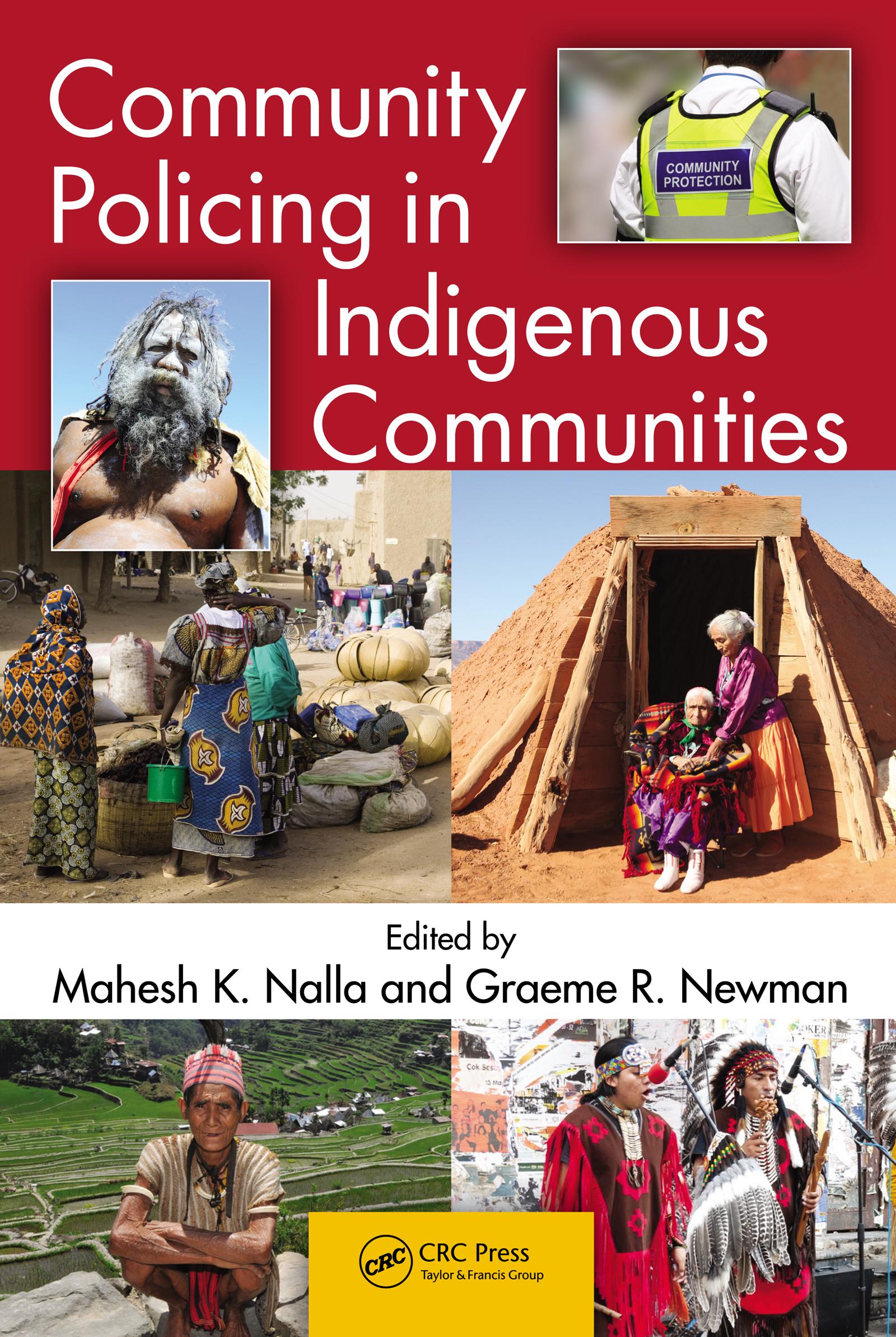
Indigenous communities are typically those that challenge the laws of the nation states of which they have become—often very reluctantly—a part. Around the world, community policing has emerged in many of these regions as a product of their physical environments and cultures. Through a series of case studies, Community Policing in Indigenous Communities explores how these often deeply divided societies operate under the community policing paradigm.
Drawing on the local expertise of policing practitioners and researchers across the globe, the book explores several themes with regard to each region:
- How community policing originated or evolved in the community and how it has changed over time
- The type of policing style used—whether informal or formal and uniformed or non-uniformed, whether partnerships are developed with local community organizations or businesses, and the extent of covert operations, if any
- The role played by community policing in the region, including the relative emphasis of calls for service, the extent to which advice and help is offered to citizens, whether local records are kept of citizen movement and locations, and investigation and arrest procedures
- The community’s special cultural or indigenous attributes that set it apart from other models of community policing
- Organizational attributes, including status in the hierarchy of control within the regional or national organization of policing
- The positive and negative features of community policing as it is practiced in the community
- Its effectiveness in reducing and or preventing crime and disorder
The book demonstrates that community policing cannot be imposed from above without grassroots input from local citizens. It is a strategy—not simply for policing with consent—but for policing in contexts where there is often little, if any, consent. It is an aspirational practice aimed to help police and communities within contested contexts to recognize that positive gains can be made, enabling communities to live in relative safety.
Pay easily by card, Klarna, Apple Pay or Google Pay. Not happy? You always have a 14-day money-back guarantee. Read more in our terms. If you have any questions, email us at hello@memmo.org.
Memmo makes studying easier – wherever you are in the world. We bring your course books and smart study tools together in one place: summaries, quizzes, podcasts and flashcards. Plus Ted, your study buddy who answers anything you wonder. Over 50,000 students already study here – built to help you learn faster and stress less.