
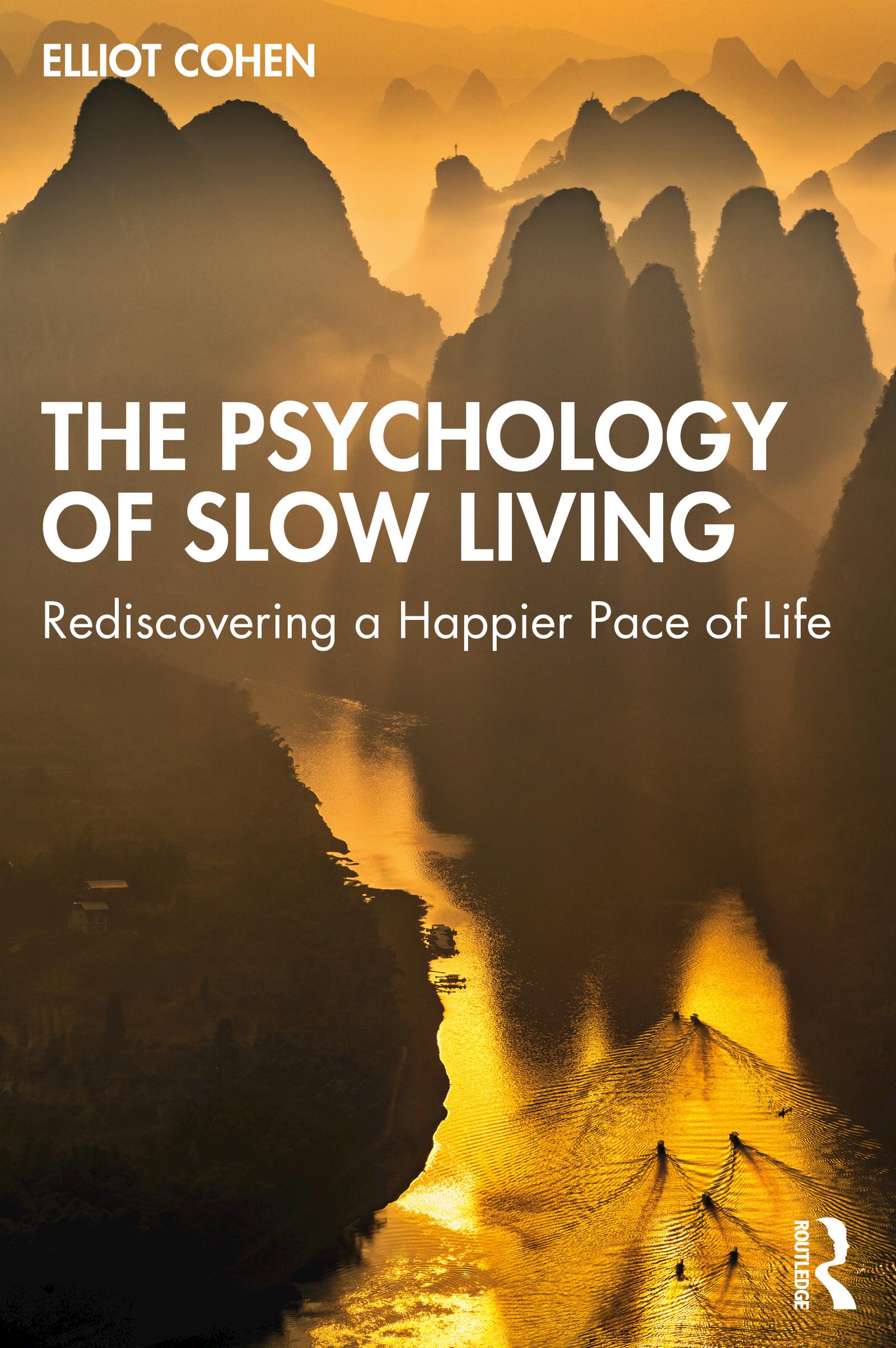
This fascinating book explores the concept of slow living, offering a philosophical and psychological exploration of the need for a slower pace of life. It advocates for reclaiming and rediscovering more natural and human ways of being.
In a digital age, which is dominated by an increasingly tyrannical trinity of speed, efficiency and productivity, the author challenges the pernicious ideal of instant gratification, perpetuated by modern consumer culture. This book examines alternative ways of being through re-examining the Wisdom Traditions of Hinduism, Buddhism, Daoism and Judaism through an ongoing and engaging dialogue with psychology and psychotherapy, including insights from environmental psychology, ecopsychology and cyberpsychology. The book argues against the trend for personal responsibility, adaptability and resilience, and the idea that stress is the ‘new normal'. Instead, it proposes a radical shift in paradigm, promoting not for collectively rising up and overthrowing this system but for communally sitting down and reimagining.
The Psychology of Slow Living is a unique exploration of the benefits of the slow living movement and taps into contemporary debates around the way we should be living our lives, making it an ideal resource for students and academics in psychology, philosophy and the social sciences, as well as individuals interested in alternative lifestyles and spirituality.
Pay easily by card, Klarna, Apple Pay or Google Pay. Not happy? You always have a 14-day money-back guarantee. Read more in our terms. If you have any questions, email us at hello@memmo.org.
Memmo makes studying easier – wherever you are in the world. We bring your course books and smart study tools together in one place: summaries, quizzes, podcasts and flashcards. Plus Ted, your study buddy who answers anything you wonder. Over 50,000 students already study here – built to help you learn faster and stress less.