
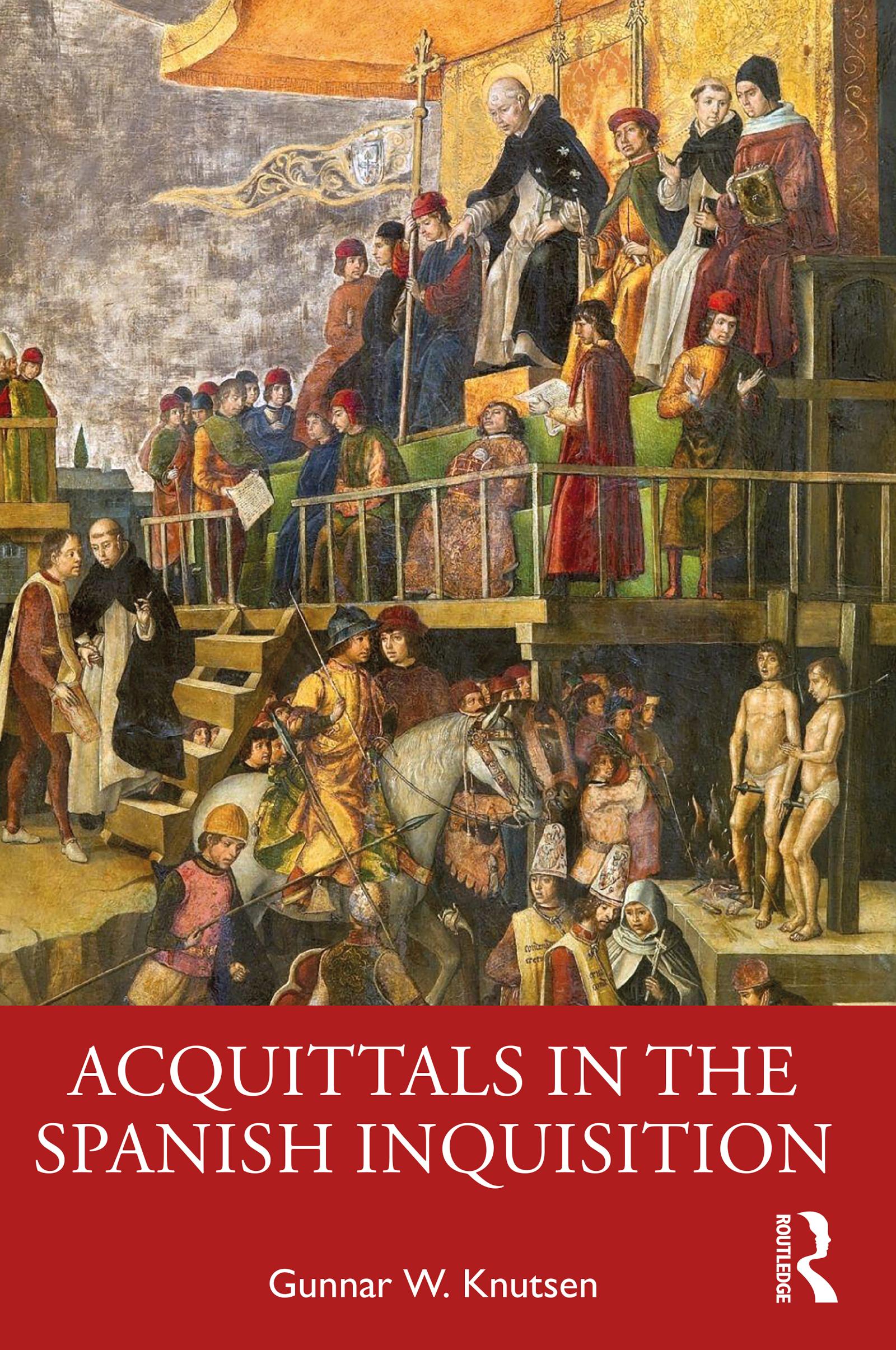
The Spanish Inquisition has become such a byword for injustice that many forget it was also a judicial system capable of acquittal. This study of more than 67,000 trials uncovers over 2,500 formal acquittals, more than 6,600 suspended trials, and nearly 2,100 with unknown or no recorded outcomes.
The inquisitors were jurists who frequently held other judgeships before and after their tenure and used the same evidentiary rules as other Spanish courts. If every acquittal may be taken as an admission of error, the Spanish Inquisition admitted its errors thousands of times, occasionally even putting them on public display at the autos de fe. An acquittal can also be taken as a sign that the inquisitors did not wish to punish the innocent and that while they were quick to arrest and charge people on flimsy evidence, they were too conscientious to convict them without further proof. However, it is also clear that the Holy Office at times did bend, twist, or even break the law when it suited it in order to secure a conviction.
This book is aimed at students, scholars, and general readers seeking a nuanced understanding of the Spanish Inquisition and its workings.
Pay easily by card, Klarna, Apple Pay or Google Pay. Not happy? You always have a 14-day money-back guarantee. Read more in our terms. If you have any questions, email us at hello@memmo.org.
Memmo makes studying easier – wherever you are in the world. We bring your course books and smart study tools together in one place: summaries, quizzes, podcasts and flashcards. Plus Ted, your study buddy who answers anything you wonder. Over 50,000 students already study here – built to help you learn faster and stress less.