
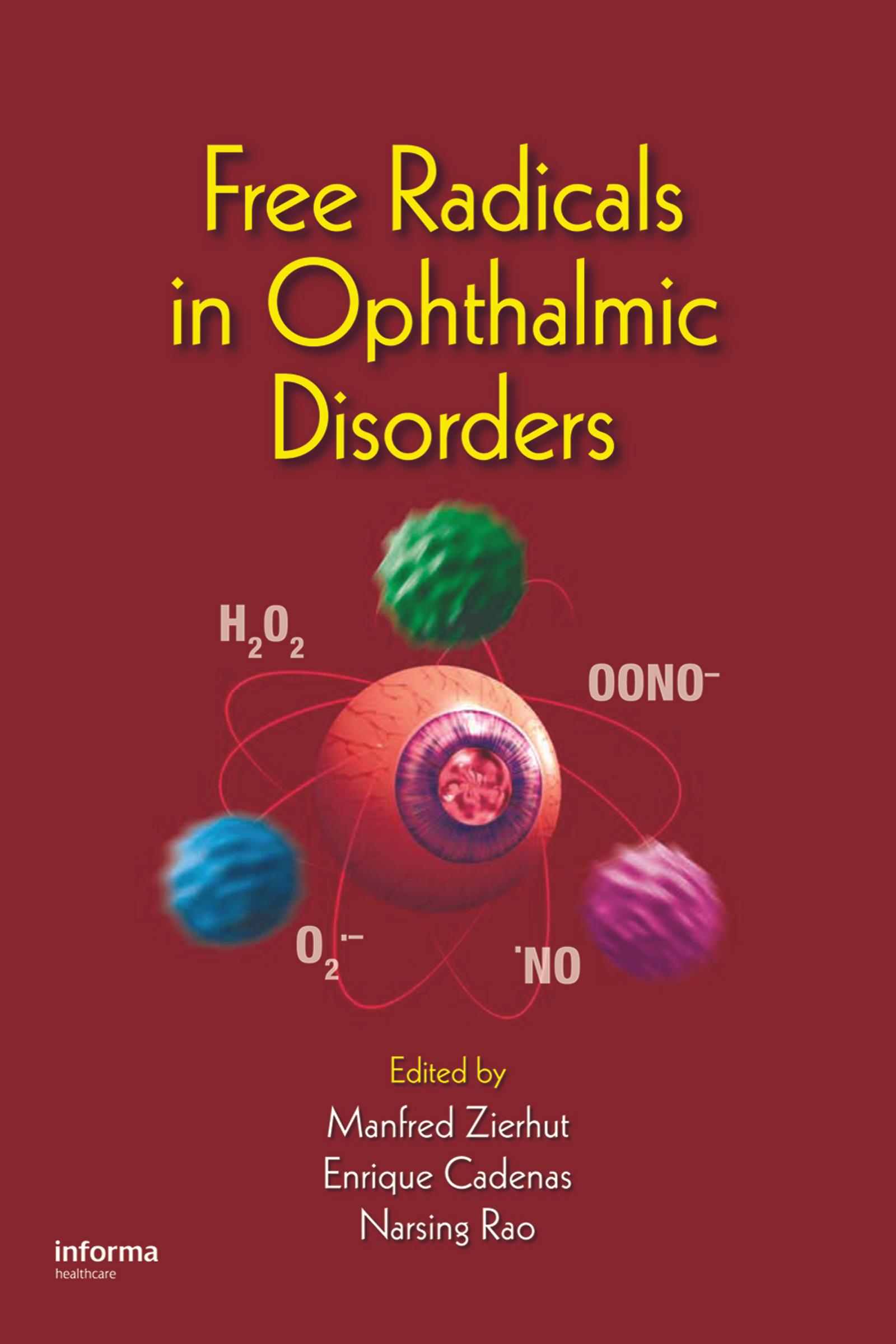
Free radicals are molecules with an unpaired electron in the outer shell or an electron that was damaged from either attack or from a poor splitting bond. After a free radical is formed it will continue to attack other molecules, which usually results in the damage of tissue or destruction of a healthy cell. Free radicals arise normally through metabolism. However, sometimes the body’s immune system will create them on purpose to neutralize viruses and bacteria. Free radicals are implicated in many ophthalmic disorders including uveitis, optic nerve damage, retinal ischemia, and macular degeneration. Free Radicals in Ophthalmic Disorders presents the most current knowledge pertaining to the role of free radicals/oxidants in ocular disorders, and the use of antioxidants in the prevention of these disorders.
Written by today’s leading ocular scientists and clinicians, Free Radicals in Ophthalmic Disorders:
- gives comprehensive coverage of the role of free radicals/oxidants in ocular disorders
- covers the use of antioxidants to prevent oxidative stress and ocular tissue damage
- examines external factors that may result in the stimulation and heightened occurrence of free radicals/oxidants
Pay easily by card, Klarna, Apple Pay or Google Pay. Not happy? You always have a 14-day money-back guarantee. Read more in our terms. If you have any questions, email us at hello@memmo.org.
Memmo makes studying easier – wherever you are in the world. We bring your course books and smart study tools together in one place: summaries, quizzes, podcasts and flashcards. Plus Ted, your study buddy who answers anything you wonder. Over 75,000 students already study here – built to help you learn faster and stress less.